Analysis of Mediumistic Communication – The Spiritist Methodology: Faith, Evidence, and Group Study

Today we bring you another analysis of mediumistic communication. The focus is always on highlighting the logical characteristics of the messages through the body of the message, point-by-point analysis, and conclusions.

In November 2025, during one of our mediumistic meetings, one of the mediums received the following spontaneous psychographic communication from a Spirit:

There was a time when proof was necessary. Today, according to the evolution of the world's inhabitants, it is even more necessary, since humanity is increasingly imbued with bad intentions, aiming for selfishness and personal gain above the collective good. Studies are being conducted on mediums and mediumship. However, researchers, focused on comforting letters, forget the basics of the doctrine. Either they forget them or they are unaware of them.

When people search for comforting letters seeking proof, the spiritual world often remains silent. The research lacks an essential element: faith. It also lacks an understanding of the spiritual world.

If we were to list all these points here, we would have to dictate the codification from the very beginning.

Even back in Kardec's time, they tried the same experiments. Since then, nothing has changed in God's Laws, nor in the conduct of the Spirits.

But don't worry. The time for concrete proof is near, and even the unbelievers will tremble.

We've already said it: if necessary, we'll bang on the tables again.

Mediums are flawed. God's Laws are not.

These scientists should conduct their studies within a mediumistic group. Only then could they understand the basic workings of the phenomena. Isolating mediums to evoke spirits is not a proper study. However, analyzing mediums in trance within groups could provide them with material to expand their research.

But we are merely messengers. Our words are not always well understood.

We hope, and will do our part, to ensure they reach their best conclusions, without taking away humanity's faith in tomorrow; on the contrary, we will inform the unbelievers about the certainty they will gain from our world. (We understand that this part of the message is best understood in this way:)“We wish to inform the unbelievers of the certainty they will obtain from our world. And we will do our part to ensure they reach their best conclusions, without taking away humanity's faith in tomorrow.”))

A Spirit November 2025

This communication has the characteristic of doctrinal firmness, rigorous logic, and a focus on moral utility.. We will assess whether the Spirit's assertions are consistent with general teaching, as well as whether it promotes progress and good, rather than sensationalism or speculation.

The message can be classified as profoundly instructive and in complete accordance with the morals of the Higher Spirits. It serves as a practical guide and a stark warning to researchers and mediums.

Here is the point-by-point analysis:

1. On the Condition of Mankind and the Necessity of Proofs

The assessment of Humanity — which is increasingly imbued with bad intentions, aiming for selfishness and personal gain above the collective good."” — it is a finding that reflects the reality of our planet atonements and trials. O selfishness it's the pride These are the real ones. wounds of Humanity. Spiritism has as its essential goal precisely moral improvement of the human being.

The statement that the The need for evidence is even greater. It is logical, since spirit manifestations have a providential end: to convince them unbelievers of the survival of the soul.

The warning that the “"The time for concrete evidence is near."” and that “"If necessary, we will bang on the tables again."”. ...is in harmony with the law of progress. The Spirits began their manifestations with the... physical effects (the blows — typology), which served as the vestibule of Science to awaken attention. Kardec observed that the Spirits conduct the teaching in a way gradual and prudent. The resumption of physical phenomena would be a powerful means for the universal implementation of the doctrine in the new phase. This would shock those who still need material evidence. ((https://kardecpedia.com/roteiro-de-estudos/889/viagem-espirita-em-1862/1983/discursos-pronunciados-nas-reunioes-gerais-dos-espiritas-de-lyon-e-bordeaux ))

The statement that “"Nothing has changed in God's Laws, nor in the conduct of the Spirits."” It is perfectly accurate, for divine laws are immutable. (Heaven and Hell – Part One: Doctrine – Chapter VIII. Future Punishments According to Spiritism – 14th. The objection raised from divine foreknowledge also falls before this law. God, in creating a soul, effectively knows whether, by virtue of its free will, it will take the good or the bad path; He knows that it will be punished if it acts badly; but He also knows that this temporary punishment is a means of making it understand its error and of leading it onto the good path, which it will reach sooner or later. According to the doctrine of eternal punishments, God knows that the soul will fail and is condemned beforehand to endless torture. Reason also tells us on which side true God's justice lies.)

2. On Research Methodology, Faith, and Spiritual Silence

Criticism of researchers who “"Focused on comforting letters, they forget the basics of doctrine"” and act with the “"curiosity"” This is a key point reiterated in Spiritist works.

The Need for Faith and Study: The teaching correctly states that research lacks faith and of understanding the spiritual world. Kardec always emphasized that the unshakable faith it is the one that can face reason head-on. Serious and persistent study is the first condition to learn about Spiritism. (( https://kardecpedia.com/roteiro-de-estudos/2/o-livro-dos-espiritos/47/introducao-ao-estudo-da-doutrina-espirita/xvii ))

Spiritual Silence: The fact that “"The spiritual world often remains silent."” When the search is for proof (out of interest or curiosity), it is a constant truth. The Higher Spirits They don't like curious people.. They are not suited to frivolous, idle experiences or those meant for show., and refuse to assist any kind of cupidity or selfishness.

The message is correct in suggesting “"to dictate the codification from the outset"” To clarify these points, this would demonstrate that, without the philosophical basis (God, soul, immortality), the study of manifestation is... useless. ((The Mediums' Book, Chapter III – On the Method https://kardecpedia.com/roteiro-de-estudos/884/o-livro-dos-mediuns-ou-guia-dos-mediuns-e-dos-evocadores/1009/primeira-parte-nocoes-preliminares/capitulo-iii-do-metodo/18)))

3. On the Fallibility of the Medium and the Importance of the Group

The communication provides vital practical instructions on mediumistic practice:

Fallibility: The distinction “"Mediums are flawed. God's Laws are not."” It is fundamental. The mediumistic faculty is organic and regardless of morale of the medium. However, the application and quality of the communications depend on the qualities of the medium.

The Obstacle of Isolation: The criticism that “"Isolating mediums to evoke spirits is not a correct study."” It's a safety maxim. isolation of the medium is one of biggest obstacles of mediumship. He who works alone easily becomes prey to Lying and hypocritical spirits that dominate. (The Book of Mediums – Part Two – Chapter XXIII – On Obsession – Causes of Obsession – 248. It very often happens that a medium can only communicate with a single Spirit, who is linked to him and answers for those who are called through him. This is not always an obsession, as the fact may derive from the medium's lack of malleability, or from a special affinity with a particular Spirit. Obsession properly speaking only occurs when the Spirit imposes itself and intentionally drives away others, which is never the work of a good Spirit. Generally, the Spirit that takes possession of the medium, with a view to dominating him, cannot bear the critical examination of his communications; when he sees that they are not accepted, that they are discussed, he does not withdraw, but inspires the medium with the thought of isolating himself, even, not infrequently, ordering him to do so. Every medium who is offended by criticism of the communications he obtains echoes the Spirit that dominates him, a Spirit that does not It can be good, provided it inspires an illogical thought, such as refusing examination. The isolation of the medium is always a deplorable thing for him, because he is left without verification of the communications he receives. Not only should he seek the opinion of others to clarify things, but it is also necessary for him to study all kinds of communications in order to compare them. By restricting himself to those transmitted to him, he risks being deceived about their value, without considering that he is not given to know everything and that they almost always revolve within the same circle.

The Strength of the Group: The advice that the study “"It should be done in a mediumistic group."” It's the only way to avoid obsession. The serious group provides the control, a analysis it's the critical examination Communications by disinterested and benevolent people unmask deceiving Spirits. (The Book of Mediums or Guide for Mediums and Evocators. Part Two — Of Spirit Manifestations. Chapter XXIX — Of Spiritist Meetings and Societies. Of Meetings in General. 329. Study meetings are, moreover, of immense use to mediums of intelligent manifestations, especially to those who seriously wish to improve themselves and who do not attend them dominated by a foolish presumption of infallibility. Obsession and fascination constitute one of the great stumbling blocks of mediumship, as we have already had occasion to say. They can, therefore, deceive themselves in good faith regarding the merit of what they achieve, and it is easily conceived that deceiving Spirits have an open path when they are only dealing with a blind person. For this reason, they distance their medium from all supervision; they even go so far as to make him averse to anyone who might enlighten him. Thanks to isolation and fascination, they achieve their goals without difficulty.) to lead him to accept everything they want. It can never be repeated too often: therein lies not only a stumbling block, but a danger; yes, a real danger, we say. The only way for the medium to escape it is through analysis performed by disinterested and benevolent people who, coldly and impartially assessing the communications, open his eyes and make him perceive what he cannot see on his own. Now, any medium who fears this judgment is already on the path to obsession; he who believes that the light was made exclusively for his benefit is completely subjugated. If one takes offense at observations, rejects them, or becomes irritated upon hearing them, there is no doubt about the evil nature of the Spirit assisting them. We have said that a medium may lack the necessary knowledge to perceive errors; that they may be deceived by resounding words and pretentious language, seduced by sophisms, all in the best of faith. Therefore, lacking their own understanding, they should modestly resort to that of others, according to these two adages: four eyes see more than two, and no one is a good judge in their own case. From this point of view, meetings are of great use to the medium, provided they show themselves sensible enough to listen to the opinions offered, because there they will find people more enlightened than themselves who will grasp the nuances, often delicate, by which the Spirit betrays its inferiority. Every medium who sincerely wishes not to be a plaything of falsehood should, therefore, seek to produce results in serious meetings, bringing to them what they obtain in private, gratefully accepting, and even requesting, a critical examination of the communications they receive. If they are dealing with deceiving Spirits, this is the surest way to rid themselves of them, proving to them that they cannot deceive them. Moreover, the medium who is irritated by criticism has even less reason for such irritation, since their self-esteem has nothing to do with the matter, for what comes out of their mouth or from their pen is not theirs, and they are no more responsible for it than they would be if they were reading the verses of a bad poet. We insist on this point because, just as this is a pitfall for mediums, it is also for meetings, in which it is important not to lightly trust all interpreters of Spirits. The participation of any obsessed or fascinated medium would be more harmful than useful to them; They should not, therefore, accept it. We believe we have already made sufficient observations to make it impossible for them to be mistaken about the characteristics of obsession, if the medium cannot recognize it for himself. One of the most evident is, on the part of the medium, the claim to always be right against everyone. Obsessed mediums who refuse to acknowledge that they are obsessed resemble those patients who are deluded about their own illness and are lost because they do not submit to a healthy regimen.

Analysis in Trance: The suggestion of “"to analyze, however, mediums in trance within groups"” It is a valid methodology. The state of sleepwalking or ecstasy It allows the medium's spirit to manifest more freely, revealing higher manifestations and deep.

4. Regarding Identity and Mission

The absence of a specific name for the Spirit, presenting itself only as “"We are merely messengers."”, it would be seen as a sign of seriousness and humility, typical of Spirits who care about idea and not with the man. Based on the analysis, we can affirm that it is the same spirit that communicated previously in... in this message here

Focus on the Message: The priority of “"to inform the unbelievers of the certainty they will obtain from our world"” This is the ultimate and essential purpose of Spiritist Doctrine. ((https://kardecpedia.com/roteiro-de-estudos/885/o-que-eo-espiritismo/1320/capitulo-ii-nocoes-elementares-de-espiritismo/fim-providencial-das-manifestacoes-espiritas))

Final verdict of our analysis:


Specific Language of Spiritist Science

Did you know that most of those who call themselves Spiritists… don't know anything about Spiritism? Nor do they use the specific language of Spiritist science to explain its phenomena and concepts.

Being a spiritualist is not a matter of emotional adherence, nor of consuming supposedly “spiritualist” novels.
Being a Spiritist means seriously studying Spiritist Science, understanding its foundations and putting its principles into practice — as Allan Kardec taught.

Spiritism is a doctrine of study, reason, and observation. Replacing this science with fiction is a great harm to Spiritism. As it is a Philosophical Science it must be studied with specific scientific terms.

In Kardec's time, the Philosophical Sciences were part of the teaching.

When Allan Kardec launched his First Edition of the Spiritist Magazine in 1858, he immediately defined it in his introduction to justify its title Journal of Psychological Studies. Spiritist Science is, according to its time presented in the table above: Moral Science

As a science, its language is specific to the elements of this science so that everyone can understand each other. Terms are extremely important for the adequate communication of spiritual ideas. We see, today, a mixture of the totally materialistic science of our time in which the study of metaphysical hypotheses, for example, is ignored. Furthermore, words from one field are mixed with the other. Because of this, there is a confusion of materialist concepts mixed with the study of spiritual matters, which are also studied metaphysically.

We will give some examples of the mistaken use of materialistic terms that go unnoticed:

  1. USE PSYCHOPHONY – DO NOT USE EMBEDDING: We see many speakers or even descriptions of manifestations in so-called Spiritist texts that use the term "incorporation." Spirit is not matter that occupies a physical place. Spirit does not incorporate any body, nor does your own spirit incorporate you. The Spirit speaks through the medium through a phenomenon called PSYCHOPHONY. The medium's spirit is WITH them and does not incorporate their physical body. This point is very important to avoid creating the false idea that the medium is possessed by another spirit, or that the spirit communally takes over the medium's body, or even that the medium's spirit goes to other places while the medium is in psychophony. This does not exist in Spiritist Science!
  2. THE ACTION OF THE SPIRIT IS SOLELY AND ONLY THROUGH ITS THOUGHT: The spirit does not have a material body. According to studies of Spiritist Science, God created two general elements: SPIRIT and MATTER. Spirit has no analogue in our material world. The perispirit is matter. The material of which the perispirit is made is unknown to us, but even without knowing its characteristics, it is matter. The perispirit is not part of the spirit, just as the perispirit is not spirit. The spirit acts through and solely through thought. How exactly this happens is still unknown to us, but there are several theories in books that explain this mechanism (read Genesis, chap. XIV – The Fluids.)
  3. USE EMANATION OR PROPAGATION – DO NOT USE ENERGY: The term energy is defined in Physics as the capacity of a body, substance, or physical system to perform work. Figuratively (non-scientific) speaking, energy is vigor or moral power; philosophically speaking, according to Aristotle, it is the action of a physical or metaphysical motor (metaphysics is not considered science today) that allows the actualization of a potentiality. Note, all definitions take into account something physical acting on something physical. One of the principles of Spiritist Science is that we are an incarnate soul. If we are a soul, we do not have a body, so it cannot be energy (something physical) leaving the spirit or soul (non-physical) and arriving at a body (physical). The more appropriate term would be an emanation or even propagation.
  4. USE SPIRITDO NOT USE MIND: The mind is used in other areas of current materialist science. Some confuse the mind with the brain; the brain is an organ of the body, the brain is matter. Since Materialist Science does not admit the spirit as a hypothesis, it attributes the thinking process to the brain, but that is not what the spirits explained. According to Spiritist Science, through its observation, it is the spirit that controls the body, not the brain. The brain sends the commands. The brain is born, lives, and dies, and the spirit remains and carries with it the knowledge acquired through various incarnations. It is the spirit, not the mind, that possesses and carries knowledge. It is the spirit that thinks. You who understand the Spiritist doctrine know this and always use Spirit instead of Mind, don't you?
  5. USE “AS IF IT WERE A VIBRATION” DO NOT USE “VIBRATION” IN ITS FORM WHEN TALKING ABOUT SPIRITUAL PHENOMENA: There are hypotheses about the mechanism itself (see item 2) and only hypotheses. Using the term vibration may lead one to believe that the spiritual phenomenon is a wave as studied in Wave Physics, where it presents different types of waves and different vibrations, etc.
  6. USE PERISPIRIT – DO NOT USE GHOST: Those who study Spiritist Science know that there are apparitional phenomena that evoke these figures that impress our imagination. But they are nothing more than spirits and their phenomena, often to play with or frighten the incarnate. There's no such thing as a Spiritist being afraid of spirits!
  7. WE ARE ALWAYS IN THE SPIRITUAL WORLD: According to Spiritist Science, when we are incarnated, we live in a dual world: the world of matter and the world of spirit. When we die, we disincarnate, that is, we leave matter, but we CONTINUE IN THE SPIRITUAL WORLD. Do not use the terms “he died and went to the spiritual homeland” (He was already in the spirit world); “now he will meet his loved ones who have already died” (his loved ones are never far away. Remember that Spirits do not stay in any one place? (see item 1); “he left us”, etc.
  8. USE CAUSE AND EFFECT – DO NOT USE THE LAW OF CAUSE AND EFFECT: Causality is generally considered a fundamental principle, rather than a specific law, in philosophical and scientific contexts. It describes the cause-and-effect relationship between events, where one event (the cause) is understood as the reason behind the occurrence of another event (the effect). Causality is a fundamental principle that helps understand the nature of the relationship between cause and effect, and is used in a variety of fields, from physics and natural sciences to philosophy and law. Although causality is often referred to as the "law of cause and effect," it is not a scientific law in the sense of a quantitative, experimentally verifiable relationship, like the laws of physics. It is more of a concept or principle that describes the nature of the relationship between cause and effect. Causality is important for understanding the world around us, as it allows us to identify the causes of phenomena and predict their effects. It is fundamental to science, technology, and everyday life, as it helps us understand and interact with the world more efficiently. An example: Imagine a hunt, an animal is shot and dies. The effect is death. The cause was the shotgun blast. It wasn't a law. In Spiritist Science, Kardec used many of these principles to explain the intelligent effects of intelligent spirit manifestations. There, he explains that for every intelligent effect, there is an intelligent cause. There are countless accounts of this in his works.
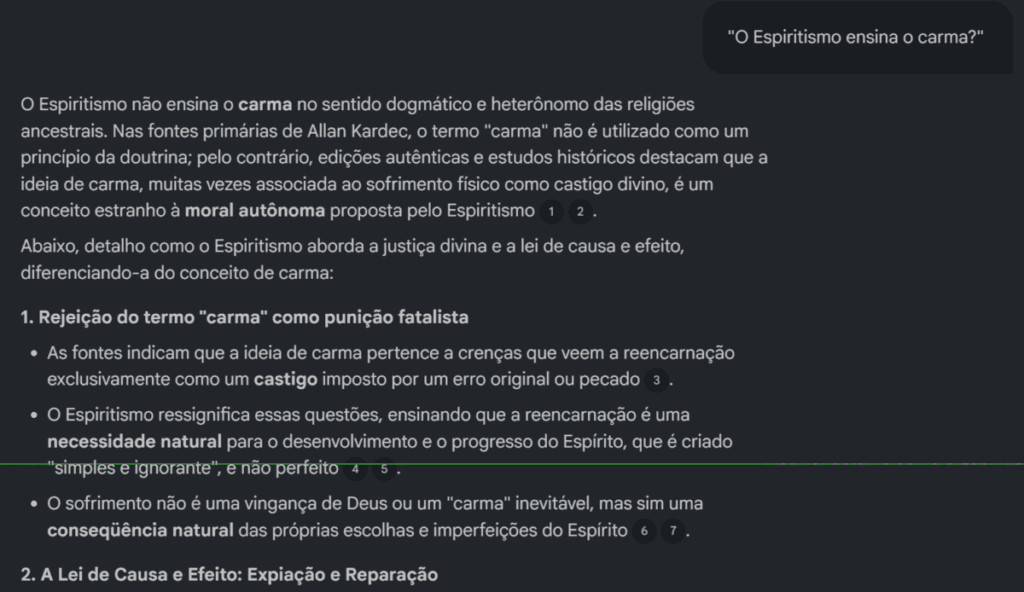
  9. USE TRIALS AND EXPIATIONS – DO NOT USE KARMA: Karma and Spiritism are like oil and water: they do not mix. Be careful with people who preach the doctrine of karma within the spiritist environment, as the understanding of Spiritist Doctrine goes in the opposite direction.(click on the link to read the full explanation).
  10. USE PARKED SPIRIT – DO NOT USE RETROGRADATION: Many people mix other reincarnationist doctrines with spiritual science. According to Spiritual Science, we spirits, when we are immersed in imperfections, such as pride and selfishness, remain stuck in a loop and do not evolve. But this doesn't mean we're going back and reincarnating as animals. It just means we're stuck in the evolutionary process! A human spirit never loses the knowledge it previously had, so it will never reincarnate as an animal because of its imperfections. It simply won't progress until it repents and sincerely returns to goodness.
  11. THOSE WHO WILL REGENERATE WILL BE THE SPIRITS OF PLANET EARTH – PLANET EARTH WILL NOT REGENERATE: The planet will not change, and therefore spirits will have to evolve. There is no deadline, year, century, or anything like that. It's the other way around! The spirits on the planet will evolve. It will simply be when the majority of incarnate spirits are more evolved, no longer needing trials and atonements to evolve. One day, Planet Earth will become extinct, as any other planet will. This is the order of the material universe as we know it.
  12. USE PURE SPIRIT – DO NOT USE PERFECT SPIRIT: The ideal of perfection is God, so a spirit will never be perfect. A spirit will reach perfection relative to its evolutionary level. A pure spirit no longer needs to reincarnate to evolve because it is no longer influenced by matter. Even though they are pure, they will evolve (Law of Progress).
  13. PASS IS NOT ENERGY TRANSFER: see item 3

If you remember any incorrect expression, just leave a comment.


The Evolution of Moral Intellect

DE explains the evolution of humankind in the world. Many philosophers and current science advocate that humankind was born selfish, that selfishness is in nature. This, then, reverses the truth. The simple and ignorant act according to instinct, and instinct is harmonious. But do they do both good and evil?

The Article The Evolution of Moral Intellect is Continuation of the article Evil in Civilizations

In reality, in the evolution of humanity, the first phase is of the simple, who act naturally through harmony, acting by instinct. But the simple and ignorant age. Later, with the arrival of the exiles, they will spread the false mentality, which reverses the true idea taught by Jesus' precursors.

The understanding of evil and the choice of good

Through trial and error, the spirit is initiated into the knowledge of good and evil.
When the spirit at the beginning of evolution eventually acts according to the interests of its personality, it commits a fault. Every fault is associated with moral suffering, as the divine law is in everyone's conscience, indicating that the act is contrary to good. A fault occurs when the individual knows it is wrong, their conscience tells them it is wrong. But if the individual does not know it is wrong, they will not experience moral suffering.

Moral suffering is associated with how much an individual knows. If one knows a lot, there is much more moral suffering than if one knows little. Moral suffering doesn't occur with every mistake, because the individual already knows they will make a mistake the next time, so their suffering becomes constant. The selfish suffer constantly. They constantly know they are doing wrong; they can only change their habits, which is perhaps more difficult than overcoming the mistake. Through the exercise of reason and the effort of will, the spirit decides to act differently and remains on the path of good. In moral autonomy, understanding error allows one to choose the truth.

The imperfections and the moral suffering

Moral suffering is inherent in imperfections, and the spirit, yearning for happiness, rethinks and chooses good.
When an individual insists on acting out of self-interest, seeking immediate sensations, the lack becomes a habit, creating a condition of attachment. In this deviation, the individual uses reason and will to possess possessions and abuse the simple things.
When attachment is stronger than the effort to return to goodness, it becomes an acquired habit, selfishness. Moral suffering
associated with the lack, according to natural law, due to bad habit, it remains constant and will last until the imperfection is overcome.

When the spirit at the beginning of evolution eventually acts according to the interests of its personality, it commits a fault. Every fault is associated with moral suffering, as the divine law is in everyone's conscience, indicating that the act is contrary to good. A fault occurs when the individual knows it is wrong, their conscience tells them it is wrong. But if the individual does not know it is wrong, they will not experience moral suffering.

If one knows a lot, there is much more moral suffering than if one knows little. Moral suffering doesn't occur with every mistake, because the individual already knows they will make a mistake the next time, so their suffering becomes constant. The selfish suffer constantly. They constantly know they're doing wrong; they can only do so by changing the habit, which is perhaps more difficult than overcoming the mistake.

the false idea

The selfish person, when his conscience weighs on him, must overcome his imperfections. But when attachment dominates, he creates false ideas to quench the light of his conscience. This happens because those who act out of selfishness suffers morally, feels guilty, knows he's wrong, and his goal is to overcome it. But when the horizon of recovery recedes, the spirit feels defeated and the goal difficult. To endure the pain and low self-esteem, he justifies himself by pride. Inverting the truth, he tells himself: I am superior, I deserve privileges; others are inferior, they must serve me. Thus arises the false idea. The more the proud believe in this lie and imposes it on the simple, but by violence will defend your false rights.

The false idea in the spiritual world

Deluded by the false idea he has adopted to govern his actions, the proud man blindfolds himself, and when he reaches spirituality, he does not see the happiness of good. So he wanders and suffers, inertia of the soul.
No matter how active it is in the corporeal world, spiritually, the imperfect spirit (selfish and proud) becomes inactive, disconnecting itself from its fellow beings and superiors who are on the path of good, as it acts in its own interests, and not for everyone else.
To alleviate unbearable moral suffering, the spirit creates antipathy towards fellow beings and superiors who are on the path of good, fights against and distorts the truth or divine law, creating or defending false ideas to circumvent their reason and conscience.

This article was prepared based on a lecture given by Paulo Henrique de Figueiredo. Click here to meet her.


Evil in Civilizations

The Evil of Civilizations is a continuation of the article The Double Concept of Good and Evil

Evil in civilizations begins with the belief in false ideas, in those who act motivated by selfishness and pride, prioritizing their own interests. When many individuals adopt this mentality, it transforms into a collective malaise. The mistaken view of this false idea permeates social relations. This problem is exacerbated when leaders, religions, philosophies, and sciences propagate this false mentality, influencing and shaping the entire culture.

The first is summed up in these words of Christ: 'Do unto others as you would have them do unto you.' In short, it applies without exception to all social relations. We must agree that if all members of a society acted in accordance with this principle, there would be fewer disappointments in life. As soon as two people are together, they thereby contract reciprocal duties; if they wish to live in peace, they will be obliged to make mutual concessions. These duties increase with the number of individuals; agglomerations form a collective whole that also has its respective obligations. You therefore have, in addition to the relations between individual and individual, those between city and city, between country and country. These relations can have two motives that negate each other: selfishness and charity, since there is also national selfishness.

Allan Kardec, Spiritist Journey, 1862

There is selfishness in science, in religion. Everywhere there is the false idea.

With selfishness, self-interest prevails; each person lives for themselves, seeing others as merely an antagonist, a rival who can compete with us, whom we can exploit, or who can exploit us; someone who will do everything possible to get there before us: victory goes to the smartest, and society—sad to say—often consecrates this victory, which divides it into two main classes: the exploiters and the exploited. This results in a perpetual antagonism that makes life a torment, a veritable hell.
Replace selfishness with charity, and everything will change; no one will seek to harm their neighbor; hatred and jealousy will die out for lack of fuel, and men will live in peace, helping one another instead of tearing each other apart. If charity replaces selfishness, all social institutions will be founded on the principle of solidarity [cooperation] and reciprocity [mutual support]; the strong will protect the weak, instead of exploiting them.

Idem

If the individual considers the other weak, he will exploit him.

If the individual considers the other strong, he becomes an adversary to be fought. The change lies in what the individual chooses to do.

This article was prepared based on a lecture given by Paulo Henrique de Figueiredo. Click here to meet her.


The Double Concept of Good and Evil

This article The Double Concept of Good and Evil is a continuation of the article The Truth that Sets You Free

Pixabay GoldenVionist

The double concept of good and evil is a false idea: doing what is right is considered acting in good, while making mistakes is seen as acting in evil. Consequently, each failure committed by the person accompanies self-condemnation, as if committing an evil act. In reality, it is natural to make mistakes when carrying out any activity that we have not yet mastered in our lives; This is not evil, but simply a mistake.

Thus, through this false mentality, the person believes that it is better to avoid mistakes. But how can you avoid mistakes? “Do as I say” is what religious leaders and academics alike say, demanding blind obedience. In the gym, you often hear, “Do as I say.” “You are incapable, I know what is best!” “Learn from me and repeat my words!” (HETERONOMY). However, memorizing and imposing does not lead to learning, as each individual has their own way of learning and understanding; some faster, others less; skills differ from individual to individual; Who said there was only one right way?

True progress lies in everyone understanding the reasons why things don't work. It is impossible to achieve something without trying. Unfortunately, we condition ourselves to fear error as a sin, which paralyzes people, preventing them from trying and, consequently, from evolving. This notion is absurd; It's a false idea!

Allan Kardec established that Spiritism is a Philosophical Science, a classification from the 19th century. At that time, science was divided between Natural Sciences and Philosophical Sciences, the latter included the spiritualists. At that time, all these philosophical ideas were being discussed. Surprisingly, when revisiting the academic texts of that century, we discovered scientific spiritualism, which, together with Spiritism, has the potential to build a new world.

At the book “Heaven and Hell”, Spiritism explains that the double concept of good and evil are not personified in God and the Devil, nor are they limited to the exclusive division between the saved and the damned. This false dichotomy diverts humanity from the correct path.

There is no battle between good and evil; any statement to the contrary is misleading, as Evil is an illusion that dissipates when understood (AUTONOMY). Understanding is the tool of Good.

All creation exists in function of divine law, God's ministers organize the worlds, life and humanities according to the path of good. But the human spirit needs act in good by understanding the truth, in a free and disinterested way, that is, You need to overcome the false idea through your effort, conquering faith supported by reason: rational faith!

Pixabay by Congerdesign – O Bem

This article was prepared based on a lecture given by Paulo Henrique de Figueiredo. Click here to meet her.

Continue on Evil in Civilizations


The Truth that Sets You Free

Continuation of the article The Dominion by Lies and Violence

Jesus came to bring us the truth that sets us free! He mentioned the devil in the Bible, but did he believe in the literal existence of the devil? The word “Devil” is written in the Bible, but its meaning goes beyond the literal.

Pixabay – Golden Violinist – birds

It really all comes down to interpretation. God and Devil are representations of Good and Evil, respectively. However, viewing the Devil as purely malevolent is a misconception. The Devil is not an entity; it resides in those who embrace this false idea. Mal has no form, is not a real entity. No one is inherently evil. Is there anyone truly evil in this world? No, because evil is a false conception that supports a habit. When someone changes their mindset, they stop acting in evil ways, but overcoming the habit is a long process. However, you never overcome if your mentality doesn't change.

What will really transform the world is genuine education – not that which merely perpetuates false ideas, that decorates teachings, but rather that which is understood, which liberates. The weapons of good are understanding and explanation. How can I make you understand that the future of the world lies in cooperation? Simply explaining and cooperating endlessly, without worrying about the results.

We are introducing a new habit into the world. By overcoming the false idea of evil, we will see global renewal, offering new opportunities for everyone. There is no Spirit that will not, sooner or later, choose the path of good. However, the good is not imposed; everyone must achieve it with their own effort.

True understanding will free us from this false dichotomy between good and evil, leading us to a life of cooperation and harmony. The following passage from Jesus is revealing:

42 Jesus said to them, “If God were your father, you would love me. I came from God and I go [to God]. For I did not come on my own, but He sent me. “


Bible – Volume I: New Testament – The four gospels – Gospel of John (pp. 470-471). Company of Letters. Kindle Edition. Trans. Frederico Lourenço

Jesus said he was sent by God and not by his own means. He came to teach the Law of God.

43 Why do you not understand my speech? Why you can't hear my word.

Idem

Science advances mainly through a paradigm shift, that is, a change in ideas.Paradigm comes from the Greek “paradigm”, which means “example” or “model”. Initially, it was applied in grammar (to define its use in a given context) and rhetoric (to refer to a parable or to a fable). From the 1960s onwards, it began to be used to define a model or a standard in any discipline scientific or epistemological context. source: Click here. We have to understand what the new idea looks like. So, after it makes sense, we test it and when we verify its coherence, we adopt it. The key is to share the new idea.
But that doesn't mean everyone will become superior, that's not the world's idea. Children do not need to study at school just to get the best grades, generating competition between them. Each person must seek to learn more than they knew before, as we are all spirits at different stages of evolution. There are very intelligent spirits in our world because they have spent more time experiencing the world. However, the intelligent are not superior to the simple, because in other existences they were simple like them. They came to our world because they felt more prepared there. Intelligent spirits are not malevolent or demonic; however, they must cultivate simplicity to serve and contribute, not to be served. This is the great motto of the world.

To move toward happiness in this world, we need to help remove the blinders from the eyes of those who are blinded by false ideas. However, they will not easily accept acting for everyone. Thus, some leave for another world, where they can progress, help many others to progress technologically more quickly and have a new opportunity to rethink their choices. It is not a punishment or punishment to be sent to another world; it is simply a consequence of a choice that did not allow them to evolve. If they reconsider their attitudes in the other world, renewed, they can return here.

This has occurred in our world; the simple ones were on Earth when the exiles arrived. They were given a second chance by coming here, but now they must contribute in useful ways to the advancement of this world. Unfortunately, many have fallen into the false idea that they must be served, thus creating all the mistaken ideas that permeate the world. But whenever we try to explain the truth, because it is a false idea, they resist.

This is the last opportunity both to change your mindset and to fully participate in this world. Those who refuse to cooperate will not understand the truth through force, memorizing orders, or blind obedience. Only through personal effort can someone understand.

44 You are [children] of your father the devil; and you want to put your father's wishes into practice. He is homicidal from the beginning and was not and is not in the truth, because there is no truth in him. When he utters the lie, he utters it from his own; for he is a liar and is the father [of lies]. 45 Me because I tell the truth you don't believe me. 46 Who among you condemns me regarding error? If I speak the truth, why don't you believe me? 47 Whoever belongs to God listens to the words of God. This is why you do not listen to me: because you are not from God.”

Idem

This part of John's Gospel is pointing out that the “devil” is in the false idea of superiority and purity. When we consider ourselves pure and superior, we tend to judge and condemn others who we consider simple and inferior. However, the act of judging is, in itself, a false idea: when we point out the error in another person, we are actually making a mistake, as we are judging the person instead of their specific behavior. This is equivalent to considering the person as “evil” and condemning them unjustly. Nobody has the right to act like that. Not even benevolent spirits condemn others in this way.

Evil reveals itself in the distortion of divine law, when we seek to satisfy our personal interests at the expense of the submission of the simplest, sacrificing their tranquility and happiness. However, we must reject the notion of superiority due to our knowledge.

In this context, our responsibility becomes even more crucial! Those who possess knowledge have a duty not only to help those less knowledgeable, but also to serve.

We must dedicate our efforts to disseminating knowledge and ensuring that many understand it. The future of the world lies in cooperation, not competition. Any new value must be shared globally so that everyone can benefit.

48 The Jews answered and said to him: “Do we not say well that you are a Samaritan and have a demon?”. 49 Jesus answered them: “I do not have a demon, but I honor my Father and you dishonor me. 50 I I do not seek my glory. There is one who seek and judge. 51 Amen, amen, I say to you: if anyone observes my word, he will not see death until eternity.”

ibid.

In this part, it is expressed: “You are contaminated by evil! And there’s a devil!” If someone already thinks the other is a devil, there seems to be no solution. Those who are selfish and arrogant label others as inferior, always seeing the evil in others. Religious fanatics see those who are different as inferior. Materialists judge those who think differently as inferior. The crux of the problem is when an individual believes they are superior and is stubborn about not changing their mind, even when faced with the truth. The truth confronts you, questioning your lofty self-image.

Now, if someone considers themselves superior, they will only recognize their error when they reach that conclusion on their own. Often, this person, deep down, does not really believe in their superiority, which is why they feel the need to affirm it so vehemently.

The only factor that makes us equal is our individuality. We are unique Spirits, each with different experiences to develop and understand. However, having more knowledge does not make us superior to others. What truly defines the evolution of a Spirit is not its intelligence or experience, but its ability to understand the law of God. The goal of the Spirit is to give the best of itself.

This article was prepared based on a lecture given by Paulo Henrique de Figueiredo. Click here to meet her.

Continue on The Double Concept of Good and Evil


The Dominion by Lies and Violence

Those who make mistakes consciously use violence and lies to dominate and act for their own benefit.

Continuation of the article The Truth about Evil and Punishment.

To achieve dominance over others, the strategy is often used to make them believe that the error or failure lies in not obeying, therefore deserving punishment. At the same time, the illusion is propagated that obeying will bring rewards. This is the trap of evil, known as heteronomy. Those who submit are then controlled through conditioning, and this is where the true violence of evil lies.

Evil acts through violence and lies. She proclaims: “You must obey! If you don’t obey, you will receive punishment!” Then she states: “This is the only way to deal with those who refuse to obey.” This is an inversion of values.

Evil manifests itself in the false idea that distorts divine law, seeking the satisfaction of interests and personal joy at the expense of the submission of the simplest, sacrificing their tranquility and happiness. However, we must not be fooled into thinking that we are superior because we have knowledge. And do you know the error of the one who knows? Indifference! Having values and not using values for good.

In this sense, our duty, which you already know, intensifies! The responsibility of those who have knowledge goes beyond simply helping those who are less educated; they must also serve. Reflect: The duty of those who know is to serve the simplest!

We should not think about taking advantage of our knowledge, but rather about cooperating. We must use our efforts to disseminate this knowledge and make many people understand it. The future of the world lies in cooperation, not competition.

This article was prepared based on a lecture given by Paulo Henrique de Figueiredo. Click here to meet her.

Continue on The Truth that Sets You Free


The Truth about Evil and Punishment

What is evil and punishment Truly?

Continuation of the article Passive Obedience and Blind Faith—The Two Principles of the False Idea

Evil is not making mistakes, then asking for forgiveness and being obedient to good.

God punishes? No! What is punishment?

Isn't this concept totally different from what we have learned? Is punishment something that happens in the world? No, the punishment is the person's moral suffering and, if they do not change, they will not find happiness.

No selfish person is happy, because they know, intimately, that they are not doing good. But why would someone be selfish, knowing they are wrong, suffering because of it, and still continuing in the same selfish behavior?

Through Spiritism, we uncover the roots of selfishness and pride. Spiritism does not confront people or ideas; he confronts selfishness and pride as concepts that harm spiritual progress.

The guilty Spirit first suffers in spiritual life due to the degree of its imperfections, and is then granted bodily life as a means of reparation. That is why the Spirit finds in her, either the people she offended, or situations similar to those in which she committed evil, or even situations opposite to those she experienced, for example, facing misery if she was a bad rich person, or a humiliating condition if was proud. This is not a double punishment, but the same one that is continued on Earth, as a complement, with a view to facilitating your progress towards effective work. It depends on the Spirit himself to make it profitable. Isn't it better for him to return to Earth, with the possibility of gaining Heaven, than to be condemned without remission when he leaves it? This freedom that is granted to him is proof of the wisdom, goodness and justice of God, who wants man to owe everything to his own efforts, thus being the architect of his future. If you are unhappy, whether you are unhappy for a longer or shorter period of time, complain only to yourself – the path to progress is always open to you.

Allan Kardec. Heaven and Hell: Or divine justice according to Spiritism, publisher Feal (p. 78). Kindle Edition.

However, it is crucial to fully understand what selfishness entails in order to combat it effectively. Recognizing your mistakes and feeling guilty is the first step towards change. Otherwise, the individual will continue to suffer.

The false idea that God is the cause of our suffering is wrong. In fact, we are judges and prisoners of ourselves and our own thoughts. Spiritism teaches us this. Knowing this, will you choose to remain trapped or free yourself? To be a slave or free? It's your choice.

No one is obligated to act for the good. Freedom is fundamental to acting in good ways. God does not put anyone to watch anyone. When you do good, you will do it with all your effort. The moment you act with integrity, other spirits approach to do the same: the network of kindness is created.

If you are acting with ulterior motives, other spirits notice and you isolate yourself by choice. That's the mechanism!

Is someone really watching us in the spiritual world? No! Is there a specific place to be punished? No! This is false! Does Emmanuel mention the threshold? Yes, he mentions it, but they are deluded spirits that gather there. Good spirits see bad spirits as sick people to be cured and not as adversaries to be fought. The fight between good and evil is a false idea!

This article was prepared based on a lecture given by Paulo Henrique de Figueiredo. Click here to meet her.

Continue on The Dominion by Lies and Violence


Passive Obedience and Blind Faith—The Two Principles of the False Idea

Continuation of the article The True Mindset and the False Idea.

Several times in his works, Kardec mentions Passive obedience and blind faith. Now let us reflect on why they are the principles of False Idea.

The false prophets, in order to conquer through passive obedience, needed to prevent the masses from learning through their own efforts without the experience of trial and error to learn. They, the false prophets, condemned error, as if error were the cause of evil in the world.

However, we all know that You can only learn when you try. From trying, errors and successes are produced. From there, we evaluate and understand the best way to act. And God does not condemn error, because error is part of learning. Think about it: it's very different to make mistakes unconsciously than to persist in making mistakes consciously.

“To rise, man must be tested. Preventing their action and putting an obstacle to their free will would be going against God and in this case the tests would become useless, because the Spirits would not commit faults.. The Spirit was created simple and ignorant. To reach happy spheres, it is necessary for him to progress and rise in knowledge and wisdom, and it is only in adversity that he acquires an elevated heart and better understands the greatness of God.”

Allan Kardec. Spiritist Magazine — Journal of Psychological Studies — 1858 – November

At the same time, when someone does something, whether at work or in everyday life, they have to know what they are doing and what the results of what they are doing are. So, this someone may be doing evil without knowing it or even participating in evil without being aware of the evil. Therefore, the ideal would be to never carry out an activity without understanding it.

The false idea, through the two principles of passive obedience and blind faith, leads us to believe that the error is evil. Consequently, error generates fear. Is it better to obey without understanding and have faith?

Since ancient times, priests have determined people's behavior, as they themselves claim that God chose them to determine His Law. Priests created the false teaching that the right thing is to obey God to receive divine rewards and be saved. They also propagate that error represents action inspired by the devil, who attacks man to take possession of him. Kardec shows this understanding in A Genesis:

Religion was, at that time, a powerful brake on governing. The people voluntarily bowed before the invisible powers, in the name of which they were subjugated and whose rulers claimed to possess their dominion, when they did not pretend to be equivalent to these powers. To give more strength to religion, it was necessary to present it as absolute, infallible and immutable, without which it would have lost its ascendancy over these almost primitive beings, just initiated towards rationality. It could not be discussed, just like the orders of a sovereign. This resulted in the principle of blind faith and passive obedience, which had, in origin, its reason for being and its usefulness. The veneration of sacred books, almost always considered to have come down from heaven, or inspired by divinity, prohibited any examination65.

Allan Kardec. GENESIS – Miracles and Predictions According to Spiritism (Portuguese Edition) . chapter IV, item 2. Kindle edition. ((Genesis – Miracles and Predictions According to Spiritism: https://amzn.to/3RM91hF ))

Whoever disobeys or does not repent will be handed over to the devil, suffering punishment, vicissitudes and pain. Through this false idea, the priests conditioned the masses to believe without reasoning — Blind Faith — claiming that reason does not understand the divine will. Obeying without understanding — Passive Obedience.

Blind faith and passive obedience occur in any area of activity: science, philosophy, religion, at work, at home, in relationships. In the Middle Ages, the religious dogma to guide actions. Today we use the materialistic dogma. In this way, it's like the middle ages of science!

If a person believes that their work is not and cannot be spiritualized, they are excluded from the environment. Exclusion is the same instrument that the church used, with condemnation, excommunication, persecution, etc. It is true that the church's condemnation led to death, but today exclusion by society is practically dying, becoming marginalized. There are graduates of higher education (or even technical education) who tend to believe in materialism; the others are the excluded. And the fight of the superior versus inferior. Spiritualism is the devil of science! And Materialism is the god of science!

Finally, currently, due to the false idea, those who think differently, whether from other countries or other religions, are enemies, they are controlled by the Devil, and must be fought and destroyed. Those who obey are protected by Good God. Thus, they create exclusivism and war. It is a MATERIALIST exclusivism!

This article was prepared based on a lecture given by Paulo Henrique de Figueiredo. Click here to meet her.

Continue on The Truth about Evil and Punishment


The True Mindset and the False Idea

Continuation of the article Spiritism: The Idea of Jesus. Are we going to better understand the differences between the true mentality and the false idea?

Over time, the true mindset and false idea have taken root in the world's traditions in various ways. Religions have always embedded competition, dispute and the law of the strongest into their teachings.

Change your mindset
Pixabay Photo: Mohamed_hassan

The Christian tradition considers that Jesus was announced by John the Baptist and foreshadowed by repentance: “repent, for the kingdom of heaven has come near”. With this thought, we had to repent of our sins, of our mistakes. This education leaves us full of guilt, because if I made a mistake, I need forgiveness to be saved.

Religions used this idea to say that only God's forgiveness saves those who make mistakes, and those who disobey are eternally punished and handed over to the devil. This thought was not only implemented by religions: at work, if you make a mistake you will be fired, in the family, if you make a mistake you will be ignored, and this happens in countless situations. In life, you can't go wrong! People use pretense, hide, camouflage mistakes, falsehood, because remember: making mistakes is a Sin. This triggers several consequences, including that people are not as they truly are, nor do they feel included, lost, aimless.

That's why we have to understand Spiritism's message of belonging, of being part, of collaboration. We have to seek this understanding. We have to put aside the idea that the strongest will save the simple, the ignorant, that the strong and outstanding are bigger and better.

To make the truth count, you have to do good! But it is necessary to reform the way these teachings are taught, changing how and what is taught to children, with structural changes in schools. Competition cannot be the stimulus for learning. False ideas are taught when children are told that fighting serves to stand out, to be superior, to be better than others, to be “among the superiors”, so as not to be rejected by society. This mentality is false!

However, the most recent translation work on the gospels makes it clear that the Greek verb methaneô, linked to the noun metanoia, has the meaning of “changing mentality”. Frederico Lourenço explains: “At the heart of the word is the word nous (“mind”): hence the fact that the essence of the idea is anchored in mental change (of which regret is a symptom)” (New Testament).

Verse 14 of chap. 1, by Mark, goes like this:

14 After John [the Baptist] was betrayed, Jesus went to Galilee to proclaim the good news of God, 15 saying: “The time has come and the kingdom of God has come near. Change your mentality and believe in the good news.”

Mark: 1:14-15

With this simple passage from the Bible, we completely transform the understanding of the meaning of Repentance: there is a need to change our mentality to overcome a false mentality! It is not regretting the mistake, but changing the way of understanding, Change your mindset.

This article was prepared based on a lecture given by Paulo Henrique de Figueiredo. Click here to meet her.

Continue on Passive Obedience and Blind Faith – The Two Principles of the False Idea