Mr. home

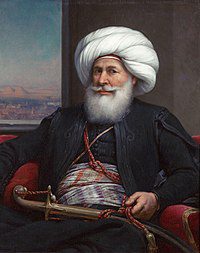
Mr. Home was a well-known personality at the time of Kardec. A powerful physical medium, Kardec attests to his moral integrity, his seriousness and his introspection in dealing with the subject. As for his fortune, there is no criticism, as it is something that only concerns him.

It is easy to see, by reading the article, that the departure of Mr. Home did not happen by chance, but by superior planning. Having ended up there for health reasons, he presented the "fatal blow" against the doubt that existed regarding spiritist manifestations - something very similar to what, years before, took place in the United States, as Ernesto Bozzano reports in " Spiritism and the Supernormal Manifestations”. Quoting Kardec,

France, still in doubt about the spiritist manifestations, needed a great blow to be dealt; it was Mr. Home who had this mission and the louder the blow, the greater its repercussion. The position, the credit, the enlightenment of those who welcomed him and who were convinced by the evidence of the facts, shook the convictions of many people, even among those who were eyewitnesses.

After commenting on some facts in the life of Mr. Home, evidencing the various indications that denote his seriousness and honesty, Kardec talks about the mediumship genre of this gentleman, very similar to those obtained by Jonathan Koons, as reported by Bozzano in the aforementioned work:

Mr. Home is a medium of the kind that produces ostensible manifestations, without excluding intelligent communications, but his natural predispositions give him a very special aptitude for the former. Under its influence the strangest noises are heard; the air stirs; solid bodies move, rise, transport themselves from one side to the other, through space; musical instruments produce melodious sounds; beings from the extracorporeal world appear who speak, write and sometimes hug us until they produce pain. He himself often found himself, in the presence of eyewitnesses, elevated, without support, several meters high.

Home's faculty does not exclude contact with Good Spirits. However, through the action of inferior spirits, he becomes a tool for the dissemination of Spiritism, a very valuable task, but not without dangers and tribulations, which he carried out with great resignation and perseverance.

The faculty of Mr. Home is innate and has manifested itself since his first months of life, when his crib rocked on its own and changed places. “In his early years he was so weak that he could barely sustain himself; sitting on the rug, when he couldn't reach the toys, they came within reach”. Kardec reiterates Home's nature:

If Mr. Home were, as those who judge without seeing claim, only a skillful juggler, he would, without the slightest doubt, always have magic ready in his bag. However, he is not the master of producing them at will. It would be impossible for him to give regular sessions, for often, at the exact moment when he needed his faculty, it might fail. Sometimes, phenomena manifest spontaneously, at the moment when least expected, while at other times it is not possible to provoke them, which is an unfavorable circumstance for those who want to make exhibitions by appointment.

Finally, Allan Kardec ends by mentioning an event that took place behind closed doors, spontaneously and without the various possible witnesses, other than his servant and a friend, a fact that demonstrates, in Kardec's eyes, that Mr. Home was not looking for a fuss and had no reason to deceive just two people.


Spiritist Magazine – Feb/1858 – Wandering or incarnate spirits

These are the states of the Spirit, which can be incarnated, that is, connected to a physical body, or in a wandering or erratic state, that is, in the interval between one incarnation and another.

To err, in this context, means “to be without the right direction”. It is clear that the Spirit has a course, traced by God, but, as he does not know this course from his imperfection, he only experiences the learning of improvement, he is said to err or that he is in a state of erraticity while he is free from matter, but waiting for a new incarnation.

Pure Spirits, of course, do not fit into this classification, as they no longer need to reincarnate, since they have, theoretically, covered the entire evolutionary scale.


Mademoiselle Clairon and the Ghost

https://kardecpedia.com/roteiro-de-estudos/20/revista-espirita-jornal-de-estudos-psicologicos-1858/4367/fevereiro/mademoiselle-clairon-e-o-fantasma

Kardec brings the story of an actress, written by herself, already in her 60s. In it, Clairon tells that a man who fell in love with her, after dying, began to haunt her for two long years – out of anger at her indifference.

She says that, day after day, and witnessed by many other people, including police officers, she began to suffer several very unique episodes:

  • Piercing screams under her window, almost every night, at 11 pm.
  • At a certain point, the screams turned into “rifle shots” that, although they did not materially hit anything, not even the windows, they promoted sound and light disturbances, believing whoever witnessed them was the target of a sniper.
  • Once, they would have been “hit” by a slap, delivered by the ghost:

“Accustomed to my ghost, who I considered a poor devil who limited himself to doing mischief, I didn't realize the time. As it was hot, I opened the bad window and, with the steward, we leaned over the balcony. Eleven o'clock strikes, the shot is heard and we are both thrown into the middle of the room, where we fall like dead. Coming back to ourselves and feeling that everything had passed, examining ourselves to see that we had both received - he on the left cheek and I on the right - the most terrible slap that could ever be applied, we laughed like madmen.

An anonymous writer commented attributing the reports to the girl's imagination, since everything would have happened at the time when "she was from twenty-two and a half to twenty-five years old, which is the age of inspiration and that this faculty in her was continually exercised and exalted by the way of life she led, in the theater and outside of it.”. The author follows: “It is also necessary to remember that she said, at the beginning of her memoirs, that in childhood she was only entertained with adventures of apparitions and sorcerers, who told her that they were true stories.”.

The unsigned comment seems to refer to the fact that Clairon demonstrated, in everything, that she was only exaggerating a fertile imagination. However, Kardec counters:

“We only know the fact through the account of Mademoiselle Clairon. Thus, we can only judge by induction. Now, our reasoning is the following: Described by the same Mademoiselle Clairon in its most minute details, the fact has more authenticity than if it had been reported by third parties. It should be added that when he wrote the letter where the fact is described, he was about sixty years old and, therefore, he had passed the age of credulity, of which the author of the note speaks. This author does not question Mademoiselle Clairon's good faith in relation to her adventure: he only admits that she was the victim of an illusion. That it had been done once is nothing extraordinary, but that it had been for two and a half years already seems more difficult to us. It is even more difficult to suppose that such an illusion was shared by so many people, ear and eye witnesses of the facts, including the police themselves.”

Kardec continues, saying that the report seems likely, but, as a good researcher, he does not accept it as absolute truth, since he could not analyze it more closely. Regarding the facts, we remember that no they are in disagreement with the spiritist teachings and the facts already known, such as those of different physical effects. In fact, we remind you that there are very serious studies on such facts, as reported and analyzed, very seriously, by the Spiritist researcher Ernesto Bozzano. We cite the works “Transport Phenomena” and “Spiritism and the Supranormal Manifestations”, recommending the reading, in addition to The Mediums' Book, which presents an important theoretical introduction to such phenomena.

Over the ghost, it is noted, says Kardec, that it is not a necessarily evil spirit, but a bottom (our word), full of passions and imperfections:

The violent passion under which he succumbed as a man proves that earthly ideas predominated in him. The deep traces of this passion, which survived the destruction of the body, prove that, as a Spirit, it was still under the influence of matter. His revenge, however harmless, denotes low feelings. If, therefore, we refer to our table of classification of spirits, it will not be difficult to determine its class: the absence of real evil naturally separates it from the last class, that of impure spirits, but evidently it had much of the other classes of the same order. , for nothing in him could justify a superior position.

Reading Suggestions

  • “Transport Phenomena”, by Ernesto Bozzano
  • “Spiritism and the Supernormal Manifestations”, idem
  • The Mediums' Book, by Allan Kardec


Isolation of heavy bodies

The movement imprinted on inert bodies by the will is today so well known that it would be almost puerile to report facts of the kind.

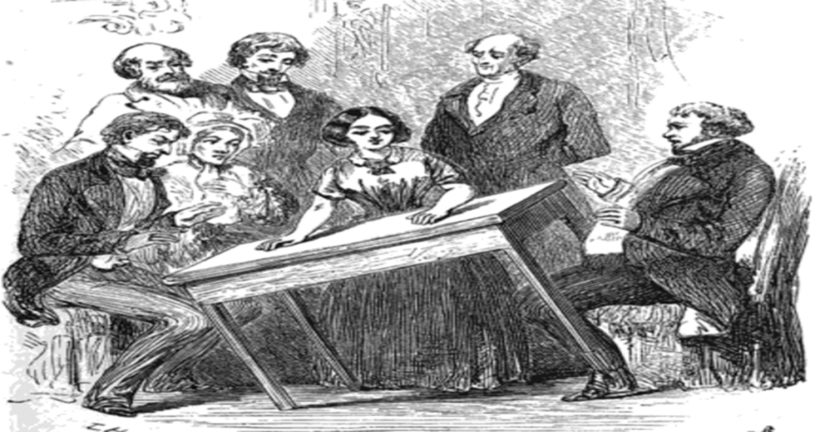
Kardec starts this article like this, saying something like this: “that tables can be lifted off the floor by psychic force, this is already a known fact”. Today it seems very strange to us to think this way. Because?

The phenomenon was already widely accepted – and studied

We need to understand that Spiritism emerged in the midst of the movement called Rational Spiritualism, adopted in France, mainly, as an opposition to the materialist movement and the old religions that enslaved thought. According to FIGUEIREDO, 2019, the Movement, “It is characterized by the adoption of scientific methodology, seeking to do with the human being what has been successfully achieved by studying the matter: the understanding of the natural laws that underlie it. In other words, it replaced blind faith with a rational faith, a requirement of the new times.”¹. 

At that time and in that context, the moral sciences studied everything born of human action, and that included the study of phenomena psychological¹ of magnetism and somnambulism, among many others. Well then: Spiritism, having been born in a so favorable, unfolded easily and, precisely because of this, quickly conquered countless adepts, among whom many, perhaps the majority, were educated, serious and dedicated to the sciences. All this to bring the relevant understanding that Rational Spiritualism was already concerned, before the birth of Spiritism, of “supernormal” phenomena, as Bozzano calls them, among which the magnetization of a heavy object, such as a table, which then moved and rose, against the laws of known of Physics, was a known and studied fact.

The psychological sciences deal with the natural laws that govern human nature. And these laws are of two kinds, the experimental or empirical, expressing the results of the experience of the human spirit as it is, and the others being ideal, representing the end towards which we must direct our faculties by means of evolution, or as such. they should be. The study of the human being in its real state is experimental psychology itself. (FIGUEIREDO, 2019)

Kardec, Mr Fortier and the turning tables

In fact, at this moment, we interrupted to return to Kardec, who tells about his contact with Mr. Fortier, known magnetizer:

It was in 1854 that I first heard of turning tables. One day I met Monsieur Fortier, whom I had known for a long time, and who said: Do you already know about the singular property that has just been discovered in Magnetism? It seems that it is no longer only people who can be magnetized, but also tables, making them turn and walk at will. – 'It is indeed very singular,' I replied; but, strictly speaking, this does not seem to me radically impossible. The magnetic fluid, which is a kind of electricity, can perfectly act on inert bodies and make them move'. The reports, which the newspapers published, of experiences carried out in Nantes, Marseille, and in some other cities, did not allow any doubts about the reality of the phenomenon.

Kardec, A., Posthumous Works, Rio: FEB, 1964. p. 237

It is noted that Kardec calmly accepted the phenomena in question, and the turning table was not his first contact with magnetism. However, shortly afterwards, a new episode will mark forever its history with the nascent Spiritism: 

Some time later, I met again with Mr. Fortier, who said to me: We have something much more extraordinary; not only do you get a table to move, magnetizing it, but also to speak. When questioned, she responds. — This now, I replied, is another matter. I will only believe it when I see it and when they prove to me that a table has a brain to think, nerves to feel and that it can become sleepwalker. Until then, allow me not to see in the case more than a story to make us sleep on our feet.” [emphasis ours]

ibidem

Returning to the article in question…

All of the above is for us to understand, rationally, the logic that led Kardec to so calmly accept isolation (and motion) of heavy bodies. He continues to make an analysis similar to the one made before Mr Fortier's account, when he said that the tables responded intelligently: if there is intelligence, there is an intelligent cause. Where, then, is this cause?

It is important to highlight, as Kardec demonstrates in the article, that we need to be very calm to analyze such facts and their reports, so that the overexcited imagination does not make the phenomenon seem like “magic”: to reach the lifting of a heavy body , it takes a lot of concentration and several attacks, with which the phenomenon seems to gain more and more strength, not happening in a snap of the fingers.

It is also noteworthy that Kardec mentions that the facts obtained “at Mr. B…” took place repeatedly, even without the contact of hands and in the presence of several witnesses, including those “very unfriendly” and who would not fail to raise suspicion if they had reason to do so. The same type of phenomenon also occurred easily in several other houses.

Reading Recommendations

To deepen the study, we recommend, in addition to the works “Transportation Phenomena” and “Spiritism and the Supranormal Manifestations”, by Ernesto Bozzano, the study of The Mediums' Book, where, in chapters I, II, III, IV and V of the Second Part, an extensive theoretical approach on the subject is carried out.

We also recommend the book “Autonomy: the untold story of Spiritism“, by Paulo Henrique de Figueiredo


  1. That is why the Spiritist Journal is called “Journal of Psychological Studies”, in perfect agreement with the understanding of the moral sciences in the historical and social context of Allan Kardec.
  2. FIGUEIREDO, Paulo Henrique de. Autonomy: the untold story of Spiritism, 2019, editor FEAL


The Forest of Dodona and the Statue of Memnon

Kardec begins this article by contextualizing the reader in the environment of a room, as in countless others, where the phenomena occurred typological so common at that time. Removing the possibility of fraud, knowing the environment in which he found himself, in order to look for valid hypotheses for the cause of these phenomena, he continues to unfold a logical and rational sequence of ideas, in order to demonstrate the need to never accept any idea, positive or negative, blindly:

A young bachelor's student was in his room, studying points from his Rhetoric exam, when there was a knock on the door. I think everyone admits that it is possible to distinguish the nature of the noise, and especially in its repetition, whether it is caused by a crack of wood, by the stirring of the wind or by some other fortuitous cause, or if it is someone knocking, wanting to enter. In the latter case, the noise has an intentional character, which cannot be confused. That's what our student thinks. However, in order not to be unnecessarily bothered, he wanted to make sure, putting the visitor to the test. If it's somebody, he says, knock once, twice, three, four, five, six times; tap high, low, right or left; beat the musical time; ring the military call, etc., and to each of these requests the noise obeys with the most perfect exactitude. Surely, he thinks, it can't be the crack of wood, or the wind, or even a cat, no matter how clever. Here's a fact. Let us see what consequences the syllogistic arguments will lead to.

Thus, he made the following reasoning: I hear a noise, therefore, it is something that produces it. This noise obeys my orders, therefore, the cause that produces it understands me. Now, what understands has intelligence, therefore the cause of this noise is intelligent. If it's intelligent, it's not the wood or the wind; if, then, it is not the wood or the wind, it is someone. Then he went to open the door. Let us see that it is not necessary to be a doctor to reach this conclusion and we believe that our future bachelor is sufficiently attached to its principles to conclude as follows:

Suppose that when he opens the door he finds no one, and that the noise continues exactly as before. He will follow his sorites¹: “I have just proved to myself, without question, that noise is produced by an intelligent being, since it responds to my thought. I always hear that noise in front of me and it's certain that it's not me who knocks, so it's someone else. Now, if this other one I don't see, of course he's invisible. The corporeal beings that belong to Humanity are perfectly visible. This knocker, being invisible, is not a corporeal human being. Now, since we call incorporeal beings spirits, he who knocks, not being corporeal, is therefore a spirit”.

Although Kardec made a simplification, as he did not address the need to look for possible hidden causes responsible for the “knocking on the door” (which he always sought to do), a very clear and simple line of logical thoughts is evident that, if followed, it would make many stop falling into contradictions and denials in face of what is so clear and evident.

It was in this way, when the phenomena of typtology, that answers were obtained about the questions made to the Spirits: through blows, in a defined shape or number, letters, numbers, binary answers, etc., were indicated, in addition to, for a more developed, they often indicated, by a particular sign, that they wanted to write; “then the writing medium would take the pencil and transmit his thoughts in writing”.

Among the attendants, not to mention those around the table, but of all the people who filled the hall, there were genuine unbelievers, half believers and fervent believers who, as is well known, constitute an unfavorable mix. The first ones, we leave them at ease, waiting for the light to shine for them. We respect all beliefs, even unbelief, which is a kind of belief, when it is respected enough not to shock opposing opinions. So, then, we will not say that his observations are useless. His reasoning, much less verbose than that of our student, can generally be summarized as follows: I don't believe in spirits, therefore, they cannot be spirits, and since they are not spirits, it is a trick. Such an assumption leads them to admit that the table would have a mechanism, in the manner of Robert Houdin.

Kardec cites the assistants, or witnesses, highlighting those who were convinced that everything was a farce, presenting their logic of thought. The answer follows:

First, it would be necessary for all tables and all furniture to have machinery, since they are not privileged; second, no mechanism is known to be sufficiently ingenious to produce at will all the effects just described; Third, it would be necessary for Ms. B… had purposely prepared the walls and doors of his apartment, which is unlikely; fourthly, finally, it would have been necessary to prepare the tables, the doors, the walls of all the houses where similar phenomena occur daily, which is also not to be assumed, because then the skillful builder of so many wonders would be known. .

It can be seen that they do not want to take the path of a bachelor's degree and, in advance, they have already decided to discredit.

We also have the “half-believers”, to whom Kardec recommends returning to the arguments of the future bachelor.

And, among believers, there are still three nuances, three other types of believers: the curious, who do not take moral advantage of the phenomena in question; the learned and serious, who do; and blind faith believers, who believe in the table as they would in a oracle (priest in charge of consulting the deity and transmitting his answers), without reflecting on his answers, accepting them without submitting them to the sieve of reason and agreement.

Ending the article, Kardec goes back twenty-five centuries in the past, in the sacred forest existing in Epirus (Greece), where the oaks preferred oracles and where, adding “the prestige of the cult and the religious pomp”, it is easy to understand the veneration of an ignorant and gullible people. The hissing of the wind between the leaves, the sounds emitted by the statues and other phenomena, when true, were the beginnings of spiritist communications which, however, were taken as absolute truth and blindly followed.


  1. Logic or reasoning composed of a series of propositions linked together in such a way that the predicate of one becomes the subject of the next, and so on until the conclusion, which has as subject the subject of the first and as predicate the predicate of the last previous proposition. the conclusion.


Lectures from Beyond the Grave – Miss Clary D… – Evocation

Noteworthy, the article in question, which we decided to approach in an anachronistic way, that is, out of the original order, brings some interesting themes, in lecture with the Spirit of Miss Clary, who died at the age of 13 and who became the genius, that is, the protective Spirit of the family. Among them, there is his reincarnation, without a defined date, in another world, the sensation of the body, caused by the memory, the displacement of the Spirit through space, with the speed of thought, the intrinsic question of the perispirit in this displacement and, finally, , the outcome of the article, when, when asked if they could see, there, her “body” (perispirit) as it is currently, they are answered that, for that, it would not depend on her, but on them, under the following conditions: “you retire for a time, with faith and fervor; to be outnumbered; isolate themselves a little and get a medium like Home”.

Understanding now that Mr. Home was a powerful medium of physical effects, donor of the fluids necessary for such phenomena, we understand very well the reason for this need.


Our considerations on material phenomena

We think it is important to highlight our own considerations about material phenomena, since they still raise many doubts and discredit, especially after Spiritism has gone through almost 150 years of misrepresentations and false understandings.

Material phenomena still exist, just as the mediums who produce them still exist, this is logical. However, we believe that such phenomena, today, may not have so much expression because, when they occurred, they were motivated to draw attention to spiritist phenomena, which, some claim, is no longer needed today.

This is one way of seeing. The other would be that these phenomena only diminished after the development of Kardec's studies because, then, they were no longer necessary, since it was much easier to communicate through psychography, mainly, than through blows. But even then, these phenomena did not stop completely, as we can see with the example of Mr Home and, later, with the example of the well-known medium Eusápia Palladino, studied by Cesare Lombroso with great seriousness and dedication.

Now, as Spiritism has been so misunderstood over time and methodological studies have been forgotten in the past, leaving room for mystifications and the unbridled growth of materialism, even among spiritualists, we ask: would such phenomena not come today? bring attention again to the spiritist facts? We dare not answer categorically, but only recall the several reports that are put to our eyes every day, in the various groups on the subject, on social networks, and about which, for the moment, we only highlight: “what if?”


the avarice

Moral dissertation dictated by Saint Louis to Madame Ermance Dufaux, on January 6, 1858

The dissertation in question has a moral nature and, therefore, requires the analysis and reflection of each one, individually.

However, we note the reflection made by Kardec at the end, because the Spirit of Saint Louis speaks of eternity of suffering, “when all the superior spirits are in agreement in combating such a belief”. It turns out that he ends up saying: “to punish you, God wants you to BELIEVE him”, which is the same thought presented in the general characteristics of Third Order Spirits, in The Spirits' Book.

“[…] the more imperfect the spirits, the more restricted and circumscribed their ideas. For them the future is vague, and they do not understand it. They suffer; his sufferings are long, and for one who has suffered for a long time, that is to suffer forever. This thought alone is a punishment.”


Yellow September: Spiritism and suicide prevention

[This article was originally created by the passage of Yellow September 2021, but extends to all possible moments]

In a century of despair, where society experiences materiality in an exaggerated way, perhaps like never before; where ancient dogmas and the imposition of fear no longer have any effect, discredited as they are by the development of science and reason; where, finally, the human being abandons life and its sufferings sweetened by the false conception that, after death, there is only “rest in peace”, Spiritism comes, once again, to show the essence of its doctrine, presenting, to individuals, the reality of life and a new way of facing it, with more determination and austerity. In the prevention of suicide, Spiritism is the most powerful tool in existence..

What is suicide in the understanding of Spiritism

Suicide, in itself, is just the extreme act, almost always desperate, often caused by human passions, led to the thoughtless act of crime against life itself. But it begins earlier, much earlier, with the first urges of giving up in the face of life's difficulties. We are still imperfect Spirits and, without a strong base, without a buoy to hold on to, we easily sink… And it is precisely this base that the Spiritist Doctrine comes to give us, no longer as an article of faith, as something imaginable, only, but by the evidence of the spiritist phenomena and the communications of themselves, the Spirits, already freed from the matter.

Where, then, will we find this lifebuoy, in the midst of the sea of pain?

Nothingness, dogma and reason

The Catholic dogmas of the time stated, on this subject, that the individual who committed suicide would suffer eternally in hell; now, between suffering here and suffering in hell, in the minds of many, the difference would not be great, since many already imagined themselves with a “foot in hell”, because they already believed themselves to be sinners. Taking one's own life wouldn't change much, they thought, but at least it would free them from their present pain. We see that dogma was no longer sufficient to fill the human void.

Materialism, on the other hand, claimed that man was just a biological machine, a slave to the senses and wills. Taking one's own life, then, to end any suffering, often without explanation, would be the best way out, from this point of view – a doctrine of terrible theories and disastrous consequences:

Every man feels the need to live, to enjoy life, to love, to be happy. To a person who knows that he is about to die, let it be said that he will still live, or that his time has been postponed. Tell yourself, above all, that she will be happier than ever, and her heart will flutter with joy. But what good would such aspirations of happiness be if a light breath could undo them?

[…]

Is there anything more desperate than the idea of absolute destruction? Sacred affections, intelligence, progress, knowledge laboriously acquired, all would be undone, all would be lost! What is the need for the effort to become better, to repress passions, to enrich our spirit, if we are not to reap any fruit from it, especially given the idea that tomorrow, perhaps, it will no longer serve us for anything? If that were so, man's lot would be a hundred times worse than that of the savage, who lives entirely in the present, in the satisfaction of his material appetites, without aspirations for the future. A secret intuition tells us that this is not possible.

Allan Kardec, Heaven and Hell

Before Spiritism, the afterlife was just a vague thing. We knew that we “had” a soul (better saying, we are a soul, linked to a body) but the kind of difficulties to be faced by it after death was something totally unknown, being treated only in a dogmatic way and, even when removed from the dogma, was more a philosophical than a factual concept.

The Spiritist Science comes to bring light through the rational study of the facts

With the birth of Spiritism, however, the concept of soul it was complemented and expanded through the study of the phenomena resulting from our relationship with the Spirits, who showed themselves to be human souls, but disconnected from the body.

This was a landmark that, one day, will be in human history, as it is already found, today, in the spiritist history, because it brought to man the certain that life does not really end in the tomb, nor does it begin at conception, but that it transcends the limits of matter, in successive incarnations, with the aim of learning and elevating itself, always, until it no longer needs matter, when the Spirit becomes pure or perfect.

Through communications with the Spirits, mediated by mediums, especially mechanical psychographers (see more about this in The Mediums' Book, in Part Two), Allan Kardec obtained the most valuable teachings about the future of the soul, after disincarnation. And that was how, after some years of studies, he formulated the work O Céu e o Inferno, where he deals in a philosophical way, in the first part, and in a practical way, in the second, about the biggest problem of humanity: who we are, where we came from and where are we going and why and what are we here for.

Heaven and Hell: the fate of the Spirit after the death of the body

In this work, impossible to be summarized, in the second part, we find some depositions of Spirits of various evolutionary shades - among them, that of some suicides. And reading, although difficult, is very important, because we learn from them about the effects of their actions. In Revista Espírita, from 1858 to 1869, we also find several reports of evocations of suicides, which tell us about their difficulties and the effects of their actions. From them we take the following extract:

Each situation is one, because each Spirit is one, with its intelligence, its evolution, its understanding, its conceptions and its moment. There are suicides who claim to suffer physical pain after death (which, in fact, is an externalized moral suffering, since the Spirit does not suffer materially); there are spirits who say they find themselves in a hellish situation, which can be just a mental picture as it can also be a “reality” lived with other suffering spirits, who are grouped by their mental state; there are spirits who realize that they made a mistake by taking their own life, in an unthinking act; and there are even, although they are rare, those who, at first, are content with having left life, only to later understand that this has been of no use to them and that they will have to reincarnate again, in the same kind of incarnation, in order to to continue their tests.

There is, therefore, this correlation that many make, that the suicidal person will suffer feeling the worms gnawing at his body or that in the next life they will be reincarnated in deformed bodies, nor that everyone will go to the famous “suicide valley”, which is nothing more. than one of the infinite groupings of Spirits in suffering and that, due to their disturbed mentality, create true infernal regions. Each case is different. The only certainty, I repeat, is that suicide will only prolong the state of suffering that is being imperfect and having to deal with these imperfections through reincarnations in gross matter and among Spirits as imperfect as we are, or more.

More than that, however, it is very important to understand the Spiritist Doctrine in its essence, from which we take the following:

In life, we have two kinds of suffering: those caused by ourselves, by our carelessness, by our impatience, by our addictions, and those that we do not cause in this life. The first can be avoided by an interior reform, by correcting our imperfections. The second, however, compose the types of difficulties that are part of a reincarnation planning, carried out by ourselves, with a view to making us learn, in difficult tests and, thus, to correct our imperfections, helping us to make less mistakes and to advance. more quickly.

So, so far, we have three very important points:

  1. Killing the body does not kill the Spirit, nor does it eliminate pain. moral that make us suffer. It often increases it and always prolongs it.
  2. Faced with the difficulties caused by ourselves, by our imperfections, only an internal correction will make us stop creating these difficulties that often bring us so much suffering.
  3. Faced with the difficulties brought by life and which are not the result of our current actions, we need to understand that it is a very great opportunity for our learning, planned by ourselves, as Spirit, and that we need to get something good out of it, taking advantage of the opportunity sore to look inside ourselves and change ourselves with even more energy and persistence.

Life, after all, is not a punishment. We are not here to pay anything, but to develop ourselves., and it is only through the exercise of this development, of getting rid of our imperfections and of conquering virtues, that we will reach a real state of happiness, each time greater.

Suicide and our relationships with Spirits

We know, however, that we are not always ready to deal with the difficulties that come our way, so it is very easy to allow ourselves to get depressed. It is at this moment that we need to be very attentive, because, let us remember, this despondency does not usually come only from within us, but often – almost always – is fed and augmented by Spirits who do not wish our good.

We know that Spirits are around us all the time, and that they are attracted to us as we are in our raw, inner reality. So, because of our imperfections, which we often we like to cultivate, we start to attract inferior spirits who start to get attached to us and feed the cultivation of these imperfections. Over time, this relationship can become obsessive, to the point where we find ourselves subjugated by the will of one or more inferior spirits, who start to command our actions. This is a dangerous state that also leads us to have suicidal thoughts and, in extreme cases, can inactivate our ability to act on our own will, and a firm will is the main tool to overcome spiritual obsessions.

In these cases, it is important to seek external support, as we often find ourselves in a state of subjugation that takes away our ability to reason and have a firm will. This help can be found in several ways – see, at the end, the section “Tools for overcoming depression and thoughts of giving up“".

the passions

Here another important aspect arises in this matter: the question of passions, which Kardec always cited in his time, and which today can be understood as “feelings”.

By definition, passion is a term that designates a very strong feeling of attraction to a person, object or topic. Passion is intense, enveloping, an enthusiasm or a strong desire for something. The term is also often applied to designate a lively interest or admiration for an ideal, cause, or activity.

In the state of experiencing the passions, the individual is blind to rationality and, in this state, how many cases of suicide have been committed without thought? How many communications were there, with which we have already had contact, from the Spirit who, soon after performing the act, deeply regretted the thoughtlessness of what he had done? Taming the passions, therefore, is something of paramount importance. Kardec defines it like this, in A Genesis:

Instinct annihilates itself; passions can only be tamed by the effort of the will.

And today, finally, with access to the Spiritist Doctrine, we can strengthen the will through reason, that is, we can develop more firmness and calmness to go through the trials of life, knowing that our future happiness depends on it, and that interrupting our life before time will not end any moral suffering, but will only prolong it.

In this situation, therefore, let us seek help: let us seek a psychologist, let us seek the spiritist center, let us seek a good friend, let us seek prayer, calm music, reading and the practice of the Gospel, let us seek to visit a nursing home to talk to the elderly, in short, Let's look for something that makes us feel good, but let's look for it with determination and persistence.

But, above all, let us seek something very special and important: to study and practice Spiritism in our homes, together with our family, because while the individual is supposed to be a passive machine, hostage to body chemistry, without soul and, therefore, without free will, he will only respond mechanically to everything and, in the face of pain, he will find the only result that emanates from it, albeit false: the machine is turned off, the pain ends.

To understand Spiritism is to understand life

It is only with the return and development of the understanding of the concept of a soul that survives the death of the body and that it always advances towards perfection, improving and correcting itself through successive trials and opportunities, and away from the old and wrong concepts of sin. and punishment by a vengeful and cruel God, that suicide will cease to exist on the face of the earth.

Life does not end in the tomb and the soul, freed from the body, only finds its reality even more exacerbated. It is precisely this reality, which leads her to give up, that she needs to lean over, without ceasing, in order to strengthen herself; but, I repeat: this will never happen as long as, in the body, one assumes only a machine, a slave to the chemistry of the senses.

And let's not forget. God does not leave us abandoned in the difficulties of life and does not give us greater burdens than we can bear. It is because of our actions or the way we face these difficulties that we often increase the weight of this burden until we fall to the ground, under a weight beyond what was programmed. Still, it is possible to recover and move on if we want to: just ask God for help and it will come, in one form or another, to help us lessen the extra weight we carry. Let's be careful: this help comes through an unexpected contact, a gifted book, content that a friend suggests or even through a persistent thought so that we look for certain content on the Internet. It's the way God answers us, but we need to be open to it.

Finally, of course: if you notice someone by your side with the slightest traces of depression, constant sadness, discouragement, withdrawal, etc., be charitable and talk to her, with all the affection, all the fraternity and all the attention possible. Tell her about your certainty that life doesn't end at the grave. Tell her that she is not alone and that life's difficulties, which we all have, are necessary tests for our own learning, almost always requested by ourselves. This could save a life.

Tools for overcoming depression and thoughts of giving up

Here, we are going to list some tools that will be more or less useful for some and for others, according to the thinking and state of each one. Analyze and stick with what makes you feel good:

  • Psychological help: This is substantial and necessary support in these cases. The professional therapist will be able to provide support that almost no one will be able to, helping you to understand content and pain that you don't even realize, but that are there, disturbing you.
  • Gospel at Home: it is a practice that has been very prominent, and which aims to reflect, in the light of the Gospel According to Spiritism, on our own faults and imperfections, seeking to change ourselves. In this sense, a content that I really like and that has already helped me is the Gospel of the Spiritist Center Land of Ishmael.
  • Study of Spiritism: acquiring knowledge is extremely important for our faith to be unshakable and for us to become more austere and decisive to face difficulties. Study Kardec's works!
  • Attending a spiritist center: although the experience of Spiritism must be something internal, having the fraternal support of a spiritist center can be very important. Look for someone close and where you feel good and welcomed.
  • Practice activities in order to socialize and disconnect a little from the disturbing thought or environment. Assistance activities, for example, help a lot, because when we do good to others, we do ourselves.
  • Practice sports and try to seek a healthier life, as we cannot forget that, while incarnate, we are influenced by the body's ailments.
  • Do general exams, verifying that you are not having health problems, including vitamin and hormonal deficiencies, which commonly cause states of shortage and depression.
  • don't cover yourself too much, for this causes disappointment and bitterness. We know we need to improve ourselves, but it's no use wanting to become an angel overnight! Evolution is made in decisive and constant steps, but millimeter by millimeter. We will stumble many times in this process: so don't let yourself get discouraged. Recognize yourself as an imperfect Spirit, get up, beat the dust and get back on your way.
  • Practice prayer at all times when you feel any anguish. Do not repeat words in a memorized way, however: make this prayer come from the bottom of your heart, connecting it to God, and don't forget that none of us are abandoned in life: on our side, seeking to help us, we always have our Spirits protectors or guardians.
  • Be aware of the opportunities that “life” (the good spirits, in fact) present to you: a good book recommended by someone, an invitation to a study group, participation in a spiritist center, in short, the good opportunities that life offers us. presents and that it is up to us not to be resistant to them.


Spiritist Scale: how Kardec classified the Spirits

Allan Kardec, under the guidance of superior spirits, classified, in decreasing character of moral value and intelligence, the spirits in general as follows. Get to know the spirit scale:

3rd ORDER OF IMPERFECT SPIRITS ACCORDING TO THE SPIRITIST SCALE

It starts from 10th grade and goes up to 6th grade. Follow below:

2nd ORDER: GOOD SPIRITS

Includes Spirits from 5th class to 2nd class:

1st ORDER – PURE SPIRITS

It is the sublime class that encompasses the Pure Spirits:

Check out the group's archives for more information on our work. Click here.

Also check out our Facebook page. Click here.