In this September 1858 edition of RE, Kardec presents the case of Louis G., a shoemaker officer, who seven or eight months earlier had committed suicide at the door of his girlfriend, Victorine R., who was a seamstress of boots.
Once, Victorine R. and Louis G, who were already engaged, got into a deep argument for a trivial reason, to the point that Louis got up and promised never to return.
Internet Image
The next day, from cold head, the boy went to apologize, but was unsuccessful: Victorine R. refused to reconcile, despite her despair.
After a few more days, thinking that his beloved would be reasonable, Louis went to try again to apologize, to which he was again rejected. At his beloved's door, he said to her: "Then farewell, you wicked one!" finally exclaimed the poor boy, “Farewell forever! Find a husband who wants you as much as I do!” – and plunged his shoemaker's knife into his chest, exhaling right there.
This article on the history of Louis G and Victorine R. appeared in Siècle on April 7, 1858.
Seeking to obtain moral teachings about the fact, on August 10, 1858 Kardec evokes São Luís:
1. ─ Does the girl, the unintentional cause of her boyfriend's death, have responsibility? ─ Yes, because I didn't love him.
Comment: This answer causes initial strangeness. Is anyone to blame for not loving someone else? Let's understand.
2. To avoid this misfortune, should she marry him, even though she did not love him? ─ She was looking for an occasion to part with him; did at the beginning of his call what he would have done later.
Comment: Here, St. Louis is saying that, sooner or later, she would separate from him, because, we understand, she didn't really love him.
3. ─ So the guilt consists in having nourished in him feelings that he did not share and that were the cause of the boy's death? ─ Yes. That's it.
4. In this case, your responsibility must be proportionate to the fault, which must not be as great as if it had intentionally caused death. ─ This is obvious.
Comment: Her “guilt” wasn’t so great because she didn’t actually want the other person’s misfortune. He just fed something that caused him suffering.
Observation: Remembering that "guilt" here is not something before an external judge, but before your own conscience. After all, it can be assumed that, since that moment, she must have carried some feeling of guilt because of the misfortune that happened to the boy.
5. Did Louis G.'s suicide find justification in the frenzy into which Victorine's obstinacy plunged him? - Yes, because his suicide, provoked by love, is less criminal in the eyes of God than that of a man who wants to get rid of life out of cowardice.
Comment: Here, when we talk about “crime in the eyes of God”, we need to understand that it was a neologism of the time. The “crime” is to impose a waste of time, perhaps with a great accumulation of suffering, due to the unconquered test. It is also important to remember two aspects: the first is that St. Luís is a Spirit who was, in his life, Catholic. The second is that, even if he doesn't bring concepts from Catholicism, he spoke as they could understand him.
Observation: By saying that this suicide is less criminal in God's eyes, evidently means that there is criminality, although less. The fault consists in the weakness that he did not know how to overcome. It is undoubtedly proof that he succumbed. Now, the spirits teach us that the merit lies in fighting victoriously against trials of all kinds, which are the essence of earthly life.
Here we have two problems to discuss. The first is to reinforce the knowledge brought by Spiritism, which presents its conclusions, without the intention of creating fantasies that try to subjugate through fear. Suicide, seen by many as something that will throw the soul into hell - whatever name is given to it - and even cause it to be born with deformations in the next life, in reality has different effects, depending on each being and each individual. situation.
Secondly, in no way is Saint Louis saying that suicide for love is a good thing: it is only more excusable, before one's own conscience, because it is practically a state of madness, whereas one who kills himself to escape life he almost always does it on his own, and it will cause him greater suffering when he discovers the truth.
Days later, Kardec evokes the Spirit of Louis G., the suicide, asking him the following questions:
1. ─ What do you think of the action that you performed? ─ Victorine is ungrateful. I was wrong to kill myself for her, because she didn't deserve it.
2. ─ So she didn't love you? ─ No. At first she thought so, but she was deluded. The scene I made opened his eyes. Then he was happy with this excuse to get rid of me.
3. - And did you love her sincerely? ─ I had passionfor her. I believe it was just that. If I had loved her with pure love, I wouldn't have wanted to hurt her.
4. ─ If she had known that you really wanted to kill yourself, would she have persisted in refusing? ─ I don't know. I don't think so, because she wasn't evil. However, it would have been unfortunate. It was better for her.
We see that this Spirit reached an important conclusion, seeing that it killed itself for a passion. He understands that if he really loved her, he wouldn't have wanted to hurt her, that is, he wouldn't have committed an act so terrible as to shock her feelings so much.
Passion is a term that designates a very strong feeling of attraction to a person, object or topic. Passion is intense, enveloping, an enthusiasm or a strong desire for something. The term is also often applied to designate a lively interest or admiration for an ideal, cause, or activity. In the 19th century, psychology called passions what we now call emotions.
Who knows, in a new incarnation, a spirit like the one who committed suicide, for having found this lucidity, instead of planning a life of suffering as a form of punishment, could not choose tests and opportunities precisely to give himself the chance to learn to get rid of the passions, which often cast us into disgrace? How many murders, by the way, take place not out of hatred or evil thoughts, but simply by passions (today calls emotions)?
Continuing with the account of the evocation of the suicidal Louis G.:
5. ─ When you arrived at your door, did you have any intention of killing you, if you were refused? ─ No. Didn't even think about it. I didn't think she was so obstinate. It was only when I saw your stubbornness that I was taken by a vertigo.
6. ─ It seems that you only regret suicide because Victorine didn't deserve it. Is it your only feeling?─ Right now, yes. I still feel disturbed. It seems to me to be at your door. But I feel something I cannot define.
7. ─ Will you understand later? ─ Yes, when I'm free... What I did was bad. I should have left her alone… I was weak and I suffer the consequences… As you can see, passion drives man to blindness and to make absurd mistakes.. He only understands when it's too lates.
8. ─ You said that you suffer the consequences. What penalty do you suffer? ─ I made a mistake by shortening my life. I shouldn't have done it. It should resist instead of ending everything prematurely. […]
Comment: he doesn't say that he was being gnawed by worms, nor that he was in a hellish region, nor that he was attached to the body, anything like that. In the disturbed state in which he found himself, his mind became attached to the fateful scene, the origin of his present moral sufferings, and it was in this that his thought became trapped. Well, we ourselves do this incarnate, every day.
Here we have confirmed the state of “madness”, driven by passions, into which this man entered, who killed himself in a thoughtless act. How many suicides of this kind are there? They would be numbered in the thousands, if something was publicized. Unfortunately it is not. These suffer, as the Spirit of Louis G. suffered, because they understood that the thoughtless act cost them time and imposed suffering on others. Hence to say that this will lead them to spend years dragging themselves in the "valley of suicides" or that they will bring physical changes to the new incarnation because of this guilt, there is a great distance.
If you think about it, he doesn't even want to kill himself. it was an act of rage at the time. And we think that we should pay a lot of attention to the teachings of this article, because it is a global problem in our current society. The number of suicides has increased a lot. We see here the how urgent is it tame our passions.
Note: This account by Louis G. appears in the Book Heaven and Hell by Allan Kardec.((1)) Book Heaven and Hell by Allan Kardec, Editora FEAL, 2021, second part, chapter. V, pg. 337, the subtitle: Louis and the Shoe Seamstress.
Was Jesus ever as imperfect as we are?
Why, of course! Jesus was neither a demagogue nor a hypocrite when he called us “brothers”. He demonstrated that he was like us, an evolving Spirit.
This is a fundamental postulate of the science of Spirits: all of us, without exception, were created simple and ignorant and, from there, we followed the path of evolution. When and where, only God knows. Since God is the sovereign justice and Love in essence, he could not create privileged, full and evolved creatures, while creating others to suffer. This is a very ancient dogma taught mainly by the Roman Church, which we will not go into, given the extent of its discussion.
Everything that is exposed here is abundantly postulated in Kardec's works, with great clarity and rationality, and it is possible to find the necessary bases already in The Spirits' Book.
The fact that we highlight here is that nobody evolves in a straight line towards God. This is a false concept. The evolution of any Spirit goes through the same steps, passing through all kingdoms, including that of the animal, and then, upon entering the realm of consciousness, acquiring free will, that is, the ability to choose.
However, how can the Spirit choose in the face of a situation it has never faced before? It's impossible. He acts, obtaining a result that can be a mistake or a success. So, the next time you face the same situation, having already some knowledge of the result according to your way of acting, you can choose to act the same way again, or you can try to act in another way, which can make you right or wrong again.
While the Spirit is trying, it's making progress. The error that is born of the attempt is not a sin, but only an error. He is not committing evil, but good, for he had no basis for his own judgment on how to act. It's how much he spends choose act wrong, for whatever reasons, that the mistake becomes a habit and then becomes an imperfection.
Kardec, in A Genesis (chapter III), concludes:
“He who does not control his passions can be very intelligent, but at the same time, very bad. Instinct annihilates itself; passions can only be tamed by the effort of the will.”
However, that chapter ends here, in the 5th edition of this work, which, today we know, has strong indications of having been tampered with. Taking the 4th edition, we have the following closing, VERY IMPORTANT:
All men go through passions. Those who have overcome them, and are not, by nature, proud, ambitious, selfish, spiteful, vindictive, cruel, wrathful, sensual, and do good without effort, without premeditation and, so to speak, involuntarily, it is because they have progressed in the sequence. of their previous existences, having rid themselves of this uncomfortable weight. It is unfair to say that they have less merit when they do good, compared to those who fight against their tendencies. It turns out that they have already achieved victory, while the others have not yet. But when they do, they will be like the others. They will do good without thinking about it, like children who read fluently without having to spell. It is as if they were two sick people: one cured and full of strength while the other is still recovering and hesitates to walk; or as two runners, one of which is closer to the finish than the other.
Therefore, Jesus also went through the same path, including wrong and right. He is just a Spirit that has already run the entire scale, while we are still at the beginning of it, making efforts to get out of the third order of the classification of the Spirit Scale. Today, if a Spirit at the beginning of its life could evaluate us, we would think that we are demigods and would judge how wonderful the few deeds we can perform.
Far from this thought lowering Jesus, it elevates him and, at the same time, gives us hope, as it demonstrates that a Spirit who has already walked this entire path of evolution, through a free gesture of kindness and charity, has returned to teach us. One day we will be working with him, but let's not forget that, from now on, we can also make a difference in people's lives, without expecting anything in return.
Does the Spirit retrograde or “involve”?
No, Spirit never retrogrades. It always goes forward, sometimes it stops, but it never goes back. If it returns to appearance, as in the case where it no longer fits into the moral evolution of a population and will incarnate in another, more backward civilization, it is because it has not yet advanced morally, in fact.
God creates us simple and ignorant. During the first steps of our evolution, we have no conscience, but only instinct, which is from the Law of God and, therefore, is good by definition. The lion that kills the zebra does not do evil, but good, for he is responding to instinct.
Further on, when we enter the realm of consciousness, we conquer free will, that is, the ability to choose. With it, we start to TRY and, from the attempt, mistakes and successes are born. The one who errs trying, is not doing evil, but good, because he is following the laws of God. Evil consists only when the individual starts to err by will, thus cultivating imperfections. When creating an imperfection, the Spirit will suffer on account of it, for more or less time, until it realizes the harm it does to itself, repents and honestly wants to overcome this imperfection, through atonement.
That is why, in Kardec's works, more than once the Spirits used the expression "will be doubly punished": it does not mean that God will punish him more or less - because God does not punish - but that, after acquiring an imperfection , the Spirit will spend a lot of time trying to get rid of it.
Rational Spiritualism and Paul Janet's Treatise on Philosophy
During the nineteenth century, what we call the human sciences were established from a spiritualist assumption for their constitution. Meanwhile, in the natural sciences, such as Physics and Chemistry, materialism predominated. This condition is very different from what we are used to today, when the university is almost completely guided by materialistic thinking.
This current of thought was known as rational spiritualism. For it was completely independent of formal religions and their dogmas. The fundamental basis was psychology, science of the soul, which had as a guideline: “The human being is an incarnate soul”.
As is explained at length in the book Autonomy, the untold story of Spiritism, Allan Kardec made psychology the conceptual basis for developing the Spiritist Doctrine. His monthly newspaper was the Spiritist Magazine, journal of psychological studies.
Rational Spiritualism was taught since 1830 at the University of Paris, also at the Ecole Normale, where teachers were trained, and also at the Lyceums, in the education of young people. For these, there were manuals, like Paul Janet's. This manual has been translated into several languages and adopted in many countries, including Brazil.
This manual is of fundamental importance to understand the conceptual basis of Kardec's studies, especially regarding spiritist morals.
The first division of the sciences, presented in the treatise on philosophy, by Paul Janet, work in two volumes, which can be downloaded here, according to the structure in force in Sorbonne University, in the 19th century, was between:
a) The exact sciences or mathematics.
b) The natural sciences, which study the objects of the physical world (physics, chemistry, biology, etc.).
c) The moral sciences, which study the moral world, which comprises the actions and thoughts of the human race.
The moral sciences, in turn, were divided into four groups:
1) The philosophical sciences, divided into two classes: psychological (psychology, logic, morals, aesthetics) and metaphysical (theodicy, rational psychology, rational cosmology).
2) The historical sciences (history, archeology, epigraphy, numismatics, geography) study human events and development over time.
3) The philological sciences (philology, etymology, paleography, etc.), whose object is language and human symbolic expression.
4) The social and political sciences (politics, jurisprudence, political economy), which study the social life of human beings (JANET, 1885, p. 15-17).
The last three classes of the moral sciences (historical, philological and social) deal with moral facts or phenomena that are external to the human being, seen from the objective point of view. But, considering the human spirit “the set of the intellectual and moral faculties of man, such as they manifest themselves internally in each of us”, everything that concerns the I, an interior principle conscious of itself, is the subjective point of view, or “study of the soul itself” (JANET, 1885, p. 17). Hence a group of sciences called psychological sciences. They adopt the methodology of introspection and were a development of the scientific school started by Maine de Biran. However, to support the psychological study from a spiritual perspective, the conceptual bases of this paradigm needed to become an object of research, comprising a science of man (human spirit) and a science of first causes, or metaphysics. These are the objects of the philosophical sciences.
See more details at work Autonomy, the untold story of Spiritism.
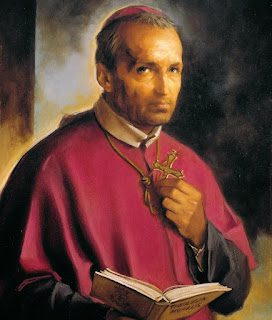
Cesare Lombroso was an Italian university professor and criminologist, born on November 6, 1835, in Verona. He became world famous for his studies and theories in the field of characterology, or the relationship between physical and mental characteristics.
Cesare Lombroso was born on November 6, 1835 and passed away on October 19, 1909. A scientist universally known for his important work in the legal field, he dedicated himself to letters from an early age. At the age of twelve, he wrote the work entitled “Grandeza e Decadencia de Roma”, which had great repercussions in the intellectual circles of the time.
About the work of Mazolo, a great Italian psychologist, he wrote an article, which was published in one of the Italian newspapers. Mazolo read this article and invited Lombroso to his house, as he wanted to meet the new writer. In front of the boy, who was only fourteen years old, he was surprised, given his precocious intelligence.
Lombroso converted to Spiritism after carrying out experiments on the mediumship of Eusapia Paladino, presented to him by Professor Chiaia, from Naples. In one of the sessions with this medium, he witnessed the materialization of the Spirit of his own mother. From then on, Lombroso had no doubts about the spirits' survival and communicability.
the medium Eusapia
He wrote several works, both in the fields of Medicine and Philosophy. Among them, the notable monograph “Criminal Anthropology”, “L'Uomo di Gênio”, “L'Uomo Delinquente”, as well as others on psychology and psychiatry stand out. On Spiritism, we cannot fail to mention the “Research on Hypnotic and Spiritist Phenomena”, through which he reports all the experiences carried out, not only with Eusápia_Paladino, but also with other mediums of physical effects, such as Elizabeth D'Esperance and Politi .
It was slow and arduous, however, continuous and sure, the march of Lombroso towards Spiritism. At first, he ridiculed psychic manifestations. He mocked mediums and “turning tables”. He even went so far as to insult the Spiritists. However, on a certain occasion, through a letter from his friend Ercole Chiaia, he came to know the figure of a Neapolitan woman, illiterate, of humble, robust class and whose name was Eusápia Paladino.
As a skeptic, he refused to attend sessions, having as a medium the great medium Eusápia Paladino. But his friend Chiaia insisted so much that Lombroso insisted on imposing the conditions. The other participants in the meetings, including the Medium, accepted all the conditions imposed by Lombroso. Thus, in March 1891, in the presence of Lombroso, under strict supervision, with the Medium being held by two people, phenomena took place...
object transport,
of partial materializations,
of typtology, (transcendental message obtained through blows),
of direct voices
and others of the same strain.
After all that he had witnessed, without a doubt, Lombroso surrendered to the Truth and confessed: “I am very ashamed and disgusted for having fought with such persistence the possibility of the so-called spiritual facts; but the facts exist and I am proud of them to be a slave”.
Lombroso passed away serenely in the arms of his talented daughter Dr. Gina on October 19, 1909, in Turin, at the age of 74.
In the midst of his research on mediumship, he first starts attempts to study the phenomenon under the positivist aspect of factual evidence – as other scientists of the time did elsewhere, several of them imbued with positivist ideals – and at the end concludes by scientifically confirming the doctrine and studied phenomena. He then became a defender of Spiritism in Italy at the time, as did several trends in the positivist movement at the time.
His works cover several areas such as: anthropology, criminal sociology, psychology, criminology, philosophy and medicine.
His studies became known as criminal anthropology.
Lombroso's work with the medium Eusápia Paladino followed and progressed. Under the ectoplasm released by Eusapia, Lombroso, ever vigilant, obtained wonderful revelations. The aforementioned revelations overcame Lombroso's scientific distrust and did not fail to illuminate his Moral Conscience. In a certain session, Lombroso's full conviction was strengthened even more, before the materialization of his mother's Spirit. Eusapia promised Lombroso a surprise and it came about through the materialization of her own mother's Spirit. Yes, my friends, the Spirit of Lombroso's mother materialized and, approaching her son, said: "Cesare, fio mio" and then, removing, for a moment, the veil that covered his face, she gave him a kiss. And Lombroso confesses that, at the moment when the materialization of his mother's Spirit took place, Eusápia had her hands trapped by two people and that Eusápia's stature was also much taller than that of her mother's materialized Spirit. Here, my friends, is the Truth through the testimony of a Man of Science, a Sage. Will anyone be able to dispute it, we believe not…
Born on the 18th of November to a wealthy family in Verona and graduated in Medicine at the University of Pavia, he graduated in 1858. A year after graduating in medicine, he obtained a degree in surgery in Genoa. He improved his knowledge in Vienna and Padua, where he perfected his knowledge, aligning himself with positivist thinking.
At the age of twenty, he demonstrates his line of interests with a study on madness. Lombroso already outlines the subjects that will make him famous: the contrast between the genius of man and theories about degenerative nature. As a medical officer, he wrote, in 1859, “Memory on Wounds and Amputations by Firearms”, which is still considered one of his most original works. Then he was drawn to Calabria by the anthropological and ethnic problems of the region. These observations were developed in a psychiatry course, which he began in Pavia in 1862, where he began to analyze the possible influences of the environment on the mind, ideas that at first achieved success and, later, distrust. He starts a course in psychiatry and the following year transforms it into a course in “clinical mental illness and anthropology”. His frequent visits to the mental hospital, where he assisted patients free of charge, allowed him to deepen his study of the relationship between genius and neurosis. “The ideas of the greatest thinkers burst out of the blue, unfold involuntarily like the compulsive acts of maniacs,” he wrote. At the International Congress of Anthropology held in Milan, several criticisms were raised against Lombroso's position, but his pioneering role in therapy with the mentally ill was recognized: rational relaxation of treatment, introduction of manual work, conversations with outsiders, collective entertainment , diaries written and printed by the patients themselves. It was a new method, used today by psychotherapy.
In 1864, Lombroso became known for the book "Genius and Madness". Psychiatrist and director of the asylum in Padua from 1871 to 1876, he collected enough data for his theories. From the examination of hundreds of mental patients and criminals, he comes to the conclusion that the criminal is formed by some basic tendency inherent in his destiny, and that the "seeds of a criminal nature" can often be identified in the child. He also believed that the social environment, combined with astral influences, prepared individuals whose nature was anti-social for criminal action. The ideas defended by Lombroso about the “born criminal” advocated that, by analyzing certain somatic characteristics, it would be possible to foresee those individuals who would turn to crime. Many other beneficial changes adopted by criminal legislators around the world derived from the studies pioneered by Lombroso. Lombroso's main idea was partially inspired by genetic and evolutionary studies at the end of the 9th century and proposes that certain criminals have physical evidence of an atavism (reappearance of characteristics that were presented only in distant ancestors) of a hereditary type, reminiscent of more primitive stages of human evolution.
These anomalies, called stigmata by Lombroso, could be expressed in terms of abnormal shapes or dimensions of the skull and jaw, asymmetries in the face, etc., but also in other parts of the body. Subsequently, these associations were considered highly inconsistent or completely non-existent, and theories based on the environmental cause of crime became dominant.
In 1882, in his booklet “Study on Hypnotism”, he ridiculed spiritist manifestations, but, invited by prof. Morselli to study the subject better, participated in sessions with the medium Eusápia Palladino, becoming convinced of the incontestable veracity of the facts. For many years he denied psychic and spiritual phenomena as quackery and simple-minded credulity.
On July 15, 1891, a letter was published in which he declared his surrender to spiritual facts: I am very ashamed and disgusted for having fought so persistently against the possibility of so-called spiritual facts; I say facts, because I am still opposed to theory. But the facts exist, and I'm proud to be a slave to them.
When he goes to Moscow, it is in 1897, as a participant in the Psychiatric Congress, he meets Tolstoy, who knew very well his ideas about genius and madness.
He then became a defender of Spiritism in the Italy of his time, as did various currents of the positivist movement of the time. Lombroso, always faithful to the experimental method, bequeathed to the spiritists an excellent collection of information about mediumship and the vast phenomenological field. A deeply honest man defended the veracity of Spiritism until his death, which was prominently reported around the world, on October 19, 1909.
It was the end of the mission, which in his case, started in reverse, from the position of ridicule to that of sincere defender, would strengthen the spiritist movement through its own inclusion in the midst of its researchers and defenders.
God has many ways for men. For Lombroso, the path was to retrace his own path, that is, to consolidate what he, through ignorance of reality, had attacked, by formulating mistaken concepts about Spiritism, portraying himself intimately and publicly a posteriori through the immense work he carried out.
Lombroso was one of the greatest criminal doctors of the last century.
Black magic, spells, baths in rock salt and herbs, amulets, Wicca: does it all exist?
Rare are the beliefs and even superstitions that, over the millennia, have no basis in truth. In fact, Allan Kardec has always tried to show that the truth has always been in the history of humanity, transmitted through all times, but that it was only muffled by the characteristic errors of human ignorance and also by the dogmas purposely created to control consciences.
In “Practical Instructions on Spiritist Manifestations”, Kardec defines it this way:
MAGIC, MAGE — from gr. mageia, deep knowledge of nature; whence magi, sage, scientist trained in magic; priest, sage and philosopher among the ancient Persians. Originally magic was the science of the sages; all those who knew astrology, who boasted of foretelling the future, who did extraordinary and incomprehensible things to the common people, were magicians or sages who were later called magicians. Abuse and quackery discredited magic; but all the phenomena that we reproduce today through magnetism, somnambulism and spiritism prove that magic was not a purely chimerical art and that, among many absurdities, there was certainly much that was true. The vulgarization of these phenomena has the effect of destroying the prestige of those who once operated under the cloak of secrecy and abused credulity, attributing an alleged supernatural power to themselves. Thanks to this vulgarization, today we know that there is nothing supernatural and that certain things only seem to derogate from the laws of nature because we do not know their causes.
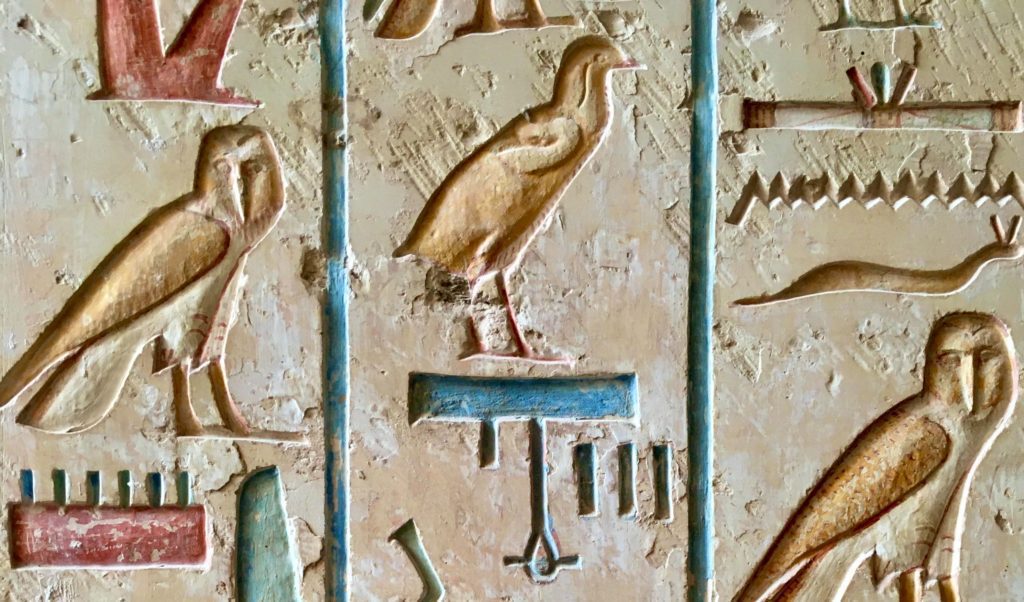
Magic in Ancient Egypt
One of the greatest examples of this were the Egyptians, who were deeply knowledgeable about mediumship and many of the truths that Spiritism professes today. However, this knowledge was reserved for the initiates — the priests, in general — and, to the public, the mystical image of terrible and vengeful gods and a false superhuman power attributed to priests and pharaohs was passed on. The same structure was copied by other religions that followed.
The Egyptians also practiced the various rituals of magic (heka) which, far from the negative meaning that the West makes of the word, was one of the gifts granted by the god (in lower case because their belief was not exactly like ours, in a single, sovereign God, etc):
Well attended are men, the cattle of the god. He made heaven and earth for your sake, repelled the water monster, and made the breath of life (to) your nose. He shines in the sky because of you, and he made plants, cattle, birds, and fish for them (everything) to feed them. (however) he killed his enemies and destroyed even his own children when they tried to rebel. He made daylight for your sake and sails (in the sky) for you to see. He erected […] his sanctuary among them, and when they cry he hears. He made them rulers in the egg, guides to lift the backs of the weak. He made magic [heka] for them as a weapon to deflect the blow of what happens (bad), watching over them day and night. killed the traitors who were among them as a man beats his son for his brother's sake, for the god knows every name.
(ARAÚJO, 2000, p. 291. Our emphasis)((ARAÚJO, Emanuel. Written for Eternity: literature in pharaonic Egypt. Brasília: UnB, 2000.)).
The Magic Among the Druids
Both the Egyptians and practically all peoples had their practices of magic. The same happened among the Druids, people in charge of counseling and teaching tasks and legal and philosophical guidance in Celtic society. In general, it can be said that they were priests and sages. They existed since before Christ, more than 3000 years ago.
One of the most legendary mages of all, Merlin, would have also been a Druid.
Considered as witches and sorcerers, full of rituals that would even include human sacrifices (which to date has not been proven) — the reason why they were largely exterminated by the Romans — the druids were, in fact, a priestly class that lived among nature and that gathered from it the elements necessary for their rituals, among them healing.
The magic for millennia
The ideas of magic or healing, as we said, perhaps permeated all people, at all times. In Brazil, we have healers, sorcerers and shamans, among the indigenous peoples and, more recently, faith healers, as well as Wicca, born in Europe, and countless other denominations that, wrapped in dogmas, rituals and particular beliefs, have, in deep down, the belief in the power of prayer (or formulas) and nature to cure illnesses — and they believe, some of them, to cast an evil spell against others. Wiccans, for example, going (to some extent) in the direction of Mesmer's Magnetism, which we will present below, believe that magic is the law of nature still misunderstood or ignored by contemporary science ((Valiente, Doreen (1973). An ABC of Witchcraft Past and Present. [Sl]: Hale. 231 pages)), and as such, they do not see it as being supernatural, but as being a part of the “super powers that reside in the natural”.
Mesmer's Magnetism
Kardec would say that “unshakable faith is the only faith that can face reason face to face, in all ages of Humanity“. Let us, therefore, take care to make an approximation with the science that already exists regarding these beliefs.
Very briefly, Franz Anton mesmer was a doctor, scientist and scholar who, based on rational experiments, postulated the theory known as Animal Magnetism ((FIGUEIREDO, Paulo Henrique de. Mesmer – A Ciência Negada do Magnetismo Animal. FEAL, 2022)).
Mesmer came into conflict with the science of his time, which, in order to explain everything that could not be analyzed by devices and human senses, created the theory of fluids (for the scientists of the time, electricity would be a fluid, as well as magnetism and even life). For him - which later was confirmed by Spiritism and by current science — there was the Universal Cosmic Fluid, which gave rise to everything. Each different state of matter, even that which was intangible and imperceptible, would only be a different constitution of this original fluid, vibrating at a different frequency (this is exactly what modern physics explains, more than 200 years after Mesmer's theory).
According to Mesmer's theory - and spiritist science - the human being is capable, by will, of interacting on what became known as perispiritual fluid, which constitutes the link between Spirit and matter.
the perispirit
The perispirit, as concluded by Kardec, connects to the body molecule by molecule((KARDEC, Allan. A Gênesis. 2nd Edition. FEAL, 2018)) (in fact, cell by cell, but at that time there was no such organic knowledge) and, through the action of thought, through this intrinsic connection, it influences you positively or negatively, being able to obtain cures or create illnesses. It is the principle of illnesses psychosomatic and, in the background, of placebo effect, for which modern science cannot find a definitive explanation precisely because it ignores the sciences of Magnetism and Spiritism, which they call superstitious.
It should be noted that the perispirit is a theory based not only on everything that great thinkers have always conceived, including Socrates and Plato — and Mesmer himself — but also on reason and the observation of phenomena and spiritist communications, as presented. on here. Kardec would say, in The Mediums' Book:
Numerous observations and irrefutable facts, of which we will speak later, have led to the consequence that there are three components in man: 1st, the soul, or Spirit, intelligent principle, where the moral sense has its seat; 2nd, the body, a gross, material covering, which he temporarily clothed himself in, in fulfillment of certain providential designs; 3rd, the perispirit, a fluidic, semi-material envelope that serves as a link between the soul and the body.
[…]
The perispirit is not one of those hypotheses that science usually uses to explain a fact. Its existence was not only revealed by the Spirits, it is the result of observations, as we will have the opportunity to demonstrate. For now, and as we do not anticipate the facts that we are about to relate, we will limit ourselves to saying that, whether during its union with the body, or after separating from it, the soul is never disconnected from its body. perispirit.
In A Genesis, Kardec concludes:
Experimental Spiritism studied the properties of spiritual fluids and their action about the matter. It has demonstrated the existence of the perispirit, about which there were suspicions since antiquity, being called by São Paulo Spiritual Body, that is, the fluidic body of the soul after the destruction of the tangible body. We now know that this sheath is inseparable from the soul; which is one of the constitutive elements of the human being; which is the vehicle for the transmission of thought and which, during the life of the body, serves as a link between Spirit and matter. The perispirit plays such an important role in the organism and in many conditions that it is linked to both Physiology and Psychology.
The perispirit is not, therefore, a theory, nor even a hypothesis, for Spiritism. Follows Kardec, in the same work, stating that…
As a means of elaboration, Spiritism proceeds in the same way as the Sciences positive, that is, it applies the experimental method. When new facts are presented which cannot be explained by means of known laws, he observes them, compares them, analyzes them and, going back from the effects to the causes, arrives at the law that governs them; then it deduces its consequences and looks for its useful applications. It does not establish any preconceived theory. Thus, it does not present as a hypothesis neither the existence, nor intervention of the Spirits, nor even the perispirit, reincarnation or any other principle of the doctrine.. It concludes for the existence of spirits when it became evident by observation of the facts, and it has proceeded in the same way in relation to the other principles. It was not, therefore, the facts that later came to confirm the theory, but the theory that came later to explain and summarize the facts. It is therefore strictly accurate to say that Spiritism is a Science of observation, and not the product of imagination..
Cures, passes, black magic and sorcery
Here, however, it is necessary to make a very important observation, based on the two sciences mentioned above: since animal magnetism is not a transference of fluids, but an action of the will on perispiritual fluids, it is essential that the other end share the will and acceptance so that this interaction prolonged come true.
When Mesmer and many of his disciples healed, this action took place through countless hours of approaching the patient, from the sympathy of ideas and, figuratively, of energies and, then, the treatment, almost always through passes, started for long hours, and could be carried out periodically, in order to achieve the result. The patient, at this stage, made himself totally available and in favor of the cure, which, not infrequently, took place in a remarkable way. Then, Spiritism came to demonstrate that these cures are almost always associated with kind spirits who help in the process.
Note: This image is just an illustration of the laying on of hands.
Of course, Mesmer's entire theory did not fail to create scathing enemies, but this is a topic for dedicated reading by the reader ((FIGUEIREDO, Paulo Henrique de. Ibidem)).
In the same way as with healing, black magic and sorcery rituals (which, in fact, are the action of the will - although maleficent - on the perispiritual fluid, with or without the participation of inferior spirits) depend inexorably on the acceptance of the counterparty for the influence to be fulfilled. See that, in any case, it is not a fluid that is transferred from one to another, but the effect of the mental action of one on the other. That's why, simply and correctly, the saying “if you don't believe it, don't take it” is accurate.
I go further: you know that idea that words of hate are a jet of negative energy that hits the other? It's also a myth. The other is only contaminated with the bad state if he allows it, and what happens is not that he lets an energy in, but that he himself creates the “bad energy”.
We see, therefore, that, with regard to "black magic", to begin by dissolving superstition is the first good that is done. The creature who doesn't even believe that already puts himself a foot away from this influence. However, it remains to be said that the vibration, here, enters with great propriety: the individual who, mentally, moves away from the good, either by ostensible action in evil, or by the cultivation of passions and imperfections, places his perispirit (being matter, but in a state quintessential) in a vibratory state susceptible of being influenced by the thoughts of other Spirits in the same tune, incarnate or disincarnate. Therefore, if the individual is in this state, he will not receive an influx of magic as if it were something tangible, but, through the action of someone else's thought, he will be able to influence himself. In fact, it is not even necessary to resort to magic for this: people influence each other, positively or negatively, day after day.
Is everything energy?
This statement is extremely common: we are energy. However, before proceeding, we have to say: not everything is energy.
Neither God nor Spirits are energy. Energy is something physical. God is something else, and Spirit is something else yet. If they were energy, they would be matter and, therefore, would be subject to the transformations of matter, including disaggregation and, therefore, would have an end. But we know that the Spirit is immortal and that God, in addition to being immortal, also does not have a beginning.
That's why anything that which is material has an influence on the Spirit, unless he believes it. By the same principle, nothing that is spiritual has direct action on matter. If this were not the case, it would be very easy for an evil Spirit to carry out a materially harmful action on an incarnate person, including creating diseases and installing control “chips”. We emphasize: all this is nothing more than superstition, and it is in this sense, so well understood here, that, in The Spirits’ Book, the following is stated:
Can a bad man, with the help of a bad spirit dedicated to him, harm his neighbor?
551. Can a bad man, with the help of a bad Spirit dedicated to him, harm his neighbor?
— "No; God would not allow it.”
KARDEC, Allan. The Spirits' Book, 1860
“God would not allow it” contains all the explanations given so far: a bad man, with or without the help of a bad spirit, cannot do evil against another, through spells, spells or conjurations. "It is the law of God."
We would say, however: “but a man can harm another by direct, even physical means”. This seems logical... But, if we think more deeply, even this harm done physically, such as, for example, a wound by a weapon or even death, can only represent harm to its victim if it allows itself to be harmed. Now, the other performs an action, far from good, through ignorance that he is doing evil to himself. As much as it hurts, it is my choice to let myself be affected by this action, allowing myself to linger over thoughts of anger, anguish, revolt, revenge, etc., which is when I myself do evil to myself. see what thought liberator!
Want a practical example? Let us think of Jesus: from our point of view, we have done him a lot of harm. From his point of view, however, nothing we did hit him, and he suffered no harm other than physical pain, for his degree of spiritual elevation no longer made him susceptible to anything they did. Here's our goal.
Flushing baths, coarse salt, herbs and amulets
Arriving at this point, we assume that the principle of “energetic” action between incarnated beings and the principle of the inexistence of an energetic action between Spirits and incarnated beings, and vice versa, is already quite clear. It became evident that no Spiritual action, whether by an incarnated or disembodied Spirit, can directly affect another incarnated individual (and it remains to rule out that the action between disincarnated Spirits is always moral and depends on the acceptance of the other). Therefore, recommending any material devices to attract or repel these influences is almost entirely a waste of time, since what is wanted is that the affected party rationally takes a firm stand against the influences of extraneous thought, which only happens. with the active moral transformation of the individual.
But what about the placebo effect? Of course, we don't rule it out. A person can, yes, believing in the power of an amulet or an herb, or even a bodily cleansing, or the environment, assume a different, more positive and active attitude and, from there, remove the previous influences. However, let's see, here is the will of that person, and not the supposed strength of those elements, which promoted the modification of his state. However, there is a very negative side to this aspect: being motivated by superstitious and unscientific beliefs, the person can often forget the main thing, that the modification itself, granting the desired effect to the action of these elements and, thus, prolonging his own suffering.
And, even clearer, we are not ruling out the effects physicists that matter has on matter; it is, moreover, the beginning of all that we have said above.
Finally, we can even resort to the much-mentioned action of André Luiz's mentor, in the novel Nosso Lar, que vai à Floresta, in the land, and there supposedly collects elements extracted from the trees to treat of the body of the incarnate individual. We know about the principle of spiritual healing, but it is important to remember that, for this action to be possible - from the collection of natural principles, to application to the sick, the existence of a medium is necessary who, even without consciousness, can provide some fluid specific perispiritual for this task. Who knows, following this theory, this didn't happen through André Luiz's own daughter, who demonstrated latent mediumship?
And does prayer or prayer work?
It depends, because the prayer or prayer must have the intention honest of the individual who recognizes his imperfections, his faults and asks for help to win these difficulties. That is the purpose of prayer. Through it, the individual elevates his thoughts, changes his tune and puts himself in contact with the superior spirits - as long as his intention is honest and true.
However, if prayer is done "with your mouth", a mechanical repetition of "sacred" formulas and if, above all, it transfers responsibility to someone else, whether to God or to a Spirit of any order, it will be ineffective, since the person is not attentive and committed to his own modification. Neither God nor any Spirit do anything for us, if not to inspire and direct us to the situations, contents and knowledge that can help us. That is, they take us to the door, many times, but opening it and entering is something that depends on us, exclusively.
Let's look at an example:
“[…] I now appeal to the 13th dimensional Security Circle to completely seal, protect and increase Michael Archangel's shield, as well as to remove anything that is not of a Christed nature and that currently exists within this field.
I now appeal to the Ascended Masters and our Christed assistants to completely remove and dissolve each and every implant and its seeded energies, parasites, spiritual weapons and self-imposed limitation devices, both known and unknown. Once that is completed, I call for the complete restoration and repair of the original energy field, infused with the golden Christ energy.”
This is an excerpt from the well-known “21-day prayer of Saint Michael the Archangel for spiritual liberation”. Review this excerpt and, if you wish, the rest of it. Compare with everything we have exposed so far. It is full of concepts. false and is based on the heteronomous concept: do it for me.
Therefore, we repeat, to emphasize and conclude: incarnate or disincarnate, all, absolutely all, from evil to cure, depends solely and exclusively on the action of our will. Without her, nothing gets done..
Spiritism Podcasts
For those who didn't know yet, we debuted on the main Podcasts platforms, among them the Spotify, The Deezer, The Amazon Music it's the Google Podcasts. We will now make available the main and most interesting contents already covered or to be addressed, in the study of Revista Espírita, as well as the most interesting articles here on our website, including general subjects, in-depth studies and opinion articles.
Click on the image to know all the options where to listen to our Podcasts:
THE CRITICISM OF MEDIUM WORK
A good medium must always be ready to criticize his work, since it does not belong to him, never being hurt or humiliated when any idea comes from an imperfect spirit and cannot be accepted as doctrinal.
This criticism and judgment, when dealing with a good medium, should not and need not be extended to the medium itself. However, if in the mediumistic group there is the invigilant individual, almost always moved by habits of vanity and pride, which often promote frames of obsession and fascination, he must be advised privately, firmly, but with benevolence. If reason speaks louder to you, you will understand and seek to change your picture; if not, it will often turn away. 🇧🇷In this case, whatever faculties it possesses, its removal is not to be missed.”, Kardec would say [RE, July 1858]
The role of the medium is to transmit the content, including those of inferior spirits, and the role of a good spiritist should be to judge, based on study and reason, mediumistic communications and even learn from those that come from inferior spirits, not for accepting them blindly, but for understanding the ideas, the difficulties, the illusions, the reflections on the previous life, etc. And that, dear reader, also applies to dear Chico Xavier, Divaldo, Sueli Caldas and all mediums, as none have the divine grace to be "armored” against imperfect spirits — quite the contrary, as I believe is clear from the very purpose of mediumship.
An absurd distortion was created, not only in the Spiritist Movement, but also in the entire spiritualist movement, with mediumistic works, since this principle was forgotten and Mediums began to be treated as infallible oracles. It is important to remember that this idea was precisely the one inculcated by Roustaing, the greatest enemy of Spiritism and that, unfortunately, permeated and dominated the Spiritist Movement since its arrival in Brazilian lands, before 1900, having found wide support for dissemination in the FEB, self-titled organ maximum representation of Spiritism in Brazil (contrary to what Kardec himself recommended and planned to start, if he had not died so soon, as presented in Transitory Constitution of Spiritism — RE — December 1869).
Mr. Roustaing, one of the "Judas of Spiritism", was not a medium. But by a good medium, Mrs. Emilie Collignon, who even communicated with Kardec, began to obtain communications attributed to the four evangelists, who came to say that Roustaing would be the new prophet, producing what became known as The Four Gospels, which until today negatively influence, with various concepts, the Spiritist Movement in Brazil, mainly.
All that I am pointing out was exactly what Kardec pointed out to Roustaing. The medium herself even stated, to Kardec, that she did not agree with those communications, but whenever she was with Roustaing, they were obtained. After Kardec drew Roustaing's attention to the obsession of which he was a victim, trying to do him some good, he rebelled, out of vanity and pride... And then the damage was done.
After the death of Prof. Rivail (Kardec), a rich (quite rich) follower of Roustaing, Jean Guérin, approached Leymarie, the “continuer” of Spiritism who, for less elevated interests, sold himself and, among so many crimes against Spiritism, started to publish , in the Spiritist Magazine, contents from this ideology, even though contrary to the Doctrine. This provoked revolt in the true followers of Kardec, among them Berthe Fropo, a close friend of the couple, Camille Flamarion, Leon Denis and Gabriel Delanne. Fropo even published:
I appeal to all spiritists, my brothers. Can this man [Leymarie] remain in the direction of spiritualism? since he is no longer a spiritist? He, who has no belief, who has only interests, who has renounced the doctrine he was supposed to defend and protect, has debased it in himself by preferring another. Now he wants to make the doctrine enter the theological phase, to establish it as a religion, and to make our beautiful philosophy be lowered through congresses, ceremonies and, later, by dogmas, and all this for the love of money, to please the ideas. of Mr. Guérin, the millionaire. He became a Roustangist, advocated subversive ideas about the nature of Jesus and, currently, puts to study even the non-existence of Christ.
In the name of our revered master, we cannot leave our doctrine of life in the hands of a man without belief, without conviction, and who has disowned it. I beg all spiritists who have shares in the Anonymous Society founded by Mrs. Allan Kardec to meet in a general meeting; they have the right as shareholders. If they are sincere spiritists, honorable people, great hearts who desire the happiness of all our humanity through the propagation of the doctrine in all its purity, they must consider that it is a right and above all a duty for them, and that if they do not fulfill it , whether out of fear or inertia, that would be a cowardly abandonment of our dear philosophy, which, you are persuaded, is in danger, and in great danger. How is it possible to respect spiritism when one sees, in order to represent and advance it, people without morality, without belief and without loyalty?
Allan Kardec's Magazine is nothing more than an abominable rhapsody; under the pretext of eclecticism, the most subversive ideas are inserted into it, and the judgment of those brothers of ours is perverted who, as they do not have sufficient education to do justice to all these ridiculous conceptions, are confused and become of a credulity that can be dangerous to your home.
Let us study the teaching of our dear master Allan Kardec, let us accept what this high intelligence has made up for thirty years of tenacious work, and above all let us know how to understand and apply it to ourselves in order to become better, fair, loyal and fraternal, dedicated to consoling doctrine that the Spirits revealed to us.
Jesus, who so well taught us love, charity and fraternity, however, in a moment of indignation, expelled the sellers from the temple, and the thongs he used are not yet worn out. I used those of our time; God and the good spirits will judge me.
I consider that I have fulfilled the mission with which I was entrusted. It is up to the Spiritist shareholders to act now and save Villa Ségur, which, according to the master's idea, was destined to be a shelter for elderly Spiritists; he wanted to build there, moreover, a building large enough to establish a meeting place, a museum and a spiritualist library.
Fropo, Beacoup de Lumiere
Kardec, for defending the basic and necessary principles of Spiritist science, was also called orthodox, proud, pedantic, vain, etc. Precisely he, who always demonstrated that he did not even begin the studies of Spiritism and that, having only dedicated himself to this study in a methodological, scientific and organized way, being often contradicted, in his ideas, by the force of reason, by the Spirits themselves, He always emphasized that everything belonged to the Spirits and not to anyone's private ideas, much less his own.
These are the facts that many find it difficult to accept, but which are already well known and which are reported in Allan Kardec's Legacy, by Simoni Privato, and End, by Wilson Garcia.
References
Allan Kardec's Legacy, by Simoni Privato
End, by Wilson Garcia
Beacoup de Lumiere by Berthe Fropo
Spiritist Magazine of 1858
“Rancho Alegre” spiritual colony for animals
Much has been said on this topic. Many teach that animals, after death, go to a beautiful spiritual colony, called Rancho Alegre, where the animals would stay together, enjoying the natural beauty of places in the world of Spirits. It sounds beautiful, but it is important to remember that Spiritism cannot be based on ideas that have not been validated by the necessary scientific methodology, because, otherwise, false ideas can generate mistakes, errors and attachments in our minds.
What spiritual science says
Kardec, in The Spirits' Book, presents important concepts about animals:
597. Since animals have an intelligence that gives them a certain freedom of action, is there in them any principle independent of matter?
“There is, and that survives the body.”
The) - Is this principle a soul like that of man?
“It is also a soul, if you will, depending on the meaning given to this word. It is, however, inferior to that of man. There is between the soul of animals and that of man a distance equivalent to that between the soul of man and God.”
598. After death, does the soul of animals retain its individuality and self-consciousness?
“Keep your individuality; about the awareness of your I, no. Intelligent life remains in a latent state.”
599. Is the soul of animals given to choose the animal in which to incarnate?
“No, since he has no free will.”
Animals, therefore, have a soul, or spirit. However, this Spirit, despite not being a machine, still has no consciousness of your own “I”. It does not, therefore, have free will, for it comes with the awareness of God's laws:
621. Where is the law of God written?
“In conscience.”
It is when man acquires conscience that, with it, he acquires free will. Rather, he is ruled by instincts: hunger calls him to eat, fear calls him to protect himself, anger serves to defend himself. By acquiring free will, you have free choice, from which mistakes and successes are born. From mistakes, learning or passion can be born, which is when the individual choose use instinct to strengthen a bad habit that causes you some sort of rejoicing. From this, an imperfection is born, which will be difficult to overcome through incarnations.
Animals have no moral suffering, nor need to reflect on them
The animal, however, is not at that evolutionary level, yet. When the lion kills the zebra, he is not committing evil, but rather good, as he is acting according to God's laws. The animal, therefore, has no guilt, no regret, in short, no moral suffering (although some animals learn, in contact with humans, to show similar reactions). It comes from there the Spirit living the animal phase does not need the period between lives to learn and reflect, because their learning, for now, takes place directly in contact with matter, living under instinct and under some capacity of will that, however, does not represent free will, which puts down the idea of a spiritual colony Rancho Alegre .
600. Surviving the body in which it inhabited, does the soul of the animal find itself, after death, in a state of erraticity, like that of man?
“It remains in a kind of erraticity, since it is no longer united with the body, but it is not a wandering spirit. The Wandering Spirit is a being who thinks and works of his own free will.. The animals do not have the same faculty. Self-awareness is what constitutes the main attribute of the Spirit. The animal's, after death, is classified by the Spirits who are responsible for this task and used almost immediately; he is not given time to enter into relations with other creatures.”
For the human spirit, the period of erraticity, between one incarnation and another, is necessary for its advancement and learning:
227. How are wandering spirits instructed? Right, don't they do it the same way we do?
“They study their past and look for ways to elevate themselves. They see, they observe what happens in the places where they go; they listen to the discourses of enlightened men and the advice of the highest spirits, and all this instills in them ideas that they did not have before.”
We need to return to Kardec
Therefore, friends, let us reflect on the doctrine forgotten by the Brazilian Spiritist Movement. Kardec's books were not created by him, but through the dedicated, organized and methodological study of the universality of the teachings of the Spirits. In the Spiritist Doctrine, there is a construction, where each point is firmly established on another, previously established, by the same process. It is necessary, therefore, to be very careful with the “new people” of Spiritism, almost always speaking of their own opinions. It is important to remember that what people see in a state of sleep or somnambulism (unfolding) does not always represent the truth, and may be altered by personal ideas and beliefs.
Kardec has always highlighted the need to judge everything, in the face of reason and science, something that the Spiritist Movement has not done. This same Movement, voluntarily forgetting this, began to accept spiritual communications and the opinions of prominent mediums as if they were something unquestionable... Which is a huge mistake, since the role of any medium is to transmit the communication, and it is up to others to judge it in terms of its acceptance or not, and it is not up to the medium to be offended by this.
This article, in short, is practically a cry, a plea: let's study Kardec, let's study his works, because the base of the spiritist science, that same base of the reasoned faith, the one that, according to the professor, "... is only the one that can face the reason face to face, in all the epochs of Humanity", is founded there. In short: no, the animals don't go to the Rancho Alegre Spiritual Colony, because they don't need it. In truth, even we, more evolved Spirits, do not need it: it is a myth that, when we die, our Spirits will go to any spiritual colonies, have soup and rest, because the Spirit does not need any of that.
The hard work of disobsession
Kardec thus defines the obsession:
Obsession is the persistent action that an evil Spirit exerts on an individual. It presents very different characters, from the simple moral influence without sensitive external marks to the complete disturbance of the organism and mental faculties. Obliterates all mediumistic faculties. In auditory and psychographic mediumship, it is translated by the obstinacy of a spirit in manifesting itself to the exclusion of others.
Obsession is almost always the fact of revenge exercised by a Spirit and that most often originates in the relationships that the obsessed person has had with that one in a previous existence.
In cases of severe obsession, the obsessed person is surrounded and impregnated by a pernicious fluid that neutralizes the action of healthy fluids and repels them. It is from this fluid that it becomes necessary to disentangle oneself; now, a bad fluid cannot be repelled by another bad fluid. By an action identical to that of the healing medium, in the case of diseases, it is necessary to expel the bad fluid with the help of a better fluid.
That's mechanical action, but that's not always enough. It is also, and above all, necessary to act on the intelligent being, to which it is necessary to have the right to speak with authority, and this authority is only given by moral superiority; the greater it is, the greater the authority.
Allan Kardec, The Genesis, 1868
Obsession occurs from spirit to spirit, even from incarnate to incarnate and has, at its root, always a lack of initial ability to fight against a pernicious influence. We see this in unhealthy couple relationships, when one exerts a pernicious dominion that is not fought for the other. When giving from Spirit to incarnate, at the origin, the incarnate's lack of ability to identify the pernicious influence on their own imperfections and passions (feelings) is identified, leading them, slowly and progressively, to enter different states. such as those of pleasure, restlessness, melancholy, etc. This means that, many times, the incarnate himself voluntarily accepts, although unconsciously, the influence that instigates him to cultivate imperfections or habits that please him.
There is also the less frequent possibility of having a self-obsession, where the individual himself is attached to certain thoughts or certain questions, without the participation of other Spirits. We will address each of these possibilities below.
It is important to say, first of all, that obsession needs to be fought, as soon as possible, by the will of the incarnate, in the first place. It turns out that, if the obsession is advanced, this desire can be obliterated, which is very common in cases identified as depressive. This is where it is necessary to have an intervention, from close people, who can help, with benevolent persistence, to lift this non-existent or erased will. For this reason, we believe it is important to highlight the state of subjugation and possession, defined as follows by Kardec:
Subjugation
It is a moral bond that paralyzes the will of the one who suffers it and that impels the person to the most unreasonable attitudes, often the most contrary to their own interest. [RE, Oct/1858]
Subjugation can be moral or corporal. In the first case, the subject is forced to make resolutions that are often absurd and compromising, which, by a kind of illusion, he judges to be sensible: it is a type of fascination. In the second case, the Spirit acts on the material organs and causes involuntary movements. It is translated, in the writing medium, by an incessant need to write, even at the least opportune moments. We saw some who, lacking a pen or pencil, pretended to write with their finger, wherever they were, even in the streets, on doors, on walls. [The Mediums' Book]
possession
It was formerly called possession to the empire exercised by bad spirits, when their influence reached the aberration of the victim's faculties. Possession would be, for us, synonymous with subjugation. [The Mediums' Book]
In possession, instead of acting externally, the free Spirit replaces, so to speak, the incarnate Spirit; he makes the choice of domicile in his body without, however, this leaving him definitively, which cannot take place except with death. Possession is therefore always temporary and intermittent because a disembodied Spirit cannot definitively take the place and dignity of an incarnate Spirit, bearing in mind that the molecular union of the perispirit and the body can only operate at the moment of conception.
The Spirit, in the momentary possession of the body, uses it as its own; he speaks through his mouth, sees through his eyes, acts with his arms as if he had made his experience. It is no longer like in psychophonic mediumship, in which the incarnate Spirit speaks transmitting the thought of a disembodied Spirit. It is the latter himself who speaks and acts and if you have known him in life, you will recognize him by his language, his voice, by his gestures and even by the expression of his physiognomy.
Obsession is always an occurrence of a malefactor spirit. Possession can be the action of a good Spirit who wants to speakand, in order to make a greater impression on his listener, he borrows the body of an incarnate, who voluntarily lends him as if he were lending his garment.. This is done without no disturbance or discomfort, and during this time the Spirit is at liberty, as in the state of emancipation, and, more often than not, he stands beside his substitute to listen to him.
When the possessing spirit is bad, things happen differently. He does not borrow the body, but takes possession if the holder does not have the moral strength to resist him.. He does it out of malice towards the said, whom he tortures and martyrs in every way, until he wants to make him perish, either by strangulation, or by putting him on fire, or in other dangerous places. Using the limbs and organs of the unfortunate patient, he insults, defames, and mistreats those around him; he frees himself from such eccentricities and acts that have all the characteristics of raging madness. [The Genesis]
We thus see the extent of evil that can be reached with an unconfronted influence. We come to the important point: how to fight an obsession.
Fighting an obsession
Whether on your own initiative or with the help of someone, fighting an obsession must encompass everyone involved. When it comes to self-obsession, that will be the only target; the approach will be different when there is a relationship between some individuals and others. In the case of obsession from incarnate to incarnate, the work can be greatly helped by human psychology, but also by approaching the incarnate obsessor who, in turn, is almost always suffering from an obsession. Depending on the severity of this situation, from incarnate to incarnate, the interruption of influence, even by legal means, may be necessary.
The most frequent picture, however, is the obsession of imperfect spirits over incarnates. As we have seen, it almost always takes place out of revenge. Other times, it is simply due to the will that one or more imperfect spirits have to attract those whom they envy to the unhappiness they share. Another possibility that should matter a lot to the workers of the Spiritist Doctrine is that of the Spirits who, enemies of this science, do everything to hinder its propagation, creating true evil plans to attack it at its bases, as was the case involving Mr. Roustaing, at the time of Kardec, and Mr. Leymarie, who, after Kardec's death, gave in to the passions of fame and money and, thus, destroyed and distorted the paths previously traced by the patron of the Spiritist Doctrine, casting, on this, a great stain that only today begins to be erased.
The work to combat spiritual obsession, as we said, must address both sides of the relationship. On the side of the spirits, a good spiritist group, sufficiently instructed and careful, can be of great help, through the work of disobsession, which consists of trying to make the obsessing spirits understand the waste of time and the uselessness of doing what they do. For this, however, the group's workers need to offer what Kardec called moral ascendant, that is, they need to be honest and committed to the work of correcting their own imperfections, because, very commonly, the obsessing spirits will point to any trace of dishonesty or demagoguery, which is when you say one thing and do another. The obsessing spirit, for example, when invited to stop acting out of jealousy, may turn around and say: “who are you to tell me that, if you acted like that yesterday, with your wife?”. Of course, we don't expect the incarnates to be perfect, but it is necessary for them to be honest and committed. In this situation, the individual might reply, “Yes, I unfortunately gave in to this bad habit yesterday, but you must have seen that I suffered from its results. That's why, if you've been following me, you must have seen that I'm trying to beat you.”
During the mediumistic contact, the Spirit, who is often crazy in a fixed thought, suffers a kind of "shock", which does not consist of anything energetic, but rather, in the containment of his thoughts, during the perispiritual connection with the medium. Thus, it becomes easier to reason and reflect.
Working with an obsessor can demand persistence and care, for several reasons. sessions, which may involve evoking the Spirit involved. But it is also necessary to approach the incarnate, which needs to awaken, in itself, the will of wanting to get rid of that yoke. For this, it will be necessary to lead him to reason, too, so that, by reason, he makes that decision.
I used all my willpower to summon the good spirits through him; all my rhetoric to prove to him that he was a victim of detestable spirits; that what he wrote was senseless and profoundly immoral. For this charity work I joined a colleague, Mr. T… and little by little we got him to write sensible things. He took aversion to that bad temper, repelling it of his own accord each time he tried to manifest himself, and slowly the good spirits triumphed.”
To change his ideas, he followed the advice of the Spirits, to give himself to a rough job, that did not leave him time to listen to bad suggestions.
The effect on the Spirit was also positive:
Dillois himself ended up confessing himself defeated and expressed a desire to progress in a new existence. He confessed the evil he had tried to do and gave evidence of repentance. The fight was long and painful and offered the observer really curious features. Today Mr. F. feels free and happy. It's as if you've dropped a burden. He regained his joy and thanks us for the service we have given him.
It is interesting to note that, in this case presented, Kardec's work was even more active in relation to the incarnate, because, acquiring this active and benevolent will, he will offer the "moral ascendant" over these Spirits, who will stop disturbing him when they verify this force, in addition to acquiring the sympathy of good spirits.
Therefore, to be fully instructed in the Spiritist Doctrine, taking from it all the moral and rational consequences that drive us on the path of "intimate reform", work on our own thoughts and actions, fears and desires, so that, each day more, everything is under divine laws, it is the best way to stay free from obsessions, because, even if the obsessing Spirit is not convinced of the need to reform, it may no longer find an opening to influence the incarnate.