Obsessed and Subjugated — The Dangers of Spiritism

Kardec opens the month of September 1858 with a long and deep digression – a real lesson on the DANGERS OF SPIRITISM. As at that time, today it is still said that mediumship can pose dangers to mediums and assistants. In a word, that contact with spirits can be dangerous. Will it be?

“[…] If we wanted to banish from Society everything that could pose danger and give rise to abuse, we would not know very much what would be left, even of those essential things, starting with fire, the cause of so many misfortunes; then the railways, &c. etc”. 

Kardec's Thought, RE 1858

This denotes that, yes, there are some dangers, but, taking the necessary precautions, if the advantages outweigh the inconveniences, then one should not outlaw such investigation.

Kardec continues, highlighting: 

“Actually, Spiritism presents a real danger, but it is not the one that is supposed. It is necessary to be initiated in the principles of Science to understand it well. We do not address those who are alien to it, but the adepts themselves, those who practice it, since it is for them that there is danger.”

Idem

Observation: Mediums and scholars. For example: Roustaing was fascinated by what he received through a medium.

See also the group study we did on the topic.

What does this danger consist of, anyway? It consists of the haste or the exaggerated enthusiasm of those who put themselves in contact with the Spirits, who often allow themselves to be influenced. Now, when they obtain any mediumistic phenomenon, how many are not amazed by it – and why do they sink?

Here, the big question is precisely with regard to the medium's knowledge: he could avoid many evils, including his morals. We already know that spirits are not special beings, but only human beings outside the flesh and that, therefore, as shown, they guard their vices and their virtues.

We also know that we are incessantly surrounded by a “cloud” of Spirits, of the most diverse classes and inclinations, the quasi connect to us as they become attached to our spiritual reality, in acting and in thinking, that is, to our deepest inclinations towards the passions or for the virtues.

Passion is a term that designates a very strong feeling of attraction to a person, object or topic. Passion is intense, enveloping, an enthusiasm or a strong desire for something. The term is also often applied to designate a lively interest or admiration for an ideal, cause, or activity. In the 19th century, psychology called passions what we now call emotions.

Due to the condition of our planet, we know that the inferior spirits are more abundant here than the superior ones. This should put us on alert, us, initiates in the Spiritist science, in relation to the Spirits that we attract to us.

We also know that imperfect spirits, when they find a breach in the human heart, can attach themselves to it and, if their moral ancestry – however inferior it may be – is accepted, it can reach the point of subdue, fascinate and obsess the incarnate.

  • Subjugation
  • It is a moral bond that paralyzes the will of the one who suffers it and that impels the person to the most unreasonable attitudes, often the most contrary to their own interest. [RE, Oct/1858]
  • Subjugation can be moral or corporal. In the first case, the subject is forced to make resolutions that are often absurd and compromising, which, by a kind of illusion, he judges to be sensible: it is a type of fascination. In the second case, the Spirit acts on the material organs and causes involuntary movements. It is translated, in the writing medium, by an incessant need to write, even at the least opportune moments. We saw some who, lacking a pen or pencil, pretended to write with their finger, wherever they were, even in the streets, on doors, on walls. [OLM]

Obsession [AG]

  • Obsession is the persistent action that an evil Spirit exerts on an individual. It presents very different characters, from the simple moral influence without sensitive external marks to the complete disturbance of the organism and mental faculties. Obliterates all mediumistic faculties. In auditory and psychographic mediumship, it is translated by the obstinacy of a spirit in manifesting itself to the exclusion of others.
  • Obsession is almost always the fact of revenge exercised by a Spirit and that most often originates in the relationships that the obsessed person has had with that one in a previous existence. 
  • In cases of severe obsession, the obsessed person is surrounded and impregnated by a pernicious fluid that neutralizes the action of healthy fluids and repels them. It is from this fluid that it becomes necessary to disentangle oneself; now, a bad fluid cannot be repelled by another bad fluid. By an action identical to that of the healing medium, in the case of diseases, it is necessary to expel the bad fluid with the help of a better fluid. 
  • That's mechanical action, but that's not always enough. It is also, and above all, necessary to act on the intelligent being, to which it is necessary to have the right to speak with authority, and this authority is only given by moral superiority; the greater it is, the greater the authority.

Fascination – The Book of Mediums 

  • Fascination has far more serious consequences. It is an illusion produced by the direct action of the Spirit on the medium's thought and which, in a certain way, paralyzes his reasoning, regarding communications. The fascinated medium does not believe that he is being deceived: the Spirit has the art of inspiring blind confidence, which prevents him from seeing the hoax and from understanding the absurdity of what he writes, even when this absurdity jumps to everyone's eyes. The illusion can even go so far as to make the most ridiculous language sublime.
  • […] The Spirit leads the individual whom he has come to take possession of, as he would a blind man, and can lead him to accept the strangest doctrines, the most false theories, as if they were the only expression of the truth. Even more, it can lead you into ridiculous, compromising and even dangerous situations.

possession

  • It was formerly called possession to the empire exercised by bad spirits, when their influence reached the aberration of the victim's faculties. Possession would be, for us, synonymous with subjugation. [OLM]
  • In possession, instead of acting externally, the free Spirit replaces, so to speak, the incarnate Spirit; he makes the choice of domicile in his body without, however, this leaving him definitively, which cannot take place except with death. Possession is therefore always temporary and intermittent because a disembodied Spirit cannot definitively take the place and dignity of an incarnate Spirit, bearing in mind that the molecular union of the perispirit and the body can only operate at the moment of conception.
  • The Spirit, in the momentary possession of the body, uses it as its own; he speaks through his mouth, sees through his eyes, acts with his arms as if he had made his experience. It is no longer like in psychophonic mediumship, in which the incarnate Spirit speaks transmitting the thought of a disembodied Spirit. It is the latter himself who speaks and acts and if you have known him in life, you will recognize him by his language, his voice, by his gestures and even by the expression of his physiognomy. [AG]
  • It was formerly called possession to the empire exercised by bad spirits, when their influence reached the aberration of the victim's faculties. Possession would be, for us, synonymous with subjugation. [OLM]
  • In possession, instead of acting externally, the free Spirit replaces, so to speak, the incarnate Spirit; he makes the choice of domicile in his body without, however, this leaving him definitively, which cannot take place except with death. Possession is therefore always temporary and intermittent because a disembodied Spirit cannot definitively take the place and dignity of an incarnate Spirit, bearing in mind that the molecular union of the perispirit and the body can only operate at the moment of conception.
  • The Spirit, in the momentary possession of the body, uses it as its own; he speaks through his mouth, sees through his eyes, acts with his arms as if he had made his experience. It is no longer like in psychophonic mediumship, in which the incarnate Spirit speaks transmitting the thought of a disembodied Spirit. It is the latter himself who speaks and acts and if you have known him in life, you will recognize him by his language, his voice, by his gestures and even by the expression of his physiognomy. [AG]

Returning to the mediums, Kardec observes: 

"The cold man, on the contrary [from excited], is impassive. He is not deceived; it combines, weighs, examines maturely and does not allow itself to be seduced by subterfuges. This is what gives you strength. The malevolent spirits, who know this as well or better than we do, also know how to take advantage of the situation to subjugate those they wish to have under their dependence.

idem

Let us remember the imposter spirit of Father Ambrósio, questioned by Kardec (July/1858):

“16. ─ Why don't you sustain the imposture in our presence? ─ Because my language is a touchstone, with which you cannot be deceived.”

Let's see, friends, that Kardec, here, is giving solid foundations for the formation and maintenance of spiritist research.

"Whether for enthusiasm, or for the fascination of the Spirits, or for self love, in general the psychographic medium is led to believe that the spirits that communicate with him are superior, and all the more, the more the spirits, seeing their propensity, do not cease to adorn themselves with pompous titles, according to the need

“From blind and thoughtless belief in the superiority of spirits who communicate, to trust in their words, there is only one step, as it happens among men.” – And Kardec will give a very practical example of that.

Allan Kardec tells that a young man, educated, carefully educated, of a mild and benevolent character, but a little weak and indecisive, he became a psychographic medium with very quickly and became obsessed by a Spirit. This Spirit began to dictate to him true absurdities, which, as a result, almost led the boy to illness and madness:

"Subjugation had reached a point where he had been told to throw himself into the water or go to the antipodes. [other side of Earth], he would have done. When they wanted to force him to do something he disliked, was dragged by an invisible force.

“When the creature managed to replace the devil with Jesus, it still does not possess the truth. to have it, it is necessary to believe. God does not give the truth to those who doubt: it would be to do something useless and God does nothing in vain. As most new mediums doubt what they say and write, good spirits, begrudgingly, by God's formal order, they are obliged to lie and have no choice but to lie until the medium is convinced; but as soon as he believes one of these lies, the high spirits rush to reveal to him the secrets of heaven: the whole truth dissipates in an instant that cloud of errors with which they had been forced to envelop their protege.

"At this point, the medium has nothing to fear anymore.. The good spirits will never leave you. However, he must not believe that he always has the truth and only the truth. Whether to try it out, or to punish it for past faults, or even to punish it for selfish or curious questions, the good spirits him inflict physical and moral corrections, come to torment him by the command of God.”

RE October, 1858 (quotes from the psychographs of the fascinated Spirit

The report that Kardec gives, obtained from the psychographies of these obsessing Spirits, through the boy, is even difficult to read, let alone to understand, such is the level of disparity of the ideas presented there. For its extension, we will abstract from the citation. It is worth highlighting Kardec's observation, only: 

"Note that in all this there is nothing coarse or banal. It is a series of sophistical reasonings linked together with the appearance of logic. There is indeed an infernal art in the means employed to deceive him, and if it had been possible for us to relate all these manifestations, one would have seen to what extent the cunning was carried and with what skill they used honeyed words.

In the midst of all this struggle, however, Kardec highlights that it was easy to recognize another spirit, kind, who struggled to make himself ear. It was his father, who, at one point, wrote: "Yes, my son, courage! You undergo a harsh ordeal, which will be for your good in the future. Unfortunately, at the moment, I can't do anything to free you, and it costs me a lot. Go see Allan Kardec; listen to him and he will save you

The boy, listening to the good advice, goes to look for Kardec, who starts what today we would call disobsession:

"I used all my willpower to call the good spirits through you; all my rhetoric to prove to him that he was a victim of detestable spirits; that what he wrote was senseless and profoundly immoral. For this charity work I joined a colleague, Mr. T… and little by little we got him to write sensible things. He took a dislike to that bad temper, repelling him willingly each time he tried to manifest himself, and slowly the good spirits triumphed.

To change his ideas, he followed the advice of the Spirits, to give himself to a rough job, that did not leave him time to listen to bad suggestions.

  • But disobsession it does not only aim at the incarnate, who can drive away bad Spirits at will, but it can positively affect the Spirit as well (and often does):

Dillois himself ended up confessing himself defeated and expressed a desire to progress in a new existence. He confessed the evil he had tried to do and gave evidence of repentance. The fight was long and painful and offered the observer really curious features. Today Mr. F. feels free and happy. It's as if you've dropped a burden. He regained his joy and thanks us for the service we have given him.

Kardec begins the conclusion of the article with a reflection: far from proving the danger of mediumship, cases like these show its utility. Now, the spirits are around us, with or without mediumship, and with or without it they can obsess us, if we allow

Mediumship only puts us in direct contact with them, which provides an important tool for the spirits themselves to reveal themselves and accuse themselves, allowing the medium or someone else to try to open their eyes – exactly as it happened with the boy.

Finally, mediumship is not what makes the communication of ideas from inferior spirits exclusive. Says Kardec: 

"Who says that among all these ridiculous or dangerous speculations there will not be some whose authors are driven by malevolent spirits? Three-quarters of our evil actions and our evil thoughts are the fruit of this hidden suggestion.

"In short, the danger is not exactly in Spiritism, because it can, on the contrary, serve as a control[…]. The danger lies in the propensity of certain mediums to, very lightly, believe themselves to be instruments exclusive to superior spirits and in a kind of fascination that does not allow them to understand the nonsense of which they are interpreters. Even those who are not mediums can be dragged along.

In closing, Kardec makes some remarks. Some we have already dealt with recently, regarding the language of the Spirits and the contradictions:

1st – Every medium must guard against the irresistible excitement that leads him to write incessantly and even at inopportune moments; he must be master of himself and not write unless he wants to;

2nd – We do not dominate superior spirits, not even those who, not being superior, are good and benevolent, but we can dominate and tame inferior spirits. He who is not master of himself cannot be master of the spirits;

3rd – There is no other criterion than common sense to discern the value of spirits. Any formula given for this purpose by the spirits themselves is absurd and cannot emanate from superior spirits;

4th – Spirits, like men, are judged by their language. Every expression, every thought, every concept, every moral or scientific theory that clashes with common sense or does not correspond to the idea that we have of a pure and elevated Spirit, emanates from a more or less inferior Spirit;

5th – Superior spirits always speak the same language with the same person and never contradict each other;

6th – Superior spirits are always good and benevolent. In their language we never find acrimony, arrogance, harshness, pride, boasting, or foolish presumption. They speak plainly, advise, and withdraw when they are not heard;

7th – We should not judge spirits by their material form or by the correctness of their language, but probe their depths, scrutinize their words, weigh them coldly, maturely and without prejudice. Any escape from common sense, reason and wisdom cannot leave any doubt as to its origin, whatever the name under which the Spirit is masked;

8th – Inferior spirits are afraid of those who analyze their words, they unmask their turpitude and do not allow themselves to be caught by their sophistry. Sometimes they try to resist, but they always end up running away, when they realize that they are the weakest;

9th – He who in everything acts with a view to the good, rises above human vanities, expels selfishness, pride, envy, jealousy and hatred from his heart, and forgives his enemies, putting this into practice. Christ's maxim: “Do to others what you want done to you”; he sympathizes with the good spirits, while the bad ones fear him and move away from him.

Let's study?

Check out the study groups that exist, dealing with the Spiritist Doctrine, in which we have learned A LOT. Click here.


“Rancho Alegre” spiritual colony for animals

Much has been said on this topic. Many teach that animals, after death, go to a beautiful spiritual colony, called Rancho Alegre, where the animals would stay together, enjoying the natural beauty of places in the world of Spirits. It sounds beautiful, but it is important to remember that Spiritism cannot be based on ideas that have not been validated by the necessary scientific methodology, because, otherwise, false ideas can generate mistakes, errors and attachments in our minds.

Image: animals of various species living together in a kind of paradise, often used to talk about the idea of the supposed spiritual colony Rancho Alegre

What spiritual science says

Kardec, in The Spirits' Book, presents important concepts about animals:

597. Since animals have an intelligence that gives them a certain freedom of action, is there in them any principle independent of matter?

“There is, and that survives the body.”

The) - Is this principle a soul like that of man?

“It is also a soul, if you will, depending on the meaning given to this word. It is, however, inferior to that of man. There is between the soul of animals and that of man a distance equivalent to that between the soul of man and God.”

598. After death, does the soul of animals retain its individuality and self-consciousness?

“Keep your individuality; about the awareness of your I, no. Intelligent life remains in a latent state.”

599. Is the soul of animals given to choose the animal in which to incarnate?

“No, since he has no free will.”

Animals, therefore, have a soul, or spirit. However, this Spirit, despite not being a machine, still has no consciousness of your own “I”. It does not, therefore, have free will, for it comes with the awareness of God's laws:

621. Where is the law of God written?

“In conscience.”

It is when man acquires conscience that, with it, he acquires free will. Rather, he is ruled by instincts: hunger calls him to eat, fear calls him to protect himself, anger serves to defend himself. By acquiring free will, you have free choice, from which mistakes and successes are born. From mistakes, learning or passion can be born, which is when the individual choose use instinct to strengthen a bad habit that causes you some sort of rejoicing. From this, an imperfection is born, which will be difficult to overcome through incarnations.

Animals have no moral suffering, nor need to reflect on them

The animal, however, is not at that evolutionary level, yet. When the lion kills the zebra, he is not committing evil, but rather good, as he is acting according to God's laws. The animal, therefore, has no guilt, no regret, in short, no moral suffering (although some animals learn, in contact with humans, to show similar reactions). It comes from there the Spirit living the animal phase does not need the period between lives to learn and reflect, because their learning, for now, takes place directly in contact with matter, living under instinct and under some capacity of will that, however, does not represent free will, which puts down the idea of a spiritual colony Rancho Alegre .

600. Surviving the body in which it inhabited, does the soul of the animal find itself, after death, in a state of erraticity, like that of man?

“It remains in a kind of erraticity, since it is no longer united with the body, but it is not a wandering spirit. The Wandering Spirit is a being who thinks and works of his own free will.. The animals do not have the same faculty. Self-awareness is what constitutes the main attribute of the Spirit. The animal's, after death, is classified by the Spirits who are responsible for this task and used almost immediately; he is not given time to enter into relations with other creatures.”

For the human spirit, the period of erraticity, between one incarnation and another, is necessary for its advancement and learning:

227. How are wandering spirits instructed? Right, don't they do it the same way we do?

“They study their past and look for ways to elevate themselves. They see, they observe what happens in the places where they go; they listen to the discourses of enlightened men and the advice of the highest spirits, and all this instills in them ideas that they did not have before.”

We need to return to Kardec

Therefore, friends, let us reflect on the doctrine forgotten by the Brazilian Spiritist Movement. Kardec's books were not created by him, but through the dedicated, organized and methodological study of the universality of the teachings of the Spirits. In the Spiritist Doctrine, there is a construction, where each point is firmly established on another, previously established, by the same process. It is necessary, therefore, to be very careful with the “new people” of Spiritism, almost always speaking of their own opinions. It is important to remember that what people see in a state of sleep or somnambulism (unfolding) does not always represent the truth, and may be altered by personal ideas and beliefs.

Kardec has always highlighted the need to judge everything, in the face of reason and science, something that the Spiritist Movement has not done. This same Movement, voluntarily forgetting this, began to accept spiritual communications and the opinions of prominent mediums as if they were something unquestionable... Which is a huge mistake, since the role of any medium is to transmit the communication, and it is up to others to judge it in terms of its acceptance or not, and it is not up to the medium to be offended by this.

This article, in short, is practically a cry, a plea: let's study Kardec, let's study his works, because the base of the spiritist science, that same base of the reasoned faith, the one that, according to the professor, "... is only the one that can face the reason face to face, in all the epochs of Humanity", is founded there. In short: no, the animals don't go to the Rancho Alegre Spiritual Colony, because they don't need it. In truth, even we, more evolved Spirits, do not need it: it is a myth that, when we die, our Spirits will go to any spiritual colonies, have soup and rest, because the Spirit does not need any of that.


The role of the researcher and the medium in communications with the Spirits

In this group study, we treated the article in question in a somewhat different way, as we noticed that it gave us the opportunity to go into a very important depth regarding mediumship and the differences between how it was treated in Spiritism, as a scientific doctrine born from the rational observation of facts and spiritist (spiritual) communications and how it is treated today. Thus, we cover the following main topics:

  • What is the medium's influence on communication?
  • Animism and the fear of being a psychic
  • Can and should we judge mediumistic communications? In what way?
  • Myths: we cannot summon spirits; Evoking Spirits Causes Obsessions
  • Lessons learned: the distance between the current “spiritualist movement” and original Spiritism; the need to resume studies

Based on the article “Impostor spirits — the false Father Ambrósio” — Spiritist Magazine, July 1858

We hope that both the video of our debate and this reading will be of great benefit to you!

The pitfalls of mediumship

We recognize: studying Kardec on your own is not always easy. It is a difficult language and, many times, full of references to neologisms and the context in which Professor Rivail was inserted, in a way that such contextualization¹ is very opportune, in the foreground, as the use of research in the web, while reading.

"I choose" means, figuratively, a difficulty. And Kardec opens the aforementioned article by discussing such difficulties:

One of the pitfalls presented by spiritist communications is that of imposter spirits, who may mislead their identity and who, under a respectable name, try to pass the grossest absurdities. On many occasions this danger has been explained to us. However, he is nothing to those who scrutinize both the form and the content of the language of the invisible beings with whom he enters into communication.. […] Nothing is easier than to guard against similar frauds, however small our good will.

Kardec seems to make quite simple, even banal, this task of identifying the communication of an imposter Spirit, isn't it? But why, then, nowadays, so many absurdities have been accepted, via mediumistic communications, as if they were the legitimate expression of a serious and honest Spirit, knowing the absolute truths?

It turns out that the “spiritualist movement” (I call it movement in order to distinguish Spiritism from what its adherents, who are not always well-informed and knowledgeable about the Doctrine, do) has largely forgotten the most basic postulates of the Doctrine of Spirits. Now, right at the beginning of the second part of The Spirits' Book, in items 100 to 113, Kardec presents us, didactically, a general scale, named by him “Spiritist Scale“, where, grouping in a more or less general way, the dear professor shows us the general characteristics of the Spirits in their different evolutionary scales, grouping them into three main orders: Imperfect Spirits (third order), Good Spirits (second order) and Pure Spirits (first order).

It is verified, even by the logical observation of our evolutionary condition, that we put ourselves in contact mainly with the Spirits of the last two orders, especially with those of the third, with whom we are more easily attuned mentally. It is also a known fact that spirits differ from us, incarnates, only because they do not have the constriction of the physical body and, due to the absence of this, they have a more free thought, in general, from the smothering of the physical brain. Therefore, like us, they do not change their opinion or knowledge simply by leaving matter through disincarnation and, like us, they can speak what they know, what they believe they know, or else they may seek to deceive, either out of ostensible malice or out of pride in wanting to say what they admittedly do not know.

We have already reproduced the Spiritist Scale in a previous article, but we are going to highlight some important details of this third order of Spirits, which is where the problems in mediumistic communications are concentrated.

How do third-order Spirits communicate – Imperfect Spirits

Tenth Class – Impure Spirits

They are inclined to evil, what they are worried about. They give treacherous, disloyal advice, blow away discord and distrust, and they mask themselves in every way to better deceive.

In language they are trivial, coarse, have baseness of inclination, and cannot long deceive with false wisdom.

Ninth Class – Levian Spirits

They are ignorant, malevolent, inconsequential and mocking. They meddle in everything, respond to everything, without worrying about the truth. They like to cause little annoyances and little joys; to produce discord; to maliciously mislead by mystifications and pranks.

His communications are almost always witty and lighthearted, but often lacking in depth.

Eighth Class – Pseudo-Wise Spirits

They have quite extensive knowledge, but they believe they know more than they really do.

It's a mixture of some truths with the most absurd mistakes, through which they penetrate the presumption, pride, jealousy and obstinacy, which they have not yet been able to undress.

Now, we have, here, a very important basic knowledge about the way these Spirits express themselves, don't we? And of course, as good spiritists, we will not stop here and will seek to study The Spirits' Book and other works, in order to acquire even more knowledge that can help in our contact with the Spirits. After all, it is not for nothing that Kardec, in the introduction to The Mediums' Book, begins like this:

Every day experience brings us confirmation that the difficulties and disappointments that many encounter in the practice of Spiritism originate from ignorance of the principles of this science, and we are happy to have been able to prove that our work, carried out with the objective of guarding the adepts against the pitfalls of a novitiate has borne fruit and that many people must have managed to avoid them after reading this work.

It is natural, among those who deal with Spiritism, the desire to be able to put themselves in communication with the Spirits. This work is intended to find the way for them, leading them to take advantage of our long and laborious studies, since a very false idea would form those who thought it was enough, to consider themselves an expert in this matter, to know how to put their fingers on a table, in order to to make her move, or to hold a pencil, in order to write.

One thing is certain: Kardec had no time to waste with empty words destined to embellish a pride or a vanity that, as it was very well demonstrated, he didn't have. So, what we have to do is put aside pride and dedicate ourselves to studying, instead of thinking that we know everything simply because we have any practical contact with the Spirits! That way it's much easier to judge a spiritual communication or trying to penetrate the real face of the Spirit that communicates – and Kardec, in that same article (by the fake Father Ambrósio) will give a simple and clear lesson on how to do it. We will deal with that later on.

How to deal with mystifying spirits?

To mystify means to deceive, to deceive. And we will highlight two questions asked by Kardec, directly to the mystifying Spirit (that of the false Father Ambrose, whom he had evoked) that raise important questions, which are discussed below.

“14. ─ What do you think of what you said in his name?

I think like those who thought of me listened."”

The question here is: who listened to them? The medium would be listening, necessarily? In other words: was that medium's fault that false communication?

“16. ─ Why do you not maintain the imposture in our presence?

'Cause my language is a touchstone [material used to assess the purity of a material], with which you cannot be deceived."”

Why in that environment (Kardec's) did that Spirit say he couldn't deceive?

But in order to answer these questions, let's move forward in our reflections, which will make the answers very clear.

Animism

We think it is important to raise the question of animism, since it is something that persecutes and takes the sleep of many mediums and leaders of spiritist groups. Animism is the concept in which the medium presents his own content, his own thoughts, instead of presenting purely the thought of the Spirit who communicates.

It is something that actually happens a lot, being the reason for many fears, as we said, because the hypothesis was created that the medium needs to be a totally passive tool for spiritual communication. This is still true when we talk about the communication of a Spirit through a medium. However, it should not be turned into a tool of persecution or self-persecution. The importance of the question here is linked to the medium's honesty:

  • When the medium acts in a totally honest way, seeking to be a good tool for the Spirits, stripped of vanity and pride, his mediumship can be developed through practice and favored by study. Thus, in more or less time, the communications given through it will be more and more “clean”, expressing the original thought of the Spirit. Therefore, animism, in this case, should not be something to be feared, as it is related to the degree of development of mediumship, considering that, in the early stages, the medium will commonly complete thoughts or translate them according to their own ideas, which are not necessarily contrary to those of the Spirit.

  • When the medium consciously acts (under the gaze of material lucidity) expressing ideas that are not of a Spirit, that is, when he is not acting as a medium, but only by himself, in a waking state, but he tries to trick, as if it were a mediumistic communication, expressing the most terrible nonsense, yes this is a serious case, a problem directly linked to the medium's morals, which needs to be treated with fraternity but with firmness, so that this medium does not put the group's harmony in check. When it acts in isolation, in this case, it is only necessary that it is not taken seriously, as, unfortunately, many spiritists have done.

The honest medium must learn that, whenever he is unfocused or when no Spirit is communicated, he must inform the group, without any fear of being affected by a self-love that, in this particular case, should never exist. Unfortunately, the current spiritist centers, with the mediumistic meetings open to the public, have placed on the mediums' shoulders a deleterious responsibility of having to always be ready and available for mediumistic phenomena, which is not logical, since, mediumship being a capacity rooted in the organism, as a sixth sense, can also present several obstacles, just as a cold can take away our olfactory ability.

But there is a third aspect to consider: sometimes the animism may be welcome, as expressed in the following question from OLM (The Mediums' Book):

223 - 2nd. Can written or verbal communications also emanate from the Spirit incarnated in the medium?

“The soul of the medium can communicate, like any other. If he enjoys a certain degree of freedom, he recovers his qualities as a Spirit.[…] Because, you know, among the Spirits you evoke, there are some who are incarnated on Earth. They, then, speak to you as Spirits and not as men. Why shouldn't the same be done with the medium?”

In such a way, if the spirit of the medium itself can communicate - which happens more easily in states of somnambulism and ecstasy, as the answer to question 223-3a makes clear - it is clear that it can also bring valid and important knowledge, in the same way that a spirit freed from matter would do.

I believe that the subject of animism is relatively well understood from what has been exposed. But what about the fear that the medium may have of transmitting a communication of low content, that is, a communication frivolous, of indecent or deceptive language? We believe that the following approach will respond well in this regard.

The medium's moral influence

Having raised the issue of the fear that the medium may have of giving way to a communication of less high content, we need to reflect on the medium's role in this regard. Kardec addresses, of course, this questioning in OLM, seeking to identify the connection between the medium's morals and the mediumistic ability. Let's see:

226. 1st. Is the development of mediumship related to the moral development of mediums?

"No; the college itself takes root in the body; regardless of morale. The same is not true, however, with its use., which can be good or bad, according to the medium's qualities.”

5th. In the lessons given, in general, to the medium, without personal application, does he not appear as a passive instrument, for the instruction of others?
“Often, warnings and advice are not addressed to him personally, but to others to whom we cannot address ourselves, except through him, who, however, must take his part in such warnings and advice, if not blind him. self-love.

The first question reinforces what we said about the mediumistic faculty being rooted in the organism, which means that both the good and the bad can be mediums of greater or lesser capacity. However – and therein lies the main objective of the mediumistic faculty – the good or bad use we make of it is what will guide our morals and the will to use it for our own progress, in the service of humanity, or not.

The fifth question goes like this: the medium, as much as he is a passive instrument, must always be attentive to the communications he intermediates, because, no matter how much they are directed to others, they can have personal application - which reinforces the previous thought.

226. 6th. Since the medium's moral qualities drive away imperfect spirits, how can a medium endowed with good qualities transmit false or rude answers?

“Do you know all the corners of the human soul? Moreover, the creature can be light and frivolous, without being vicious. This is also the case, because sometimes he needs a lesson in order to keep his guard up.”

The sixth question points out that, often, a low-level communication can occur through the sympathy of mediums with Spirits who think like him or who have the same inclinations, even if this is not visible in the medium, on a daily basis. They can also happen because he sometimes needs a lesson to keep himself on his guard, or else, we suppose, so that the study group remains on guard, because we suppose that a good medium can still mediate a communication of this content. in order to test the attention of that group.

All this, however, is very valid if the group or the individual is attentive and they treat communications seriously and honestly. Otherwise, such communications, which will happen more often, will lead to the downfall of one or the other.

226. 8th. Is it absolutely impossible to obtain good communications from an imperfect medium?

“An imperfect medium can sometimes obtain good things, because, if he has a beautiful faculty, it is not uncommon for good spirits to make use of him, in the absence of another, in special circumstances; however, this only happens momentarily, because, as long as the spirits find one that suits them best, they give preference to this one.”

Spirits communicate in a friendly environment, preferably.

Note. It should be noted that when good spirits see that a medium is not well assisted and becomes, due to his imperfections, the prey of deceiving spirits, circumstances almost always arise that reveal their defects and distance them from serious and well-rounded people. -intentioned, whose good faith could be lacquered. In this case, whatever faculties he possesses, his departure is not to be missed.

a moral medium complicated but with good mediumistic abilities, it can be used by good spirits in specific situations, such as when there is no other or when the spirits think that they will produce good or that they will be able to avoid evil by doing so. Other than that, they walk away.

Kardec's note says it all: if a medium, due to his inclinations, is no longer well assisted (by good spirits) and becomes prey to inferior spirits, he is, by the good spirits themselves, removed from serious and well-intentioned people.

Conclusions about the moral influence of the medium

  • A medium of good morals can be the target of a mystifying spirit. This can be a warning, as in the case that Kardec will address.
  • A medium of "questionable" morals can be used, if he has a powerful mediumship, by a high spirit. However, much more often he will be the target of inferior spirits, who will end up making him fall, especially when he uses his mediumship for “questionable” purposes.

The False Father Ambrose

Kardec, in order to study the problem, approaches the case that occurred at Spiritualiste de la Nouvelle-Orléans (Click here to download the original, in French), where two deceiving spirits had posed as Father Ambrósio and Clement XIV, weaving a dialogue that was too frivolous and empty.

Kardec then evokes the three Spirits: The real Father Ambrósio, the false Fr. Ambrose and the false Clement XIV, but rather declares:

Let us hasten, however, to declare that this circle does not only receive communications of this order; there are others of a very different character, in which we find all the sublimity of thought and expression of superior spirits.

As it is possible to verify in the original magazine and also in the free translation done by our collaborator, Ariane, in the second part (third page of the document), the communications of the real Fr. Ambrose are much higher and deeper.

Kardec's conversation with the Spirits and our reflections

To the Spirit of the true Fr. Ambrose:

5. ─ How could you allow similar things in your name? Why have you not come to unmask the impostors?

─ Because I can't always prevent men and spirits from having fun.

6. ─ We understand you about the spirits. But as for the people who collected the words, they are serious people; they were not looking for fun.

─ One more reason. They must have immediately thought that such words could not but be the language of mocking spirits.

Not always good spirits can prevent such situations, because, above all, they respect the free will of others. In addition, they may allow such situations to serve as a warning to the group or individual.

7. ─ Why don't the spirits teach in New Orleans, principles perfectly identical to those they teach here?

─ Soon the doctrine dictated to you will serve you. There will only be one.

8. Since this doctrine will have to be taught there later, it seems to us that if it were taught immediately it would accelerate progress and prevent some from having harmful doubts.

─ God's plans are always impenetrable. Are there not other things which, in view of the means which he employs to attain his ends, seem incomprehensible to you? It is necessary for man to get used to distinguishing the true from the false. Not everyone could receive light from a jet without being dazzled.

The Spirit of the true Fr. Ambrósio makes it clear: the Spiritist Doctrine found, in France and in the Kardec context, the necessary basis to make itself shine with full force, without overshadow, since the sciences were very well prepared to receive their teachings, treating them rationally and with a scientific method.

A great lesson from Kardec

We talked, before, about the need to seek to distinguish the communications of the Spirits, identifying if they are honest or products of deception and if they are of more or less wise Spirits (remembering that a communication can be serious and honest, but, even so, of little importance). or no wisdom). Let's see, then, the following questions and answers exchanged between Kardec and the real Fr. Ambrose:

 9. ─ Would you be kind enough to give us your personal opinion regarding reincarnation?  

Spirits are created ignorant and imperfect. A single incarnation would not be enough for them to learn everything. It is necessary that they reincarnate in order to enjoy the happiness that God has reserved for them.  

10. Does reincarnation take place on Earth or only on other globes?  

Reincarnation takes place according to the progress of the Spirit, in more or less perfect worlds.  

11. This does not clarify whether it can occur on Earth.  

Yes, it can happen on Earth, and if Spirit asks for it as a mission, it will be more meritorious to him than if he asked for it to advance more quickly in more perfect worlds.

Now, Kardec was talking about a completely different subject. Suddenly starts asking about reincarnation? Because?

Simple: because he was trying to probe the knowledge of that Spirit, in order to know if he was really talking with a wise Spirit or if he was talking with a deceiving Spirit. Brilliant, no? This is how we should proceed, even today and always, but for that, it is necessary that we are attentive, that we have knowledge and that we leave the condition of simple passive spectators of spiritual communications.

Kardec continues, now asking the false Foot. Ambrose:

15. ─ Why did you use a respectable name to say such nonsense?

In our eyes, names are worthless. The works are everything. As from what I was saying, they could see what I really was, I didn't attach importance to the name replacement.

Look: the deceiving Spirit knows that the “listeners” (we know that communication was through psychography) could judge who he really was, through what he expressed. Therefore, he did not attach any importance to using the name of Fr. Ambrose.

lessons learned

We live in a Spiritism that is very distant from "Kardec's" Spiritism (in quotation marks, because we know that Spiritism does not belong to him nor did it originate from his mind). And this is not good, because "Kardec's" Spiritism is that scientific doctrine, born from the rational observation of spiritist phenomena and the universal agreement of the Spirits' teachings.

Today, in the Spiritist milieu, on the one hand, the medium is persecuted for “animism”; on the other hand, many mediums are treated as oracles, as if their opinions – because any individual thought, in the face of the Doctrine, that has not passed through the sieve of reason and universal agreement, can only be taken as opinion — of themselves or of the spirits that communicate, could be taken as the supreme expression of truth and wisdom. We have just seen how false and dangerous this premise is.

Should we not evoke the Spirits?

In addition, several myths were created, such as the one that says that we should not evoke the Spirits (which is only valid in case of lack of good intentions, which would constitute, in Kardec's words, a true desecration) and how what says that evocations can result in spiritual obsessions. Now the spirits are all around us all the time, and they approach us according to their affinities with what we are and think, in the depths of our soul. To obsess us, it is enough that they want to use our unwillingness and our permission and, for that, do not need to communicate with us through mediumship.

It is worth noting that if a medium or mediumistic group becomes the target of spiritual obsession, it is because there is a moral problem there, linked to the imperfections of each one, over which they need to be vigilant. Kardec and countless other researchers used educated and balanced mediums to evoke all kind of spirit, without ever suffering from obsessions to do so. Just to reinforce: these evocations had a serious purpose and were made by serious people. If they were made out of mere idle curiosity or amusement, they would be related to a moral problem, and so there we have the highlighted problem.

This question, of the possibility and validity or not of evoking the Spirits, was already very well addressed by Kardec in his article “Spiritism without the Spirits”, in the RE of January 1866, about which we made some important considerations in an article namesake (Click here to access it).

Also, in the 1858 Magazine, in the article “Obsessed and Subjugated” Kardec addresses the issue of the dangers of Spiritism in more detail. We suggest reading the article emerged from our studies.

Spiritism needs defense

Many claim that Spiritism does not need to be defended and, much more, that it needs updating, as it would be outdated. I begin by saying that Spiritism needs defense YES. Affirmations contrary to this seem to come from Spirits contrary to the propagation of this Doctrine, Spirits who, by the way, have never read Kardec, who should come out in defense of Spiritism whenever appropriate. It is not a defense that attacks religions or beliefs, but a defense that points out the inaccuracies and errors, in the face of Spiritism, in the so-called Spiritist affirmations and practices.

I've heard a lot, in the spiritist environment, in different parts: the times are come. For a long time I thought it was just a warning about the difficulties we are going through. However, today I reflect: analyzing it coldly, do we really live something very different from what we already lived in other times of humanity? Or could it be that the Spirits were informing that the time has come to restore what was corrupted?

One thing is a fact: it is time to start reorganizing thoughts and resume studies that have been forgotten or lost for a long time. Some researchers have brought very important information, based on documents and original works, hitherto unknown, allowing us to know not only Spiritism in its essence, but also the sciences that gave rise to it or that, together with it, form an inseparable set. .

Paulo Henrique de Figueiredo, in the work Autonomy: the untold story of Spiritism, brings us information about Rational Spiritualism. This formed the Moral Sciences of the time and which gave basis to Spiritism, which, according to Professor Rivail's own thought, was a development of the first; at work Mesmer: a denied science of magnetism, brings very important information about Magnetism, a science that is so often cited not only by Kardec, but by the Spirits themselves. As magnetism was a very well-established Science in its time, it never had in-depth explanations by Kardec, who could not imagine that it would be extinct in the following decades; and Simoni Privato, in Allan Kardec's Legacy, gives us information regarding not only an alleged adulteration of The Genesis, a subject that is still full of controversial discussions, but also gives very important information about the complete deviation that the Parisian Spiritist Society, later transformed into an Anonymous Society and led by Pierre Gaetan Leymarie, suffered at the hands of this gentleman.

Based on these studies and on Kardec's studies, Spiritists honestly interested in seeing the return of serious research work, together with Spirits, along the lines of Kardec, need to do their part in defending the Doctrine, disseminating it without accusing and, above all, , urging the mediumistic groups to re-register communications with the Spirits, delving into them and leaving the mere condition of patient spectators, living under the misunderstood phrase, which became the motto, “the telephone rings from there to here”, to resume serious evocations and produce important material that, one day, can be independently analyzed again (read this succinct article about this reflection).

Conclusion

Unfortunately, the spiritist movement is quite distant from Kardec and from Spiritism in its real face. It started to accept the most diverse blunders, allegedly transmitted by mediumistic sources, some well known, which has caused a lot of damage not only to the movement itself, which is increasingly emptied, but also to the image of Spiritism before the society, which has learned, in large part, to see Spiritism as that opinion that comes to the surface whenever any disaster happens to say that, there, people who were redeeming a collective debt were victimized, being, therefore, guilty and deserving of that event. And this kind of thinking is widely reproduced about individual or collective tragedies, causing aversion and distancing.

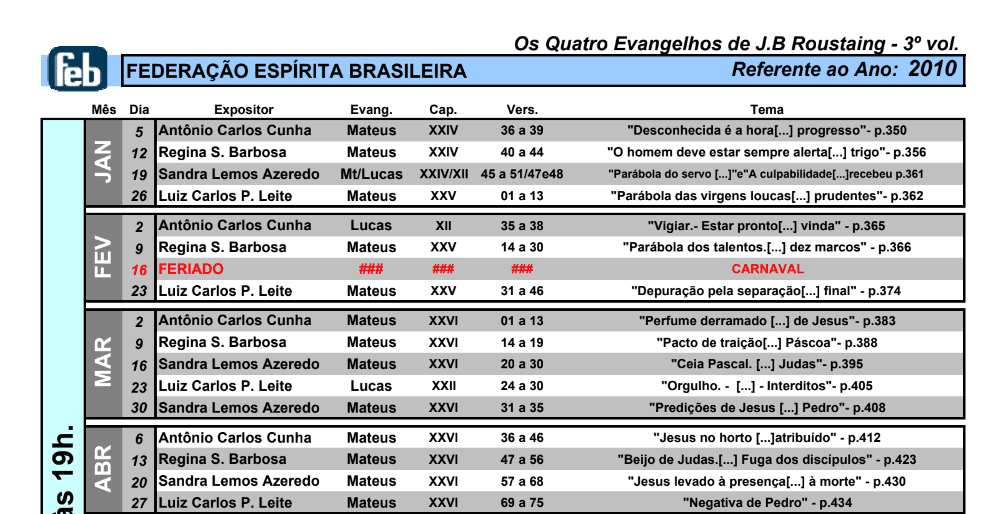
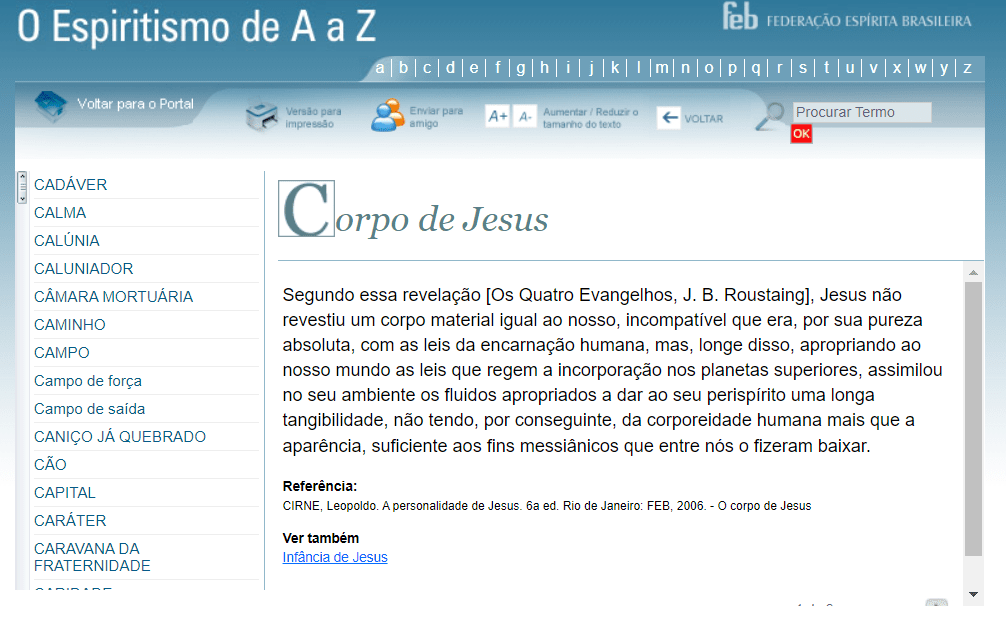
As if that were not enough, Spiritism, since Kardec's death (in 1869), began to be flooded with ideas roustaguists (by Jean-Baptiste Roustaing), a “doctrine” that was established in the Brazilian Spiritist community since before the beginning of the 20th century, including by great sympathy from Bezerra de Menezes to his ideas. Although the FEB, self-proclaimed “Spiritism summit in Brazil”, only adopted the obligation to study Roustaing’s works from 1917 onwards (read more here), the Roustainguist (or Rustanist) influence was already strong in this environment for a long time.

Then came the influences Ramatists, following the same pattern: ideas of a clearly pseudo-wise Spirit (Ramatis), who believes he knows more than he knows and who wants to put himself with messianic characteristics, rewriting the truth and putting Kardec in the trash, contradicting the Spiritist Doctrine and Science itself in countless points and, finally, without citing several other examples, came the divinism, also with the same messianic content, this time through an individual who proclaims himself the reincarnation of Kardec and who also produces the most diverse types of ideas contrary to what was already established by the universal agreement of the teachings of the Spirits and by reason.

Anyway: the Spiritist Movement is forgotten by Kardec, to the point that there is almost no Spiritism in many points, but a religious spiritualism (in the sense of dogmatic religion and full of rituals, hierarchies and priests). We need, I repeat, to do our part, actively, but without contention, that is, looking for groups and individuals honestly interested in this task, in order to assist in the restoration work, because,

what is basic, cannot be surpassed!