A stone against the denialism surrounding the adulterations of Allan Kardec's works
Dear reader, we will be brief on the subject, putting an end to the denialism surrounding the adulteration of Allan Kardec's works. The bibliography used is included at the end. The text will be presented in succinct bullet points for ease of reading.
Before you begin, please note that you can obtain Kardec's original works, already released in PDF format by the publisher FEAL, by clicking on here.
1. The figure of Roustaing
Around the 1860s, the figure of Jean-Baptiste Roustaing, an influential and wealthy French lawyer, emerged, seeking to establish himself in the Spiritist community. This gentleman began to receive psychographies, through just one medium, of one or more Spirits who claimed to be the evangelists themselves, reproducing absurd dogmas, among which ((ROUSTAING, The Four Gospels, volumes I to IV, FEB)):
- the dogma of the fall into sin, stating that the individual only needs to incarnate after making a mistake;
- the dogma of the fluidic body of Jesus, affirming that he was never incarnated among us, being only a materialization;
- the dogma of the retrogradation of the soul (“involution”), by affirming that the Spirit that errs a lot incarnates as a slug (“fleshy cryptogam”).
2. Roustaing hated spiritual science
Roustaing and his followers came to hate Spiritist science and Kardec's method, as this method was their Achilles' heel, easily undermining their theory. This hatred is evident in the publication, in 1882, of the pamphlet Les quatre évangiles de JB Roustaing- réponse à ses critiques et à ses adversaires, édité par les élèves by JB Roustaing (The Four Gospels of J.B. Roustaing — a response to his critics and adversaries, edited by his disciples by JB Roustaing), a pamphlet written sixteen years earlier by Roustaing.
Roustaing's intentions are confirmed by the Spirits, when Kardec, on September 16, 1862, questions about this gentleman, who wanted Kardec to go to his house, instead of visiting the worker spiritists:
No, in general, he comes across as an enthusiast, an exalted, wanting to impose itself.
FIGUEIREDO, Paulo Henrique. Neither Heaven nor Hell: the laws of the soul according to Spiritism. Editora FEAL, 2020.
3. The new edition of Heaven and Hell
Soon after Kardec's death, a new edition of Heaven and Hell appeared, containing, among many terrible changes:
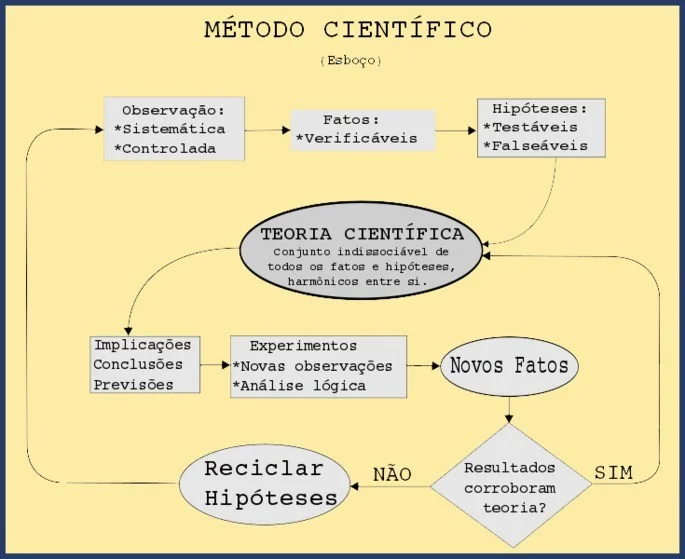
- THE removal of the preface of the work, where Kardec exposes precisely the scientific method necessary for the Spiritist Doctrine;
- THE complete amendment of Chapter VIII, becoming VII, with the creation of the subtitle “Penal Code of the Future Life”, an absurd title, inserting the item 10, where it is said that all the vicissitudes we suffer here would be the result of our imperfections, expiations of mistakes committed, in this or other lives. The effect of this idea is, by force of logic, to admit that all the difficulties we go through would be the result of acquired imperfections, as a kind of punishment, leading to the idea that only imperfect Spirits would incarnate here, needing correction — the same dogma as Roustaing, exhaustedly fought by Kardec and the Spirits.
- THE loss of correspondence between the 25 items in chapter VIII with the rest of the book.
4. The new edition of Genesis
In 1872, the new edition of Genesis appeared, which contained very important alterations:
Removed item 2 of chapter IV, where Kardec speaks precisely about the principles of blind faith and passive obedience: “The veneration of sacred books, almost always considered as having descended from heaven, or inspired by divinity, prohibited any examination.”
- Regarding the disappearance of Jesus' body, it was removed item 67, in which Kardec addresses the issue of the disappearance of Jesus' body, stating that the issue had not yet been completely resolved by Spiritist science: “Now, until now, none of the [personal opinions] that have been formulated have received the sanction of this double control.” Remember: Roustaing accepted the dogma that Jesus was among us only in the materialization of the fluidic body, and hated the method of double control (“This double control is fundamental and obligatory for the acceptance of any new fundamental concept of the Spiritist doctrine by Kardec. Until this has occurred, it will be considered a simple opinion, whether it came from a man or from a Spirit” — FIGUEIREDO, 2021)).
- In chapter XVIII, item 20, it was removed the entire passage in which Kardec says: “Far from replacing one exclusivism with another, Spiritism presents itself as the absolute champion of freedom of conscience.”
- In item 24 of the same chapter, the entire item 24 was removed, in which Kardec makes a serious observation about the enemies of moral progress (our emphasis):
To say that humanity is ripe for regeneration does not mean that all individuals are on the same level, but many have, by intuition, the germ of new ideas that circumstances will bring about. Then they will prove to be more advanced than one might suppose, and they will eagerly follow the lead of the majority.
There are, however, those who are essentially resistant to these ideas., even among the most intelligent, and who certainly will not accept them, at least in this lifetime; in some cases, in good faith, out of conviction; in others out of self-interest. These are those whose material interests are tied to the current situation and who are not advanced enough to give them up, because the general good matters less than their personal good—they become apprehensive at the slightest movement toward reform. Truth is a secondary issue for them, or, better said, for some people, truth lies entirely in that which causes them no trouble. All progressive ideas are, from their point of view, subversive ideas, and that is why they dedicate an implacable hatred to them and wage an obstinate war against them.They are intelligent enough to see Spiritism as a tool for progressive ideas and the elements of transformation they fear, and because they don't feel up to it, they strive to destroy it. If they considered it worthless and unimportant, they wouldn't bother with it. We've said this elsewhere:The more grandiose an idea is, the more it encounters adversaries, and its importance can be measured by the violence of the attacks it is subjected to.”.
5. Adulteration published in Posthumous Works
In the publication of Posthumous Works, by Pierre Gaetan Leymarrie, the author inserts a psychograph tampered with, in which Kardec is asking for advice on the new edition of Genesis, which he was, yes, elaborating:
February 22, 1868.
Medium M. Desliens.Allow me to give you some personal advice about your book Genesis. I think that, as you do, it should undergo a rearrangement that will make it gain value in methodical terms; but I would also advise you to review certain comparisons in the first chapters, which, without being inaccurate, can be ambiguous, and which can be used against you in the finishing of words. I don't want to point them out in any particular way, but by carefully analyzing the second and third chapters, they will certainly surprise you. We'll take care of your research. It's only a matter of detail, no doubt, but details sometimes have their importance; that's why I thought it useful to draw your attention to this side.
Question. In the reprint we're going to do, I'd like to add a few things, without increasing the volume. Do you think there are parts that could be removed without inconvenience?
Response. My opinion is that there is absolutely nothing to take away as doctrine; everything is useful and satisfactory in every aspect; but I also believe that you could, without inconvenience, further condense certain ideas which need no development to be understood, having already been sketched elsewhere; in your work of reorganization you will easily achieve this.
We should leave intact all the theories that appear for the first time in the public eye; don't remove anything as ideas, I repeat, but just cut out, here and there, developments that add nothing to clarity
You will be more concise, no doubt, but just as understandable, and it is the ground thus gained that you may have to add new and urgent elements. It's a serious job for this revision, and I urge you not to wait too late to do it, it's better to be prepared ahead of time than if I had to wait after you.
Above all, don't rush it. Despite the apparent contradiction of my words, you undoubtedly understand me. Start working promptly, but don't stay too long. Take your time; your ideas will be clearer and your body will be less fatigued.
You can download the original content of this psychography by clicking on here.
Leymarie, seeking to reinforce the idea that the fifth edition of Genesis (already questioned since that time) would have been produced by the hands of Kardec, uses only the final part of this dialogue, discarding the beginning of it and inserting a section that didn't exist, at the beginning:
February 22, 1868.
(Private communication — Medium: Mr. D…)
the genesisFollowing a communication in which Dr. Demeure gave me very wise advice on modifications to be made in the book Genesis, for its reprinting, which he urged me to take care of without delay, I said to him:
"Sales, so brisk so far, will undoubtedly cool; it was an immediate effect. I believe the fourth and fifth editions will take longer to sell. However, since it takes some time for revision and reprinting, I must not be unprepared. Could you tell me how much time, roughly, I have to handle this?"
Answer — This revision is serious work, and I advise you not to delay starting it too long. It's better to have it ready in advance than for it to be left waiting for you. However, don't rush. Despite the apparent contradiction in my words, you certainly understand me. Get to work now, but don't dedicate too much time to it. Do it slowly; your ideas will present themselves more clearly, and your body will benefit, becoming less fatigued.
However, you should expect the volumes to sell out quickly. When we told you this book would be a huge success among your other books, we were referring to both philosophical and material success. As you can see, our predictions were correct. It's important to be ready at any moment; things will happen more quickly than you imagine.
6. The insurmountable legal fact
They are undisputed legal facts at tampering of Genesis and Heaven and Hell, for the mere reason that editions were released, with alterations, after the author's death and without legal deposit — as stated by at least four specialized legal operators: Simoni Private, Julio Nogueira, Lucas Sampaio and Marcelo Henrique. That cool fact it is above of any consideration and, because of this, spiritist federations from other countries, respecting the law, returned to the third edition of the work. Unfortunately, laymen in matters of copyright have found resonance in some individuals and also in the Brazilian Spiritist Federation, working to maintain a denialist thesis and contrary to the law.
7. It barks like a dog, wags its tail like a dog, has the shape of a dog, but is it a bird?
Having arrived here, having given due attention to the facts, verifiable in the indicated bibliography, the dear reader, in addition to everything acting in a rational and logical manner (and respecting the law) will not be able to have any doubt about the facts of adulterationsTo say otherwise would be against the law and deny what is transparent. After all, if it barks like a dog, wags its tail like a dog, and is shaped like a dog, it is definitely a dog, not a bird—but "some" want it to be.
Now, dear reader, to give rise to denialist thesis of these gentlemen, trying to maintain that they were not adulterations, but rather modifications made by Kardec's hands:
- it would be necessary, first of all, to go against the law;
- it would be necessary to voluntarily ignore that Roustaing hated spiritualist science and wanted to take Kardec's place;
- it would be necessary to voluntarily ignore that Guerin, an influential and wealthy follower of Roustaing, offered his influence around the new presidents of the Public Limited Company;
- it would be necessary to admit that Kardec, without any possible explanation, removed such important passages precisely at the points of greatest conflict with the Roustainguist theses or his modus operandi;
- it would be necessary to admit that Kardec contradicted the spiritist science, that is to say, in adulteration from Heaven and Hell, which all the vicissitudes we suffer here would be the result of our imperfections, expiations of mistakes committed, in this or in other lives. The effect of this idea is, by force of logic, to admit that all the difficulties we go through would be the result of acquired imperfections, as a kind of punishment, leading to the idea that only imperfect Spirits would incarnate here, needing correction — exactly the Roustainguist thesis, “by chance”. This is false and, in fact, is even refuted in the adulterated Genesis, in the analysis of the passage about the Man Born Blind: “If this was not an atonement for the past, it is proof that it should serve their progress.”.
- it would be necessary to voluntarily ignore that Leymarie, to support the thesis that the 5th edition of Genesis had been produced by Kardec, published an adulterated psychograph, cutting out the part that touches on the importance of DO NOT REMOVE ANY DOCTRINAL IDEAS, something done in adulteration.
- it would be necessary retire rationality in the face of such obvious things, leaving aside Erastus's very important guidance: “It is better to reject ten truths than to admit a single lie, a single false theory” (item 230 of The Mediums' Book).
8. Conclusion
We're not here to try to force understanding on those who don't want to understand and, by willingly admitting sophistries, give rise to fascination—as Roustaing did when faced with such absurd ideas. For those who want to understand, it's crystal clear. Let each person investigate further to reach their own conclusions—after having investigated everything, not before.
9. Bibliography
- Allan Kardec's Legacy: https://amzn.to/3RIn2gv
- Final point — the reunion with Spiritism with Allan Kardec: https://amzn.to/48PLaE7
- Neither Heaven nor Hell — The Laws of the Soul According to Spiritism: https://amzn.to/3F2voYO
- Genesis — Miracles and Predictions According to Spiritism (unadulterated): Free PDF or https://amzn.to/3RM91hF
- Heaven and Hell: Or divine justice according to Spiritism (unadulterated): Free PDF or https://amzn.to/3ZGrcal
- Much Light, by Berthe Fropo: https://bit.ly/3zCV8LR