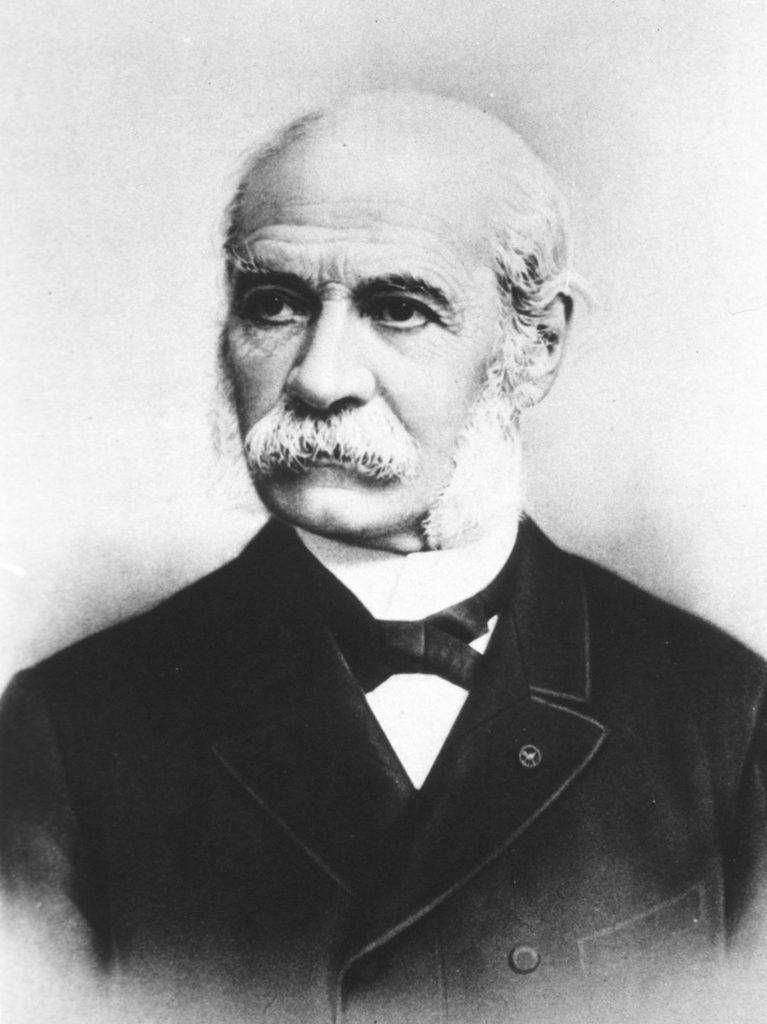
CSI of Spiritism: the official organ of Truth

CSI of Spiritism, by Carlos Seth, became the official body of Truth.

by Paulo Degering R. Junior


Contrary to respecting world law, with regard to the moral right of the author and which peremptorily classifies, from a legal point of view, the fourth edition of Heaven and Hell and the fifth edition of Genesis as factual tampering, indisputable, the group known as CSI of Spiritism, through an argument full of holes and lack of logic, giving final words on the subject and running over The legal system says there were no adulterations.

There, in the CSI of Spiritism, by Carlos Seth, Adair Ribeiro and Luciana Farias, the subject is no longer discussed. Although the legal record of the publication of the fifth edition of A Gênesis only dates back to 1872, how did they find one (only one) supposed copy of this edition, but dated 1869, in a library in Switzerland (not in France, but in Switzerland ), soon linked this lost copy to the fact that Kardec declared that he was preparing a new version — as if this could be used as proof of conclusion and correspondence. And, in the basket, there is the statement that the grotesque — and obvious — adulteration of Heaven and Hell it didn't exist!

The logic of absolute Truth (CSI of Spiritism) is this: if Kardec declared that he was preparing a new edition of Genesis and if a copy, dated 1869, with at least strange changes, was found (in Switzerland), then it is clear that it could only have been published by Kardec (despite the problems, right on the cover), and whoever says otherwise is lying!

Of course, there is a detail here: the fact that, as the Legal Deposit of the 5th edition was only carried out in 1872, almost three years after Kardec's death, this, per se, classifies an important legal question — that any change made after the death of an author implies adulteration. But of course the Ministry of Truth has the answer: the unique copy, for who knows why, forgotten in a Swiss (and not French) library is complete proof against the legal issue (it is not)!

There is also the fact that Kardec's wife signed the minutes of 1873 (if I'm not mistaken) where she would be giving notice of the publication of that edition... But that this lady of over 70 years old, in mourning, was removed from her duties, by Leymarie, as Simoni Privato demonstrates, and that this edition was not published in France, in the first years, of course it's beside the pointIt seems to us that everything was planned so that this adulteration would not be evident in French territory.

It would be logical, for an unwary thinker, to imagine that the fact that it is not possible to find, in France, copies of this new edition, “Revised, Corrected and Enlarged”, is due to the fact that, in France, this could be considered a misdemeanor — since it had no legal deposit — but not for us who accept the Unquestionable Truth.

As they found several pieces of evidence that Kardec, before he died, had ordered a new edition of A Gênesis; how they found evidence that this new edition had begun to be printed; as they verified that Kardec's widow herself, three years later, signed a document acknowledging the distribution of this new edition, they concluded, of course, that it would be absolutely impossible for anyone to take the movable types after Kardec's death, and produced a second version, presenting each one according to convenience, or that the version altered by Kardec had disappeared, leaving only an adulterated version. No, none of this could have happened, according to the CSI of Spiritism.

Evidence is now supported to have the final say on something that cannot be proved — and which they claim cannot be proved. What we need to understand and accept, “on our side”, is that Kardec became — he may forgive me — gagá, in his last years! That, despite having produced such profound and wise works, in scientific and philosophical terms — Heaven and Hell and Genesis — shortly after that, he must have had some kind of syncope that left him injured, to the point of going against the direction of the Spirits, who said that the work was fine and that NOTHING should be removed.

"My opinion is that there is absolutely nothing of doctrine to be taken away; everything there is useful and satisfying in every way

[…]

"It is necessary to leave intact all theories that first appear in the public eye.”.

In this case, in addition to the legal demonstration of tampering with The Genesis, this communication also reinforces the fact due to the doctrinal changes identified in the work, with the suppression of several passages in which Kardec criticizes the heteronomous moral of religious fanaticism, among other manipulations.

Still in this communication, the spirit also suggested that he work without haste and without dedicating a lot of time:

"Above all, don't rush too much. (…) Start working immediately, but not in an exaggerated way. Do not hurry”.

AUTONOMY. NCNI – Advice on Genesis. Available in: https://espirito.org.br/autonomia/ncni-conselhos-sobre-a-genese/. Accessed on: 24 Apr. 2023.

Kardec not only removed very important points from the works, such as the preface of the new edition of AG (after all, who needs a preface explaining the character of the work and the property it has, as a result of the study of the spiritist science?), he made a true frankenstein of this work, exchanging previously declared fundamental ideas and even making references to postulates that he would have to remove in the new edition of OCI. Then he, who, with frightening skill, was able to lead a line of thoughts perfectly linked between several issues of the Spiritist Magazine! He removed a chapter from the OCI and made into afterlife law what he once said could not be taken into law - without giving any explanation for it!

Poor Kardec, he must have lost his mind from talking to Spirits so much. According to this line of thought—that of Unquestionable Truth—he could have almost become a new disciple of Roustaing, so much so that, according to the Ministry of Truth, we must accept as a product of Kardec's handiwork the insertion, in Chapter VII, item 10 of the "Penal Code of the Future Life" (sic), of the idea that all the vicissitudes we suffer would be expiations! You, Kardec, who always affirmed, in agreement with the Spirits, that incarnation is not a punishment and that even the Spirit who always chose good, still needs to incarnate and go through vicissitudes! I really wish that WArlos seth Iinvestigation would explain this complete incongruity… But there is no need: we must accept their truths without question.

Worse: in addition to gagá, Kardec was FEARFUL. Well, that's the only thing we can deduce from the unquestionable truth of the CSI of Spiritism, since it made, in A Gênese, heavy assertions about the opponents of Spiritism, to later remove them in the new edition.

To say that humanity is ripe for regeneration does not mean that all individuals are on the same level, but many have, by intuition, the germ of new ideas that circumstances will bring about. Then they will prove to be more advanced than one might suppose, and they will eagerly follow the lead of the majority. There are, however, those who are essentially refractory to these ideas, even among the most intelligent, and who will certainly not accept them, at least in this lifetime; in some cases, in good faith, out of conviction; others for interest. They are those whose material interests are linked to the current conjuncture and who are not advanced enough to give them up, since the general good matters less than their personal good — they are apprehensive at the slightest reform movement. The truth is for them a secondary issue, or rather, the truth for certain people lies entirely in that which does not cause them any trouble. All progressive ideas are, from their point of view, subversive ideas, and for this reason they have an implacable hatred for them and an obstinate war against them. They are intelligent enough to see Spiritism as an aid to progressive ideas and the elements of transformation that they fear and, because they do not feel up to it, they strive to destroy it.. If they thought him worthless and unimportant, they wouldn't worry about him. We have already said it elsewhere: “The more grandiose an idea is, the more it finds opponents, and its importance can be measured by the violence of the attacks to which it is the object”.

KARDEC, Allan. GÊNESE, 4th EDITION — EDITORA FEAL

Perhaps Kardec received a threatening letter — more threatening than the dozens he should have received with threats. Or else Kardec finally noticed his mistake in judging that Spiritism was so potent as to awaken the relentless hatred to which he referred.

Well, in addition to accepting the Unquestionable Truth of the CSI of Spiritism, learning to leave aside this “reason” business, we also need to learn to bury certain authors, who are not even cited by the representative body of divine truth on Earth. We can even criticize them, as Carlos Seth did, but we cannot, in any way, use their vast works from years of research on Magnetism, Rational Spiritualism and Spiritism. Never! When criticizing them, we shouldn't even mention names – people will be interested in reading the crazy things said by this guy “Paulo Henrique de Figueiredo”. After all, this author has the audacity to question the Ministry of Truth, using this so-called “reason” and, stating that he cannot see a crazy Kardec, says that he found full agreement between the ideas discussed in the works and in the Revista Espírita with the first editions of these works — editions that should also not be cited.

Let's run a ruler over all this imbroglio, and let's talk about it no more. The evidence of the “other side”, the one that “believes” in an adulteration, must be summarily forgotten, together with its authors. Unlike what Kardec said — that we cannot give the final word on what cannot be proven — we must accept the final word of the CSI of Spiritism. Since the evidence they found became the final expression of unquestionable truth, all — I repeat: all — arguments from the “other side” automatically become null and void! That “truck” of arguments brought by Simoni Privato in “The Legacy of Allan Kardec”? NULL, as it says WArlos seth Investiga: “We demonstrate with FACTS that ALL the evidence used to prove that “The Genesis” could have been tampered with DID NOT hold up.” There are those who disagree.

Ah, the FACT that Leymarie tampered with a spiritual communication, in Posthumous Works, removing precisely the passage in which the Spirit recommended that Kardec not remove any idea in the new edition of The Genesis was also promptly annulled by the evidence of the organ of Unquestionable Truth.

Nor should we even bring up these opposing arguments, as what is it worth, against a few material evidences, an enormous amount of logical arguments and the fact that the registration, after the author's death, of an altered edition, constitutes adulteration? ? Absolutely nothing!

Of course, this brings a “small” problem, since Spiritism cannot be proven except through rationality, but we should not fear: the Ministry of Truth will certainly have a solution for this. As soon as Spiritism is somewhat more undermined by the distrust placed on Kardec (who, remember, was left stuttering) and by the discovery of “gossip of the time”, obtained through the opinions of dissident mediums, found in old documents, we will be able, who You know, take a look at “Kardec’s” Spiritism and found a new era of historical studies. historical (not doctrinal, not moral, but historical, which is all that matters for the Absolute Truth).

But that's not all: we must, in addition to declaring the nullity of any arguments to the contrary, without presenting them to the public, also combat any idea that comes from the opposite direction, criticizing works without any need for scientific commitment. If we commit fallacies, it's okay. After all, we will be fighting the lie and, for that, we must use all the weapons.

Says Carlos Seth, from the CSI of Spiritism:

In the mid-1890s, the division between the Consoling Spiritism and Scientific Spiritism, as my colleague John Monroe has already pointed out.

History repeated itself between 2016 and 2020 now in the field of morality, with the release of books that sought to bring the thoughts of Kant, Maine de Biran and Victor Cousin into Spiritism, even if that meant distorting the ideas of Allan Kardec.

BASTOS, Carlos Seth. Added bonus – The ending. Spirits under investigation. Available at: <https://www.luzespirita.org.br/leitura/pdf/L193.pdf>. Accessed on: 04/15/2023.

Without a shadow of a doubt, Seth has not read absolutely anything that these crazy people are saying about Rational Spiritualism, nor has he read the Spiritist Magazine, which is where the scientific basis of Spiritism, which he seems to criticize. Precisely in Revista Espírita, where Kardec seems to have “lost his head”, when stating that Spiritism is a development of Rational Spiritualism! Interestingly, reading (and taking care not to criticize what one doesn't understand) makes it clear that Rational Spiritualism provided the foundation for Spiritism, with a significant interchange between these two sciences, with Spiritism providing the key to what Rational Spiritualism couldn't answer. But therein lies the problem: this subject is addressed by an author whose name the Ministry of Truth (CSI of Spiritism) doesn't even allow to be cited—this "Figueiredo" guy. I even cite the work: "Autonomy: The Untold Story of Spiritism." But please, don't read this book, full of nonsense! We should just place it in the shadow of non-existence, along with its author who, according to the Ministry, is causing a division in Spiritism, “now in the moral field”!

If the Unquestionable Truth acts like this, it is because it has a very serious reason: it is that this author can endorse the subversive ideas of adulteration. Showing his malevolent intentions and putting his books into oblivion, through some harmless and far from light fallacious statements, Truth acts in the name of Good. If these ideas of autonomy and Rational Spiritualism — “rational” — are treated by this author, they are either the result of an error, or they should just be forgotten, so that, we repeat, they do not lead people to read the prohibited works.

Pay close attention: the controversy over the adulteration of the works Heaven and Hell and Genesis turned out to be non-existent! Yes, because, for us who accept the Unquestionable Truth of the CSI of Spiritism, the other side does not even exist! Because we accept evidence as proof (although science is about theories, not proof) and make an inference that to many may seem far-fetched — but the Ministry of Truth claims it is not — everything else automatically becomes null. Let us also delete the story, which we should not even mention. Regarding the authors who corroborate this idea of a plot around Kardec, we can do nothing more than show them as they are — impulsive and frivolous, despite having dedicated themselves to long years of research — so that, finally, we can guide the people on the correct path — that of Unquestionable Truth — not through reason, but through coercion, since the majority are incapable of thinking for themselves. That story of leaving it up to time and the public to judge what is correct — these crazy ideas from Kardec — fall apart, as we have evidence that can be taken as complete proof, according to our theories.

Those, finally, who do not accept the Unquestionable Truth, we must treat them as they are: resistant and closed-minded, who do not accept the evidence that we point out to them. They prefer to believe that Kardec could never have made such alterations, because, they say, they are not rational or consistent with the method he would have used for years, much less with the rest of the work. Balela! Let us declare war on these ideas without any nexus and prohibit, as much as possible, that they are even raised, as they cause a gigantic harm by stirring up, in the people, this absurd desire to think for reason — so absurd that they do not accept historical evidence as an irrefutable fact of non-adulteration. By the way, we should name them as such: denialists, so that they are demoralized wherever they speak and do not arouse anyone's curiosity.

Therefore, some steps are defined to be followed to reestablish the Truth, according to the CSI of Spiritism:

  • Use every space possible, on social media and YouTube channels, to state that all opposing arguments have been defeated, no intention of dialogue.
  • Write documents and articles showing a series of material evidence that corroborates the thesis, that is, the evidential proof of Truth — again, without considering presenting contrary arguments.
  • Write articles that disparage authors and ideas in contrast to the position of the CSI Ministry of Spiritism, without venturing to get to know them, which is obvious, and without any concern about committing fallacies. Remember: everything for the Good!
  • Create study spaces. From Spiritism? No. From its scientific context? Much less! To study the old letters and investigate who were the mediums that Kardec insistently said should not be placed in relevance.
  • In the face of any discussion about the Ministry of Truth's form of action, quickly and skillfully lead the matter to the question of adulteration, where we have total control, since the other side, already demoralized by being framed in denialism, will not be able to sustain reliability in the face of the public.

They say that we tarnish the image of Kardec and Spiritism itself by acting like this. Now, the search is for the Truth, and everything that sustains what we are certain of, from the beginning, must be exalted, no matter who it hurts. But enough of this subject, for we will not discuss it further now that we are in possession of the Unquestionable Truth.


Explanations

Dear reader,

Of course, if you study Kardec and follow us, you will notice that the text is just a criticism, in a satirical tone, of the absurd behavior adopted by some people who decided to take the truth for themselves, leaving important facts aside. I'm sorry I made you read all this. For our part, we do not wish to impose our truth or our conclusions. We leave each person the freedom to judge for themselves, in possession of evidence and using their own reason. What saddens us is that many, allowing themselves to be led, completely ignore works such as those by Paulo Henrique de Figueiredo and Simoni Privato, who have made a unique contribution to the understanding of Spiritism.

What is the crux of the matter, anyway? Is that the 5th edition, with alterations, was legally deposited only in 1872. This, legally, constitutes adulteration. The rest, the evidence found by the “CSI of Spiritism”, only points to the fact that Kardec was preparing a new version, but it does not prove that this version ever went to print.. All efforts to point out that the only copy found in Switzerland corresponds to this new edition constitute forced inferences, just because it corresponds to the copy referring to the legal deposit of 1872, of the 5th edition, made by Leymarie. This is the point.

What do we have for security, without a shadow of a doubt: Kardec edited A Gênese, of which he ordered four reprints, each of which constituted a new edition, although equal to the first. The proof of this lies in the fact that he did not make a legal deposit for the other editions.

It is also a fact that Kardec was preparing a new edition of this work and of O Céu e o Inferno. But there is no proof that he concluded them, it being another forced inference to state that the request for reprint of two thousand copies of A Gênese, made in February 1869, refer to the printing of this new edition. Maybe yes, maybe not. If so, it may be that this edition has been destroyed, so that someone can tamper with it. For the argument about the time to do so, it is enough to remember that, in those days, people had much more time than we have today and that, moreover, there is no proof that the adulterated version was not printed only later. ; for the argument of the printer's need to convince, it suffices to assume that it would only be necessary to say, for example, that it was a request from Kardec, made shortly before his death, and that, not being a final edition, but only an edition for evaluation and corrections, legal deposit would not be required (which is a fact).

An important point, by the way: what is the point of Kardec changing the title of his work (A Gênesis), inserting the subtitle “revised, corrected and increased”, if he has never done this before, for any of his other works? In my opinion, it looks more like something done, by a tamper, to reinforce that that edition would be an important “change”.

Spiritual communication, where the Spirit affirms, through the medium Mr. M. Desliens, that Kardec should not remove anything, but only condense what may have become clear in other points (which you can check on here), he was tampered with by PG Leymarie, when it was included with cuts and alterations in Posthumous Works, organized by him, and published in 1890: second part, chapter: “My initiation into Spiritism”, item: “My new work on The Genesis” (where “ Mine" would be a reference to Kardec, talking about himself).

Now, why Leymarie's rage in supporting, through flagrant adulteration, the idea that the 5th edition of A Gênese was produced by Kardec?

Anyway, let's leave each one to their time and their choices, but we don't fail to present the real proposal of the spiritist science, totally autonomous and liberating and, as we concluded, very far from the concepts transformed in "Código Penal da Vida Futuro", in that which, for us, can only be configured as an adulteration.

The fact is that Carlos Seth, in the search for everything that can support his idea, has distorted ideas and words himself, using fallacies and logical arguments, sometimes invalid, to force conclusions. It was frivolous and inelegant to state, with great ignorance, that “a certain author” would be causing a division in Spiritism, “now in the moral field”, by bringing, into the Doctrine, Rational Spiritualism (we have already dealt with this in the article Rational Spiritualism and Spiritism – a new division in the Spiritist milieu?) and is equally inelegant in using his means of communication to denigrate those who, through reason and facts, conclude differently from him, imputing “denialist” terms to them.

Furthermore, we present a final argument: Carlos Seth himself claims that he has no proof that the works have not been tampered with. There remains, therefore, room for some doubt and, therefore, it would not be much more prudent to stick with the first edition of these works, from when Kardec was alive, where we have complete confidence that everything, absolutely everything that exists there, was produced by your hands? This, of course, without treating the other editions as non-existent, as they serve, in our view, precisely to demonstrate the tone of the changes and what they removed or inserted in Kardec's thinking.

We leave the reflection to the reader.


Umbral and the doctrinal basis

"What is the threshold?"; "Who goes to the threshold?"; "What is the meaning of threshold?"; "What does Spiritism say about the threshold?". Followers of the Spiritist movement are so concerned about something that, in truth, has no reason to exist—not as they imagine it to be.

I think that a lot of time is wasted on this subject, the “Umbral”, which is a peaceful point in the Doctrine (therefore, a result of the scientific method of research): it is nothing more than a mental creation of attached, suffering Spirits, when they are not intentionally cultivated ideas and transmitted in order to delay. This is so much a fact that, before Spiritism, the Spirit would say he was suffering in the fires of hell and, before Catholicism, he would say he was in Tartarus. They are not local, they are a state of soul and, if you seek to do good, with all your strength and with all your understanding, you should not worry about this suffering. moral.

Therefore, the question "what is the threshold" is answered thus: it is an allegory, a figure of speech, representing a state of the soul. It can also be an allegory representing this denser spiritual layer, of the Spirits most connected to matter. This is the meaning of "threshold," and "those who go to the threshold" are those who are attached to imperfections and materiality, knowing, however, that this is an allegorical idea to illustrate a previous state.

When you focus on what you want, based on previous ideas, you miss the important details of the work. Here's what we're going to demonstrate. This is a simple work analyzing the article “Umbral, is there a doctrinal basis to support it?”, by Paulo da Silva Neto Sobrinho, by Paulo Degering Rosa Junior.

Paulo Neto's study on the umbral

In the study presented by Paulo Neto, “Umbral, is there a doctrinal basis to support it?”, there are some initial problems. Let us check, for example, the very sensitive differences between the first edition of Heaven and Hell and the edition used by him. In the first edition:

In most cases, he is unhappy in this world through his own fault, but if he is imperfect, it is because he was already imperfect before coming to Earth, where it atones not only for current faults, but the previous faults that were not repaired, suffers in a life of trials the suffering imposed on others in another existence. The vicissitudes that man experiences are simultaneously a temporary punishment and a warning about the imperfections that must be eliminated to avoid future misfortunes and progress towards good.

KARDEC, Allan. Heaven and Hell, 1868 (original edition).

In the edition cited by Paulo Neto:

[…] Most of the time he [man] is unhappy through his own fault; however, if it is imperfect, it is because it was already imperfect before coming to Earth, expiating not only current faults, but previous faults not repaired. Suffer in a life of trials what you made others suffer in a previous existence. The vicissitudes he experiences are, at the same time, a temporary correction and a warning regarding the imperfections that he must eliminate from himself, in order to avoid future evils and progress towards good. […].

NETO, Paul. Umbral: Is there a doctrinal basis to support it?. Available in: http://www.paulosnetos.net/artigos/send/6-ebook/806-umbral-ha-base-doutrinaria-para-sustenta-lo. Accessed on: 20 Apr. 2023.

Can you notice that the difference in the use of the verb atone causes a whole change of ideas? In the first version, by Kardec, it is clear that man atones in the land. In the version used by Neto, it is possible to infer that atonement begins before coming to Earth, which would not be true, according to doctrinal conclusions.

Not only that: this edition, by Paulo Neto, does not even match the 4th edition in French, already adulterated:

Le plus souvent, il est malheureux ici-bas par sa propre faute; mais s'il est imparfait, c'est qu'il l'était avant de venir sur la terre ; il y expie non seulement ses fautes actuelles, mais les fautes antérieures qu'il n'a point réparées ; il harden dans une vie d'épreuves ce qu'il a fait harden aux autres dans une autre existence. Les vicissitudes qu'il éprouve sont à la fois un châtiment temporaire et un avertissement des imperfections dont il doit se défaire pour éviter les malheurs futurs et progresser vers le bien.


Most of the time he is unhappy down here through his own fault; but if he is imperfect, it is because he was imperfect before he came to earth; he expiates there not only his present faults, but the former faults which he has not repaired; he endures in a life of trials what he made others endure in another existence. The vicissitudes he experiences are both a temporary punishment and a warning of the imperfections he must get rid of in order to avoid future misfortunes and progress towards good.

KARDEC, Allan. Heaven and Hell or Divine Justice According to Spiritism. 4th ed. Rio de Janeiro: FEB, 2019. Available at: https://kardecpedia.com/roteiro-de-estudos/886/o-ceu-e-o-inferno-ou-a-justica-divina-segundo-o-espiritismo. Accessed on: 20 Apr. 2023.

It is evident that Kardec, in the first edition and also in the fourth, reaffirms that the atonement takes place on Earth, and to infer the opposite would be to assume that the Spirit atones, materially, in the spiritual world, which is intrinsically linked to the ideas of hell, purgatory, umbral, etc.

Let's go.

Spiritist Magazine

One of the most interesting articles in the RE is “About the Spirits who believe they are still alive”, from the 1864 Revista Espírita:

Not everything is proof in existence; the life of the Spirit continues, as you have been told, from its birth to infinity; for some, death is nothing more than a simple accident that has no influence on the fate of the person who dies. A fallen tile, an attack of apoplexy, a violent death, very often, do nothing but separate the Spirit from its material envelope; but the perispiritual envelope preserves, at least in part, the properties of the body that has just succumbed. On a day of battle, if I could open your eyes, which you have but which you cannot make use of, you would see many fights continuing, many soldiers still going up to the assault, defending and attacking the redoubts; ye would hear them even utter their hurrahs! and their battle cries, in the midst of silence and under the gloomy veil that follows a day of carnage; the combat is over, they return to their homes to embrace their old fathers, their old mothers who are waiting for them. Sometimes this state lasts a long time for some; it is a continuation of terrestrial life, a mixed state between corporeal life and spiritual life. Why, if they were simple and wise, would they feel the cold of the tomb? Why should they pass abruptly from life to death, from daylight to night? God is not unfair, and leaves this joy to the poor in spirit, hoping that they will see their state through the development of their own faculties, and that they will be able to pass calmly from the material life to the real life of the Spirit.

We have, in The Spirits' Book, the well-known question 1012, which, in my opinion, Neto completely disregarded to focus only on “we have already answered this question”, making an assumption that it would refer to question 87. This question, for In turn, he interpreted it as he wanted, not taking into account the often figurative language used by the Spirits:

1012. Will there be circumscribed places in the universe for the pains and joys of spirits, according to their merit? “We have already answered that question. Feathers and pleasures are inherent to the degree of perfection of spirits. Each one takes from himself the principle of his happiness or his misfortune. And as they are everywhere, no circumscribed or closed place exists especially for one thing or another. As for the incarnates, they are more or less happy or unhappy, depending on the more or less advanced world they inhabit.”

a) — In agreement, then, with what you have come to say, hell and paradise do not exist, such as man imagines them?

“They are simple allegories: there are happy and unhappy spirits everywhere. However, as we have already said, spirits of the same order gather together out of sympathy; but they can meet wherever they like, when they are perfect.”

The absolute location of the regions of penalties and rewards only exists in man's imagination. It comes from his tendency to materialize and circumscribe things whose infinite essence he cannot understand.

KARDEC, Allan. The Book of Spirits. 1st ed. Rio de Janeiro: FEB, 2019. Available at: https://kardecpedia.com/roteiro-de-estudos/2/o-livro-dos-espiritos. Accessed on: 20 Apr. 2023.

87. Do Spirits occupy a determined and circumscribed region in space?

“They are everywhere. Infinitely populate the infinite spaces. You have them continually at your side, observing you and acting on you, without realizing it, since Spirits are one of the powers of nature and the instruments that God uses to execute his providential designs. Not everyone, however, goes everywhere, as there are regions forbidden to the least advanced.”

Referring to question 87, note: "Spirits are everywhere. They infinitely populate infinite spaces." Space is not the Universe. Space is infinite; the Universe is not. The Universe is material, cyclical, has a beginning and an end, just like matter. Space is not.

When, in the end, he asserts that “there are regions forbidden to the less advanced", Neto took a figurative phrase for a literal one. Still, if we consider the fact that the less advanced do not easily detach themselves from the material world, we can easily imagine the difficulty of living in material regions that give way to incarnations of more advanced Spirits.

Back in RE, we have in 1858, “The Berezina Drum”:

28. ─ Do you see other spirits around you?

─ Yes, many.

29. ─ How do you know they are spirits?

─ Among us, we see ourselves as we are.

30. ─ How do you see them? ─ How one can see spirits, but not through the eyes.

31. ─ And you, in what form are you here?

─ Under the one I had when I was alive, that is, as a drum.

32. ─ And do you see the other spirits with the forms they had in life?

─ No. We don't take on an appearance until we are evoked. Other than that, we are formless.

In the same year, in “Lectures from beyond the grave — Mrs. Schwabenhaus. Ecstatic Lethargy”:

29. ─ In what form are you among us?

─ Under my last female form.

30. ─ Do you see us as clearly as if you were alive?

─ Yes. 31. ─ Since you are here with the form you had on Earth, is it through the eyes that you see us?

─ No, the Spirit does not have eyes. I only find myself in my last form to satisfy the laws that govern the Spirits when evoked and forced to resume what you call perispirit.

In the Spiritist Magazine of March 1860, Kardec, talking (via mediums) with three different Spirits, questions one of them, the Spirit of Charles Dupont, the one involved in the “History of a Damned”, an inferior Spirit, quite late and still very linked to matter. Kardec asks how he sees the Spirit of Dr. Vignal, a living person, evoked for that study:

53. ─ Do you see the Spirit of the doctor, with whom we spoke?

─ Yes.

54. ─ How do you see it?

─ I see him with a less transparent envelope than that of other Spirits.

55. ─ How do you know that he is still alive?

Ordinary Spirits have no apparent form. This one has a human form; he is enveloped in a mist-like matter, which repeats his earthly human form. The Spirit of the dead no longer has this envelope, as it is detached from it.

In other words: the Spirits continue to affirm that, for them, form is nothing. In the last case, Charles Dupont's Spirit, being inferior, himself affirms the same principle: common (detached) Spirits have no apparent shape. Kardec realizes, based on all this, that, when they claim otherwise, they are in a state of suffering. Ever. The big mistake, allow me to repeat, is wanting to say that, outside of the methodological study, it is enough to collect something that is said everywhere and it becomes true. If so, we should include elves, fairies and mermaids in the Spiritist Doctrine.

It is not enough and we cannot simply believe in the Spirits

From then on, Paulo Neto began to catalog several statements by Spirits, after Kardec — among them André Luiz — and other conclusions by Spiritists or Spiritualists who, putting the Doctrine aside, were left with their partial conclusions.

It is a very big problem to assume that the universal communication of the Spirits is enough for the acceptance of a new doctrinal idea. No: it must also attend to reason and respect what has already been climbed by the same method. So, when a lot of people read a book that talks about “umbral”, a lot of people start to accept this idea, which becomes an illusion after death; that becomes illusion in “unfoldings”; that the medium inserts, finally, through their own ideas, when translating a thought of a Spirit, during a communication.

It is remarkable to note that, in Spiritist circles, there is great concern about whether, upon death, one will go to "Nosso Lar" or to the "Umbral." Since "Nosso Lar" could not support billions of Spirits in their beds and homes, hundreds of new "colonies" soon emerged, each located, they claim, over specific cities or regions of the Earth. Spiritists are no longer concerned about their morals, based on their spiritual progress, but are now concerned about whether they will be punished by the Umbral or rewarded with a comfortable bed and hot soup in Nosso Lar or some other "colony"!

Neto misinterprets the concepts of atonement and punishment. I say this with certainty, because Kardec and the Spirits were using concepts present at that time, based on Rational Spiritualism, to express themselves.

When the author cites the article “O Dia de Todos-os-Saints”, in the RE of 1862, we have an excerpt highlighted in bold: “[...] unhappy spirits who endure the anguish of punishment and isolation”. It turns out that “punishment” was considered the legitimate consequence of evil, not an external action of a punitive force. The irresponsible father's punishment, for example, is to see his beloved son go astray. If the father is blamed for human justice and imprisoned for his irresponsibility, this, perhaps, means absolutely nothing for him, compared to the real punishment he himself suffers. Punishment is not something external, imposed, but as a result of natural law. We thus understand Spiritism from another point of view, much more congruent.

By not understanding this fundamental idea, Neto infers that suffering or pleasure, in the spiritual world, is an external, materialistic condition, as I have already demonstrated.

Next, Neto emphasizes the following passage:

“My dear brother, what horrible torments for all these [those who have chosen the path of materialism]! It's just like the Scripture says, "There will be weeping and gnashing of teeth." They will be plunged into the deep abyss of darkness. These unfortunates are commonly called the damned, and although it is more accurate to call them the punished, they still suffer the terrible tortures that are attributed to the damned amidst the flames. Wrapped in the thickest darkness of an abyss that seems unfathomable to them, although it is not circumscribed, as you are taught, they experience indescribable moral sufferings, until they open their hearts to repentance.”

From this passage, Neto sticks to the idea of a “deep abyss of darkness”, without paying attention to the fact that this abyss, if it seems unfathomable and not circumscribed, can only exist as a mental creation of suffering spirits, being, therefore, , ephemeral. Let us evoke these Spirits and help them to understand that their pain is moral and not physical, and the abysses, mud, etc. , where they will have the new opportunity to work on their past attachments.

Did you know that there are spirits who put themselves in such circumstances because they made a mistake and because they believe in the Doctrine of Sin? Yes. An individual may, for example, have killed another because he believed that the other was coming to take his life. He believes that this is a sin and, thus, mentally submits himself to this suffering, which he externalizes in fluidic creations (which are not matter like ours, but something much more subtle, formed by the “condensation” of the Universal Cosmic Fluid). . Make him understand that this apparent error was born of an instinctive reaction; that God does not punish; that he can seek, in new lives, to work this instinct, to dominate it by will; that, finally, the one he killed has nothing against him, because he understands his mistake, and that Spirit will get rid of such ideas, really disturbing.

André Luiz himself makes this clear when he cites the case of the girl who, having died, her spirit did not want to leave the coffin, because she believed that Christ himself would come to take her out of there, subjecting her to judgment.

Furthermore, the author, based on a preconceived notion, adopts a paradigm that leads him to understand all the examples given according to his own preferences. When he mentions "spiritual spheres" and "spiritual layers," he fails to realize that this is figurative language, and in this last case, it refers to the classification of Spirits by "layers," as is done in Spiritist Scale. By the way, this is very clear in question nº 1017 of OLE, which the dear Paulo Neto did not include in his assessment (my emphasis):

1017 [1016]. Some Spirits said they were inhabiting the fourth, fifth heavens, etc. What did they mean by that?

“If you ask them what heaven they inhabit, it is that you form an idea of many heavens arranged like the floors of a house. They then respond according to your language. But for these words room and fifth heavens express different degrees of purification and, therefore, happiness. It's exactly like when you ask a spirit if he's in hell. If he is unhappy, he will say Yesbecause, for him, hell is synonymous with suffering. He knows, however, very well that it is not a furnace. A heathen would say to be in Tartarus.”

The same occurs with other analogous expressions, such as: city of flowerscity of the elect, first, second or third ball, etc., which are only allegories used by some Spirits, either as figures or, sometimes, out of ignorance of the reality of things, and even of the simplest scientific notions.

When you focus on what you want, based on previous ideas, you miss the important details of the work.

The Countess Paula – Heaven and Hell

Many people use the case of this Spirit, Countess Paula, presented in Heaven and Hell, to support their theories of “astral cities”.

What are your palaces and your golden halls before the aerial abodes, the vast field of space variegated with colors that would make the rainbow pale? What are your step-by-step walks in the parks, compared to journeys through the immensity, faster than lightning? What are your limited and cloud-laden horizons, given the grand spectacle of the worlds moving in the limitless universe, under the powerful hand of the Almighty?

How are your most melodious concerts sad and noisy, in the face of this harmony that makes the fluids of the ether and all the fibers of the soul vibrate? How sad and insipid your great joys are compared to the ineffable sensation of happiness that incessantly saturates our being in the form of a beneficent effluvium, without any mixture of restlessness, any worry, any suffering! Here everything breathes love and trust and sincerity. Everywhere loving hearts, everywhere we see friends, no envious and jealous. This is the world I find myself in, my friend, and you will all reach it infallibly by following the right path.

Unfortunately, many stop reading the points that interest them. When the Spirit speaks of “aerial dwellings”, that’s enough to say that she was speaking of spiritual cities! What point do biases adopted in a hurry lead to…

Right after the quote about “aerial addresses”, he continues:

[…] the vast space field tinted with colors that would make the rainbow pale? What are your step-by-step walks in the parks, in front of Travels through the immensity, faster than lightning? What are your limited and cloud-laden horizons, compared to the grand spectacle of worlds moving in the limitless universe, under the mighty hand of the Most High?

These Spirits are talking about Space! He is not talking about astral cities, but about the Space! “Aerial addresses” is a figurative language to say about Space, “above” us!

She continues:

However, uniform happiness would soon become boring. Do not think that our happiness is free from vicissitudes. This is not a perpetual concert, nor an endless party, nor of beatific contemplation through eternity. No. It is movement, life, activity. The occupations, although free from fatigue, present an incessant variety of aspects and emotions, due to the thousand incidents that contain them. Each one has their mission to fulfill, their protégés to assist, friends from Earth to visit, Nature's processes to direct, suffering souls to console. There is a back and forth, not from one street to another, but from one world to another. Creatures come together, separate to come together again; they meet here and there, they talk about what they do, they congratulate each other on their successes; They understand each other and assist each other in difficult cases. Anyway, I assure you that no one has a second of time to get bored.

What exists “on the other side”, for detached Spirits, is action in divine creation! It is the transit through infinite Space, where they come together, here and there, with other Spirits, to act in the processes of Nature, to console suffering souls, incarnate and disembodied! That's it, and not a life limited by walls and false physiological needs!

Conclusion

It is important to note, however, that if such creations exist, it is because God allows them. In fact, this is something linked to the divine benevolence itself, which guarantees, to each one, a gradual and shock-free development. In the article “About the Spirits who believe they are still alive”, from the Spiritist Magazine of 1864, there is an important spiritual communication, from which we take the following excerpt:

Not everything is proof in existence; the life of the Spirit continues, as you have been told, from its birth to infinity; for some, death is nothing more than a simple accident that has no influence on the fate of the person who dies. A fallen tile, an attack of apoplexy, a violent death, very often, do nothing but separate the Spirit from its material envelope; but the perispiritual envelope retains, at least in part, the properties of the body that has just succumbed. On a day of battle, if I could open your eyes which you have, but which you cannot make use of, you would see many fights continue, many soldiers still rising to the assault, defending and attacking the redoubts; you would even hear them utter their hurrays! and their battle cries, in the midst of the silence and under the dismal veil that follows a day of carnage; the fight is over, they return to their homes to embrace their old fathers, their old mothers who are waiting for them. Sometimes this state lasts a long time for some; it is a continuation of terrestrial life, a mixed state between corporeal and spiritual life. Why, if they were simple and wise, would they feel the cold of the grave? Why would they pass abruptly from life to death, from daylight to night? God is not unjust, and He leaves this joy to the poor in spirit, hoping that they will see their state through the development of their own faculties, and that they may pass calmly from the material life to the real life of the Spirit.

We see, therefore, that the existence of such “places” is a fact, permitted by divine benevolence, to those who are not yet developed to understand something above and outside of matter and material needs.

We remember what is printed on our home page:

General concordance in teaching is the doctrine’s essential character, the condition even of its existence. It is evident that all principles which have not received the consecration of general agreement can only be considered as a fractional part of this same doctrine, merely as a simple, isolated opinion for which Spiritism cannot assume the responsibility.

This collective agreement of the opinion of the Spirits, passed, to the rest, by the criterion of logic, is what constitutes the strength of the spiritist doctrine and ensures its perpetuity.Allan Kardec – Genesis

Kardec gave the safe guide to the research method, often presenting it in RE. Current rescues of science at the time allow us to deepen this knowledge. Spiritists need to learn to study, just as those who do not study science end up believing in theories such as the flat Earth. I argue that the most interesting thing is to resume Kardec, understand Spiritist science (which depends on a scientific understanding of its context and current affairs) and then resume contact with the Spirits. With the detachment of one's own ideas and the firm purpose of research, it will be very easy to resume the step, clearing up this confusion caused in the Spiritist Movement with a single purpose: delay of moral progress.


The distance between Spiritism and the Spiritist Movement

A correspondent asked about what would be this supposed distance, always affirmed by us, between the Spiritist Doctrine and the Spiritist Movement.

To her, we can answer in this way, to exemplify for everyone:

“B…, this is something that everyone really needs to study or seek information about, especially about the works mentioned ((

  • In the sense of doctrinal changes: The Legacy of Allan Kardec, by Simoni Privato; Neither Heaven Nor Hell, by Paulo Henrique de Figueiredo; Final Point, by Wilson Garcia
  • In the sense of knowledge about the doctrinal context: Autonomy: the never-told story of Spiritism, by Paulo Henrique de Figueiredo;
  • In the real understanding of the Doctrine, in the essence proposed by Kardec, through the studies: Heaven and Hell and Genesis, both from the publisher FEAL, as the others are adulterated versions, still.)), because understanding and, hence, assuming new positioning, it needs to be a autonomous action. However, I can highlight some key differences between the Spiritist Doctrine (DE) and the current Spiritist Movement (SM):

  • Evocations of spirits: DE was formed on them and demonstrated the need to be carried out, with method, to continue their development; ME recommends not doing it, provoking a wave of mediums who are only “available”, therefore, without control or learning objective.
  • Generality of teaching: DE demonstrated the need to develop the spiritist study through the method of double control: universality and agreement of teaching and rational judgment; ME, infected by Roustaing, who saw a danger in this method (which would disprove her theories), started to take isolated communications as an expression of the truth, without reasoning.
  • Life of the Spirit in Erraticity: DE demonstrated that emotions and physical sensations only exist for the attached Spirit; ME began to teach a fully materialized spiritual world, thus creating ideas of attachment harmful to the Spirit who disincarnates.
  • Necessity of the incarnation: DE demonstrated that the incarnation is a necessity for the progress of the Spirit, in which he, even if involuntarily, plays his solidary role in creation. He removed the concepts of punishment and punishment as an arbitrary action of God, demonstrating that everything is the fruit of the conscious Spirit's choice; ME, under Roustainguist influence, inserted the false concepts of karma, redemption, law of action and reaction and law of return.
  • Heteronomy x autonomy: DE demonstrated, throughout it, that the Spirit develops autonomously, being the first, if not the only, author of its choices; ME, influenced by Roustaing, started to deal with life in a heteronomous way – if I suffer, it is because I am receiving the return; if I have joy it is because I have been blessed, &c.
  • Charity: DE demonstrated that charity is a disinterested action, fruit of the Spirit's duty, which consciously moves towards the good; ME started to treat charity as an external action, almost always only material. Due to the absence of DE studies, ME fails to do the good it could to help in the development of society through spiritist ideas.
  • Moral: DE demonstrated that, all created simple and ignorant, the Spirits develop wrong and right, through the incarnations, choosing between acting in this or that way. There is no duality between good and evil. Some choose to repeat the mistake, developing imperfections from which they will be very difficult to get rid of, through reincarnation work, in a conscious and autonomous action; ME, influenced by Roustaing, started to treat the incarnation as a punishment, as if all the spirits that incarnate were imperfect.
  • Method: DE has always demonstrated the way it would develop itself: through the study of human sciences, confronted, by reason, with the spiritist teachings, in the exchange of information with reputable groups spread all over the world; On the other hand, the ME practically does not study the fundamentals of DE, it has isolated itself in the centers in routines that include: monologues, almost always filled with all the errors mentioned above; passes, without knowledge of magnetism; and mediumistic sessions that, without method and without studies, lose the purpose and usefulness they could really have.

And so on.”

We see that the differences between the Spiritist Doctrine, in its origin, and what the Spiritist Movement professes or believes today, are profound and, almost always, harmful to the propagation of the Doctrine. Therefore, it is up to the voluntary effort of each one in honest and detached study, as well as in the fraternal and cooperative dissemination of knowledge.

Complementing the cited works, we cannot fail to point out the need to study the Spiritist Magazine, which demonstrates how the formation of the Spiritist Doctrine took place.


Autonomous morality and heteronomous morality

We live in a world hitherto dominated by the concepts of heteronomy. To understand this concept well, we need to analyze the etymology of the word: heteronomy is formed from the Greek radical “hetero” which means “different”, and “nomos” which means “law”, therefore, it is the acceptance of norms that are not ours, but that we recognize as valid to guide our conscience that will discern the moral value of our actions. This understanding is fundamental, because understanding autonomous morality makes a total difference in understanding Spiritism.

the heteronomous world

In the heteronomous world, we attribute everything to something external: the fault lies with the devil or the obsessor, the effect lies with divine wrath, and reparation lies with the imposition. karma. Everything, absolutely everything in the heteronomous world comes as an external imposition, through laws that we respect out of obligation and not out of understanding. And in the absence of her or her actors, we find ourselves without limits and even without self-love.

Heteronomy is something inherent and perhaps even necessary to a condition of little spiritual advancement, when, without a deeper understanding of the mechanisms of life and evolution, we are forced to attend, out of fear, to the impositions of divine laws, humanized, or even human laws, divinized. Unfortunately, as we already know, it is also widely used by religions to maintain control over their faithful. But this is something that, as we can see, changes as the human spirit advances, both in science and in morality.

A big problem with the concept of heteronomy, or, rather, with the belief in it, is that for a certain time the evolution of the Spirit was involved: well, if the individual believes that his difficulties in life are a punishment imposed by God, he only accepts his submissively (which, yes, is important), but without doing anything to change it. He just waits for the end of his trials. Not even charity can really be understood and practiced in a heteronomous context, as the individual practices charity expecting a return, without understanding that it is a moral and natural obligation of the thinking being.

Another very problematic point is that when the individual believes in divine punishment - and, even worse, in eternal punishment - it is very common for him to lose any limit after making a mistake. Surely, the reader has heard the statement countless times: “I'm already going to hell, so one more sin, whatever”.

But we are wrong if we think that the heteronomous concept is found only in religions. Unfortunately, even in the spiritist milieu, this concept has also infiltrated, especially with the adulteration of the works O Céu e o Inferno and A Genesis, by Allan Kardec. If today we constantly hear, from the mouths of spiritists, the words “karma”, “law of action and reaction”, “rescue”, this is largely due to these adulterations, passed from generation to generation and that today make many of us , spiritists, we still believe that “karma” makes me reborn in this life to “rescue” a past mistake.

Let's see: it is precisely one of the most serious adulterations in O Céu e o Inferno that instilled this heteronomous thought, which delays the advance of the Spirit, in the heart of a Doctrine that was totally focused on the autonomy of being. In chapter VII, item 9 of the cited work, we read: “Every fault committed, every wrong done is a debt that must be paid; if not in one lifetime, it will be in the next one or more.” This item did not exist until Kardec's death, and only appeared in new editions made more than two years after the Professor's death.

No — I insist on saying: in Spiritism there is no karma, nor "law of action and reaction” and, much less, “rescue”. These are concepts that, deep down, have the same effect as belief in divine punishment and the fall through sin, which were both ideas overcome by Spiritism.

Autonomous Morality

Opposed to the concept of heteronomy, autonomy (self — of oneself) places the individual at the center of its evolution. It depends on your will, solely and exclusively, both your actions and your thoughts and the spirits attracted or repelled by them.

In the concept of autonomy, which was not born with Spiritism, but which was expanded by this Doctrine — and demonstrated — the Spirit is master of itself and of its choices from the moment it develops consciousness and, with that, comes to have the free will. Thus, he chooses between good and bad, or rather, he chooses ways to act in the face of situations and whether or not he congratulates himself on its effects. However, when the effect is negative, it does not mean that you are being effectively punished by a punishing God, but that you are suffering the moral consequences of your actions. And these moral consequences only exist for the Spirit who is already aware of their existence, which is why animals, for example, do not have them.

This is how, evaluating the consequences of our actions and, when more conscious, the moral imperfections that lead us to make mistakes, we impose on ourselves lives full of evidence and atonements, in order to try to get rid of these imperfections, by learning:

“Some, therefore, impose upon themselves a life of miseries and privations, aiming to bear them with courage”, when they wish to acquire patience, resignation or know how to act with few resources. Others wish to test whether they have already overcome inferior passions and then “prefer to experience the temptations of wealth and power, which are far more dangerous, through the abuses and misapplications to which they can give rise”. Those who struggle with the abuse they have committed, “decide to test their strength in the struggles they will have to sustain in contact with addiction” (The Book of Spirits, p.220).

It is clear: when doing evil against Inferior Spirits, we will have an almost guaranteed chance of receiving, in return, revenge; but this revenge, if any, is the effect of choice of the other Spirit, and not of a “karmatic” reaction of a supposed “law of action and reaction” — which, by the way, is a law of Newtonian Physics, and not a divine one. When practicing revenge, the other Spirit also errs, as it gives rise to the habit of its imperfections and, therefore, it can enter a circle of error and revenge with the other that can last centuries. When this does not occur - and this is the key point - the effect is only the Spirit who errs to remain longer away from the happiness of good Spirits, due to his own imperfections.

There is no “law of action and reaction” in Spiritism

Many people, attached to old concepts of the past, feel perplexed by such a statement, but anyone who has dedicated themselves to studying Spiritism can perceive that autonomous morality, in everything, is made very clear to our eyes, through the agreement universal teachings of the Spirits. What do we gain by doing good? We will move faster. And what will we suffer for doing evil? We will be longer held back by spiritual inferiority and around successive incarnations in lower worlds.

Spiritism shows us that, when we enter the circle of consciousness, we start to talk about our own destinies, and the trials and atonements that we face in the current incarnation are due to our own choices, made before incarnating, although very difficult, since, in a state of wandering spirit (freed from the body), we evaluate our imperfections much more clearly and, thus, choose opportunities, even if suffered, to learn and rise. Spiritism, by the way, when well understood, favors us to make better choices, because we stop only wishing for atonement past mistakes, in a mechanics of sin and punishment, and we start to choose opportunities that take us deeper to learn and develop better habits, hiding the imperfections that we have turned into habits.

We have already addressed a very typical case, extracted from the Spiritist Magazine, which deals with the question of the Spirit's choices regarding its tests, treated by Kardec in Evocation of the assassin Lemaire, in the March 1858 issue.

Another very interesting case is that of Antonio B, who, having walled up his wife alive in the previous life, not knowing how to deal with this guilt, planned an incarnation where he ended up buried alive, after being thought dead. He woke up in his coffin and inside he suffered horribly until his death, as if he had “paid” that debt with his own conscience. What really matters in this case is that, effectively, in life, he was a worthy and good man, and he wouldn't need this tragic end to “require” anything.

A rational proof that there is no such “law”: if an inferior Spirit does evil against a superior Spirit, what will he receive in return? Nothing but understanding and love. The example of the murderer Lemaire demonstrates this. So where would the return be? In another Spirit that God would designate for his "vengeance", to "collect a debt", thus making him also a Spirit in debt to the Law?

No, dear brother: there is no return except in the realization, sooner or later, on the part of the Spirit itself, that he is not happy as long as he is imperfect. Of course, we also need to remember: the Spirit is in the environment where it likes, and it attracts Spirits of the same vibration to itself. Therefore, he may even feel happy, but the Spirit will never be happy, which, due to its predispositions, only attracts inferior Spirits to itself. In this also consists a kind of punishment.

Reason explains, guides and comforts

The greatest characteristic of Spiritism is to be a rational scientific Doctrine, whose theory was born from the logical observation of the facts and the teachings of the Spirits. Now, when it comes to God, what would be the reason for him to punish us with punishments, since he created us and knows that our mistakes are born of our imperfections? There is no rationality in that. It's as if we punish our children for getting math wrong or putting their finger in the socket: in either case, the pain or feeling of being left behind is the punishment itself, and by adding an additional punishment to that, we are only conditioning the being not to think and only to be afraid of making mistakes - and therefore, to be afraid to try.

We were talking about reason: because it is mainly through reason that Spiritism leads us to better evolutionary choices. By deeply understanding the Doctrine, we stop making choices because of impositions or external expectations, either because “God wants”, because “Jesus waits”, or because “the devil haunts”. We start to make better choices, with a more active will, when we understand that the more time we allow for our imperfections or our materiality, the longer it will take to get out of this painful and brutish “wheel of incarnations”.

This understanding is also great remedy against suicide: we no longer see it with the concepts of sin and punishment - which are still disseminated and defended even in the spiritist environment - but, with a rational understanding: if I am an inferior Spirit, full of imperfections, it means that life is a rich opportunity for apprenticeship. Shortening it by my choice, in addition to being a huge missed opportunity, will just be a waste of time, because I will see myself, in Spirit, imperfect as I am, maybe even more wide open, and I will have to go back and start a new existence to be able to learn and get rid of imperfections that make it impossible for me to become happier.

The atonement explained in the light of the Spiritist Doctrine

Kardec defines it like this, in Practical Instructions on Spiritist Manifestations, from 1858:

ATONEMENT — penalty suffered by Spirits in punishment of faults committed during corporeal life. As moral suffering, the atonement it is found in the errant state; as physical suffering, in the incarnate state. The vicissitudes and torments of bodily life are, at the same time, tests for the future and atonement to the past.

It seems, from this text, that Kardec then defended that, yes, we pay in the present life for past mistakes? Not exactly. We cannot forget that, for the Spiritist Doctrine, autonomy, or the Spirit as the central actor of everything, is the key piece of everything. Therefore, even in the case of atonement, is something that consists in the choice of the Spirit itself, in order to seek to overcome an acquired imperfection:

The duration of the punishment is subject to the improvement of the guilty spirit. No condemnation for a fixed time is pronounced against him. What God requires to put an end to suffering is the repentance, expiation and reparation – in short: a serious, effective improvement, as well as a sincere return to the good.

KARDEC, Allan. Heaven and hell. Translation by Emanuel G. Dutra, Paulo Henrique de Figueiredo and Lucas Sampaio. FEAL Publisher, 2021.

And, to better understand the use of the terms punishment and punishment, by Allan Kardec, it is necessary to understand the philosophical context of Rational Spiritualism, in which it was inserted. We already talked about this in the article “Punishment and reward: you need to study Paul Janet to understand Allan Kardec“".

However, we are well aware that “the times have come” and that the planet Earth will slowly cease to be a planet of trials and atonements to be a world of regeneration, where there should be incarnations a little happier than the current ones. Let us use, for a moment, reason to evaluate all that we have exposed so far:

If the Spiritist Doctrine, teaching us autonomous morality, outlines better paths and better choices, let's think: what does it teach the individual more? A suffering of the same kind and degree, as in the case of Antônio B, above, or, understanding the imperfections that led us to do evil, in the first place, a life full of opportunities, often quite challenging and laborious, to exercise learning and doing good?

Do you understand where we are going? everything, absolutely everything, depends on our choices in face of our ability to consciously understand ourselves, and, in this, the study of Spiritism leverages us in several steps.

This is why the world will cease to be a world of trials and expiations: because the Spirits who incarnate here will begin to choose their incarnations better, ceasing to apply the law of talion (an eye for an eye, a tooth for a tooth) to themselves in order to then take care to develop healthier moral habits. Even in this we contact that everything comes from the individual to the outside, and not the other way around.

Conclusion

Therefore, brothers, onward: let us study Spiritism in depth and, today knowing the adulterations in O Céu e o Inferno and A Genesis, let us study the original versions (already made available by FEAL) so that we no longer waste time with heteronomous concepts and, above all, so that we no longer repeat, in the Spiritist environment, the pitiful statements like those who say that “so and so was born with mental problems because he is paying for a mistake in his past life”. This, in addition to being an absurd mistake, keeps people away from Spiritism.

See an example:

Let's be amazed: this sentence is not from Kardec. Nor does it appear to be yours, nor can it be found in ANY of your works. This is one more proof of how much Spiritism was invaded by false ideas, almost always anti-doctrinal.

Our tests are rich opportunities, almost always chosen by ourselves, being imposed only in cases in which we do not have consciential conditions for such choices and, even so, they are given by action of benevolence of superior Spirits, and not as divine punishment.

The soul or Spirit suffers in the spiritual life the consequences of all the imperfections that it has not been able to correct in the corporeal life. Your state, happy or unhappy, is inherent in your degree of purity or impurity. (Heaven and hell).

The greatest punishment is that we continue for countless ages dragging ourselves in the mud of our imperfections. That's enough.


Note: the name of the article comes from the text of the same title, which served as inspiration for this one, from the book Autonomia: a história sem contada do Espiritismo, by Paulo Henrique de Figueiredo.

study suggestions

We suggest to the reader the following additional content:


The principle of happiness and unhappiness

As far as our state of mind is concerned, the feelings that affect us the most are those of unhappiness and unhappiness… Or, at least, we believe so. In this way, society in general lives in a search for happiness, almost always without lasting results, happiness that, when not achieved, refers to the general states that often lead to the abysses of depression or melancholy.

I begin by saying, dear reader, that the almost total absence of current direction and understanding is due to the forgetfulness of Rational Spiritualism. Having transformed man into a biological machine, lacking a soul, materialism took from morality its primordial essence, which the Spirit in its role of first cause of everything that goes on in the matter.

Paulo Henrique de Figueiredo says:

Religious doctrines and also materialistic thought are heteronomous, as they assume that morality would be based on pain and pleasure, which are innate impulses and linked to instinct and survival, sensations that arise from physiological changes, proper to the body. biological. The false idea of divine punishment for the guilty creature dogmatically points to the existence of physical pain after death, caused by the environment of hell, for all eternity. On the other hand, pleasures and eternal contemplation for the elect in Heaven. Spiritism, on the other hand, will demonstrate, for the first time, in its autonomous morality, the existence of intimate sensations proper to the spirit, which are happiness and unhappiness, giving these terms specific definitions.

KARDEC, Allan. Heaven and hell. Editor FEAL, 2021. Editor's Note.

Spiritism, which developed from Rational Spiritualism – a “movement” that formed the most illustrious thinkers of the 19th century, had, in a very summarized form ((I recommend, for a better understanding, the study of the work Heaven and Hell, by Allan Kardec, published by FEAL, with commentaries by Paulo Henrique de Figueiredo, and the work “Autonomy: the never-told story of Spiritism”, by the same author. Another suggestion is search for videos featuring Paulo, on YouTube)), in morality, the concepts of happiness and unhappiness are very well defined as achievements from the soul, whereas, of the body or matter, are part of emotions, be they the fear, a sadness, a happiness, a rage, etc. Also, in the matter aspect, we must mention the sensations, as the pleasure and the ache, which are the immediate result of the physical impression captured by the nerves and carried to the brain.

As incarnate Spirits, we are all subject to the conditions of matter. As evolved as a Spirit may be, the fact of receiving a hammer to the hand will cause a lot of pain, perhaps the same as for everyone else, but the detail is that the superior Spirit will not cling to that pain or to the individual who eventually provoked it — which is a very important one.

We thus have, well separated, what belongs to the Spirit and what belongs to matter. In a very simplistic way, and counting on the reader's willingness to believe that what I am saying is based on studies of the original works of Allan Kardec, from what he can check for himself, we conclude that the emotions of the body has nothing to do, a priori, with the feelings of soul or spirit. Happiness has to do with the achievements of the Spirit, while unhappiness has to do with his inferiority. A spirit, incarnated, can be very unhappy, despite being rich and with all resources of pleasures and joys within your reach, while another may be very happy living in a mud hut. A spirit incarnated in a healthy body can be very depressed or angry, while another, in a deformed or sick body, can be very calm, happy and kind.

To form a better understanding, let's talk about unhappiness. It is often confused with human emotions and pain, but, as we have seen, it does not reside in them. Unhappiness is actually how far the Spirit is away from happiness. This seems pretty obvious, but let me explain: happiness is living under God's law, that is, living in goodness. The absence of it, unhappiness, is living far from the good, under the empire of imperfections that lead us to error and suffering, which is the result of actions performed, and not divine punishment.

Here is the great key to understanding morality and the human being's necessary search for happiness: it does not reside in the fleeting things of matter, nor in pleasures, nor in passions. she resides in the soul, as a result of an inner, individual and non-transferable achievement.

Paulo Henrique, in the same work, says:

Already in the law that governs the human spirit, which has its main life in the spiritual world, the improvement of faculties through its effort is its goal, making use of reincarnations as a means of progress. Happiness is not like the physiological sensation of pleasure; it is an intimate state or sensation of the spirit, inherent to its intellectual-moral perfection. Every act of good corresponds to a feeling of happiness, and the development of virtues, knowledge and skills makes this condition progressive, until the full happiness of pure spirits. On the other hand, the condition of imperfection is inherent to moral suffering, which will last until the spirit overcomes imperfection by its effort. These are intimate states and feelings of the spirit, in no way dependent on something external to them. These are the laws of the soul, which govern the moral world. Thus Kardec expressed himself, in item 2 of Chapter VIII:

“As all spirits are perfectible, by virtue of the law of progress, they carry within themselves the elements of their happiness or future unhappiness and the means of acquiring one and avoiding the other by working towards their own advancement. (p. 132)”

The elements of your happiness or your unhappiness are in the spirit itself; it is up to him to provide one or the other. In this way, happiness is not a concession or a divine grace, but an achievement of the being itself. Nor is unhappiness a punishment, but a condition created when the spirit develops an imperfection that ends when the spirit itself undoes it.

ibid.

We can be very happy to experience relaxed and fun moments with friends, but once these moments are over, what remains it is our state of mind. We can be happy buying things to dress us well or eating tasty delicacies... But, after these actions, the same state of mind still remains. And here we come to something very important: this constant pursuit of happiness in things and occasions, instead of seeking it in the inner conquest, often leads us to imperfections!

Man, when seeking the satisfaction of his desires and instincts, confusing this search with the search for happiness, can “exaggerate the dose”. Let us take the example of the purchase of material goods: a person who links possessions to the feeling of happiness, when he cannot satisfy this desire with his own resources, may be led to commit the crime of robbery or theft, in order to satisfy this desire. there. Just in this example, we have greed and selfishness being cultivated. If repeated, forming habits, they can settle in the soul, as imperfections, which will produce sufferings that, to be overcome, will have to be overcome. understood and actively faced, for the will of the Spirit, which commonly takes more than one incarnation to achieve.

Paulo Henrique continues:

Every imperfection is the result of the free choice of the spirit, which, by attachment to matter, uses the faculties of the soul to act in order to conquer pleasure (sensation) and joy (emotion). This act of abuse, turned into a habit, is imperfection, which has as an inherent consequence moral suffering, or unhappiness (sensation of the spirit). This condition is transitory, because, overcoming imperfections, the spirit returns to the path of good and frees itself from unhappiness.

ibid.

The opposite is also true: the spirit that confuses unhappiness with the pains and negative emotions of matter, in order to see itself far from them, can launch itself on an endless search, which, often, also puts it in contact with bad habits that can make an imperfection appear.

This understanding, which seems very simple in principle, and which is of paramount importance, it's not very easy to be internalized. How will she be? Through study, which leads to knowledge, which strengthens reason. The Spirit only changes, really, when you see its imperfections and mistakes and when, actively, of its own accord, it starts to seek to overcome them. Therefore, the invitation to studies remains, and the one being carried out by the Spiritism for All Study Group (EPT), on the work O Céu e O Inferno (FEAL publisher, based on the 1st edition of the unadulterated original) is one of the best in this sense.

Here, before ending, we have one more reflection. We talk about the formation of imperfections arising from bad habits… That's why we can't help but talk about early childhood education. The child, by virtue of a bad habit, taught or reinforced from the cradle, can also acquire an imperfection, from which it will be very difficult to get rid of. Therefore, parents, the time has passed to focus on the study of morals and education, in order to better educate children, from their first acts in material life, helping them, through the charity that is our responsibility, to help these Spirits to reach happiness sooner, as we wish we had.

We hope to soon begin a series of articles on this topic. Be sure to subscribe to our email list to receive them too—just enter your email address in the "SUBSCRIBE TO OUR NEWSLETTER" box next to or below the article!

We suggest the reader to watch the video:


Punishment and reward: you need to study Paul Janet to understand Allan Kardec

Paul-Alexandre-Rene Janet

He was born on April 30, 1823, in Paris, and died on October 4, 1899, in the same city.

Student of the École normale supérieure in 1841, agrégé in philosophy in 1844 (first) and doctor of letters in 1848, he became professor of moral philosophy in Bourges (1845-1848), in Strasbourg (1848-1857), then in logic in the Lycée Louis-le-Grand in Paris (1857 – 1864). From 1862 he was associate professor of philosophy at the Sorbonne, then in 1864 he held the chair of the history of philosophy at that university until 1898. He was elected a member of the Academy of Moral and Political Sciences in 1864 and was also a member of the Superior Council of Instruction Published in 1880.

His work focuses mainly on philosophy, politics and ethics, in line with the eclecticism of Victor Cousin and, through him, of Hegel.

https://pt.frwiki.wiki/wiki/Paul_Janet_%28philosophe%29

Janet was a contemporary of Allan Kardec. His works demonstrate, with excellence, the philosophical context in which the coder was inserted, making use of his concepts.

Many, when reading Kardec, suppose that he, due to the words he used in his works, was just reproducing ideas and concepts originating from the Catholic Church. Nothing could be further from the truth, as we will see below, because Kardec was, in fact, using the concepts widely widespread and understood in the midst of French cultured society, which, by the way, was the class that was most interested in the study of Spiritism.

Paulo Henrique de Figueiredo explains:

During the nineteenth century, what we call the human sciences were established from a spiritualist assumption for their constitution. Meanwhile, in the natural sciences, such as Physics and Chemistry, materialism predominated. This condition is very different from what we are used to today, when the university is almost completely guided by materialistic thinking.

This current of thought was known as Rational Spiritualism. For it was completely independent of formal religions and their dogmas. The fundamental basis was psychology, science of the soul, which had as a guideline: “The human being is an incarnate soul”.

As is explained at length in the book Autonomy, the untold story of Spiritism, Allan Kardec made psychology the conceptual basis for developing the Spiritist Doctrine. His monthly newspaper was the Spiritist Magazine, journal of psychological studies.

Rational Spiritualism was taught, since 1830, at the University of Paris, also at the Ecole Normale, where teachers were trained, and also at the Lyceums, in the education of young people. For these, there were manuals, like Paul Janet's. This manual has been translated into several languages and adopted in many countries, including Brazil.

This manual is of fundamental importance to understand the conceptual basis of Kardec's studies, especially regarding spiritist morals.

FIGUEIREDO, Paulo Henrique de. Paul Janet's Treatise on Philosophy. Portal do Espírito, July 22, 2019. Available at . Accessed on May 19, 2022.

Using, we said, the concepts of Rational Spiritualism, which was taught at the University of Paris and at the Escola Normal Superior in Paris, Kardec develops the most diverse philosophical concepts of the Spiritist Doctrine, in the light of the agreed teachings of the Spirits. Thus, it will give a deep development to the ideas of moral treated by these scholars, approaching the concepts of pain and pleasure, good and bad, to owe, disinterested charity, freedom, merit, punishment and reward. Let us, by way of illustration, demonstrate the construction of these last two concepts:

The reward and the punishment

in your work Small Elements of Morals, available for download, in PDF, in this link, Janet builds the various philosophical concepts that will support those of the reward and gives punishment. He expresses himself thus: "pleasure, considered as the consequence due to the accomplishment of good, is called reward, and pain, considered as the legitimate consequence of evil, is called punishment".

Pleasure, for him, is the quest to experience what life allows, and there would thus be good pleasures and bad pleasures, varying, in this interval, according to certainty, purity, intensity, duration, etc. Thus, the fugitive pleasure of drunkenness would be a bad pleasure, while the lasting pleasure of health would be a good pleasure:

There are pleasures that are very lively, but fleeting and fugitive, such as the pleasures of passion ((This is how the Oxford dictionary defines it: “in the Kantianism, violent emotional inclination, capable of completely dominating human behavior and moving it away from the desirable capacity for autonomy and rational choice. This is the meaning of passion, used by Kardec and the philosophers of his time)). There are others that are durable and continuous, such as health, safety, convenience, consideration. Will those pleasures that last a lifetime be sacrificed for pleasures that last only an hour?

JANET, 1870((JANET, Paul. Small Elements of Moral. Translation by Maria Leonor Loureiro. Paris, 1870))

Therefore, morally, the human being should always seek the good pleasures, that do not produce regrets, passing them over to the bad pleasures, which generate regrets and complications:

Experience teaches us that pleasures must not be sought without discernment and without distinction, that it is necessary to use reason to compare them with each other, to sacrifice the uncertain and fleeting present for a lasting future, to prefer simple and peaceful pleasures, not followed. of regrets, to the tumultuous and dangerous pleasures of passions, etc., in a word, to sacrifice the pleasant to the useful.

ibid.

It is clear, therefore, that the concept of reward, used in this context, is linked to the understanding of the joy of having performed an action linked to the good, while the punishment is the pain generated as legitimate consequence from evil. There is no attribution, therefore, to a mechanical imposition of a supposed “law of return” or “law of reparation”, by God or by the “Universe”, for bad action, as many insist on proclaiming, nor are there any rewards given for good action. Everything is a consequence moral, from the individual to himself, which necessarily depends on the knowledge of the Law:

In morals, as in legislation, no one takes advantage of ignorance of the law. There is, therefore, in every man a certain knowledge of the law, that is, a natural discernment of good and evil: this discernment is what is called conscience or sometimes the moral sense.

ibid.

However, for the individual to act morally, he must have free will:

It is not enough for man to know and distinguish between good and evil, and to experience different feelings from one to the other. It is also necessary, to be a moral agent, that man is capable of choosing between one and the other((Here the studies of Spiritism lead us to another understanding: in truth, man does not choose between good and evil, because, deep down , if you choose poorly, it is because you do not yet know the law. The Spirit that really knows and understands the Law of God only does good, always.)); You cannot order him what he could not do, nor prohibit him what he would be forced to do. This power to choose is freedom, or free will.

ibid.

But it is important to remember that man, as an incarnate soul, is a basic concept of Rational Spiritualism, as defined by Janet, in the same work:

Every law presupposes a legislator. The moral law will therefore presuppose a moral lawgiver: this is how morality elevates us to God. Every human or earthly sanction being shown to be insufficient by observation, the moral law needs a religious sanction. This is how morality leads us to the immortality of the soul.

From all this, the understanding of vice and virtue is born:

Human actions, we said, are sometimes good and sometimes bad. These two qualifications have degrees, because of the importance or difficulty of the action. This is how an action is convenient, estimable, beautiful, admirable, sublime, etc., on the other hand, bad action is sometimes a simple fault, sometimes a crime. It is reprehensible, base, hateful, execrable, etc.

If, in an agent, the habit of good deeds be regarded as a constant tendency to conform to the law of duty, that constant habit or tendency is called virtue, and the contrary tendency is called vice.

ibid.

Evil, however, is a judgment of oneself (no one can do harm to another((According to the rational principle of autonomy, developed so far, the individual can only commit physical harm against another, but never moral harm. A subject can stealing someone else's belongings, which will cause him some difficulties, but, in truth, he does harm to himself, as he violates the moral law, for which he will suffer depending on his state of consciousness. The victim, for his Once, apart from the material setback, she may or may not do harm to herself, depending on whether or not she clings to what happened and generates some suffering for herself. This will also depend on her awareness of the moral law))), which depends on the awareness of what one does:

The judgment that is made from yourself It differs according to the principle of action that is admitted. He who lost at the game may feel distressed about himself and his recklessness ((In other words: he may realize that he did himself wrong by losing money at the game)); but he who is conscious of having cheated in the game (even though he has won by that means) must despise himself when he judges himself from the point of view of the moral law ((Because, when he becomes aware of what he has done, he realizes that he has harmed the another, and this makes him remorse)).

ibid.

And then, a little further on, still in the same work, Janet develops the understanding of moral satisfaction and repentance:

Regarding our own actions, feelings change depending on whether the action is to be done or already done. In the first case, we feel, on the one hand, a certain attraction to the good (when the passion is not strong enough to suffocate it), on the other, a repugnance or aversion to evil (more or less attenuated according to circumstances by the habit or violence of the desire). These two feelings were not usually given particular names.

When, on the contrary, the action has been performed, the pleasure that results from it, if we act well, is called moral satisfaction, and if we act badly, remorse or regret..

Remorse is the burning pain, and, as the word indicates, the wound that tortures the heart after a reprehensible action. This suffering can be found in the very ones who have no regrets for having done wrong and would do it again.. It has, therefore, no moral character, and must be regarded as a kind of punishment inflicted on crime by its very nature. “Malice, said Montaigne, poisons itself with its own poison. Addiction leaves as it were an ulcer in the flesh, a regret in the soul, which is always scratching and bleeding itself.”

Repentance is also, like remorse, a suffering born of wrongdoing; but there is added to it the regret for having carried it out, and the desire (or the firm resolution) not to carry it out any more..

For Janet, then, remorse would not yet be the suffering generated by regret, but just a certain torture for carrying out the reprehensible action. In other words, one does not suffer because evil has been done, but only because what has been done is reprehensible. And then, Kardec, in Heaven and Hell ((Always remembering that this work was tampered with and mutilated starting from the fourth French edition, which served as the basis for all other editions and translations. The topics covered in this article were those that suffered most from these adulterations)), speaking of punishment, which has, for Janet, the same meaning as punishment ((Says Janet: “The idea of punishment or punishment would also not be explained if the good were only the useful. You don't punish a man for having been unskillful; you punish him for having been guilty”)), it is expressed as follows:

The duration of the punishment is subject to the improvement of the guilty spirit. No condemnation for a fixed time is pronounced against him. What God requires to put an end to suffering is the repentance, expiation and reparation – in short: a serious, effective improvement, as well as a sincere return to the good.

KARDEC, Allan. Heaven and hell. Translation by Emanuel G. Dutra, Paulo Henrique de Figueiredo and Lucas Sampaio. 2021.

In other words: God does not pronounce punishments or punishments against the individual. It is he himself who punishes himself, through legitimate consequences of the evil done. So, to end this suffering, you need to repent, in the first place, that is, identify that you have done something reprehensible (remorse) and add to that the regret of having done it (repentance, which is moral), as well as the desire to no longer do it. In order to reach this understanding, it is necessary for the Spirit to advance in intelligence and, in order to repair the harm done (which it is already clear that he has committed against himself, and not against others, from which it follows that he must repair in itself the origin of this evil), Spiritism demonstrates, without the possibility of error, the existence of the law of reincarnation.

All this, in short, to understand the concepts of punishment and reward. Behold, in accordance with all the above, Kardec says, in an excerpt prior to the one mentioned above:

Punishment is always the natural consequence of the fault committed. The spirit suffers for the evil it has done, so that, as its attention is incessantly focused on the consequences of this evil, it better understands its inconveniences and is motivated to correct itself.

And then, because of all this, Kardec thus begins chapter IV of this work - The hell:

Man has always intuitively believed that the future life should be more or less happy in the ratio of good and evil practiced in this world. But the idea he has of this future life is in proportion to the development of his moral sense and the more or less just notion he has of good and evil. The penalties and rewards are a reflection of the instincts that predominate in him..

But it is worth remembering that, using these philosophical concepts of his time, Kardec, at the same time, developed them for the moral consequences of spirit science.

O spiritualism in Kardec

It is worth, before closing, to remember that Allan Kardec several times used the word spiritualism in your work. It is to Rational Spiritualism that he refers:

Whoever believes that there is something more in himself than matter is a spiritualist. It does not follow from this, however, that he believes in the existence of spirits or in their communications with the visible world. instead of the words spiritualspiritualism, we use, to indicate the belief to which we refer, the terms spiritist and spiritualism, whose form recalls the origin and the radical meaning and which, for that very reason, have the advantage of being perfectly intelligible, leaving the word spiritualism its own meaning. We will say, therefore, that the doctrine spiritist or the spiritism its principle is the relations of the material world with the Spirits or beings of the invisible world. The adepts of Spiritism will be the spiritists, or, if you like, the spiritists.

As a specialty, the Book of Spirits contains the doctrine spiritist; in general, it is linked to the doctrine spiritualist, one of whose phases presents. This is the reason why it has the words in the header of its title: spiritual philosophy.

KARDEC, Allan. The Spirits' Book. 1857

This is, finally, proved by the following excerpt from the Spiritist Magazine of 1868:

The work of Mr. Chassang is the application of these ideas to art in general, and to Greek art in particular. We are happy to reproduce what the author of the Patrie review says about it, because it is further proof of the energetic reaction that takes place in favor of spiritualist ideas and which, as we said, every defense of rational spiritualism opens the way to Spiritism, which is its development, fighting its most tenacious adversaries: materialism and fanaticism.

KARDEC, Allan. Spiritist Magazine, November 1868

Conclusion

Here is clearly presented proof that we cannot know and understand Kardec's philosophy without understanding the philosophy and morals of his time, fully inserted in the context of French Rational Spiritualism, just as we cannot fully understand the spiritist science without understanding the sciences of Magnetism [by Mesmer] and Psychology (the latter also included in the ER, under the division of moral sciences).

It was clearly evidenced that Kardec no he used dogmatic religious concepts, but only words that, found in these concepts, were first re-signified under the philosophy of the time and, later, under the spiritist philosophy.

Therefore, it is very necessary to study and disseminate this knowledge. Once again, we invite the reader to study and distribute, in all possible spiritist media, the work referred to in this article, as well as the present text, which is the result of an effort made in this direction as well.


Autonomy, the moral of the new world

We live in a world hitherto dominated by the concepts of heteronomy. To understand this concept well, we need to analyze the etymology of the word: heteronomy is formed from the Greek radical “hetero” which means “different”, and “nomos” which means “law”, therefore, it is the acceptance of norms that are not ours, but that we recognize as valid to guide our conscience that will discern the moral value of our actions. This understanding is fundamental.

the heteronomous world

In the heteronomous world, we attribute everything to something external: the fault lies with the devil or the obsessor, the effect lies with divine wrath, and reparation lies with the imposition. karma. Everything, absolutely everything in the heteronomous world comes as an external imposition, through laws that we respect out of obligation and not out of understanding. And in the absence of her or her actors, we find ourselves without limits and even without self-love.

Heteronomy is something inherent and perhaps even necessary to a condition of little spiritual advancement, when, without a deeper understanding of the mechanisms of life and evolution, we are forced to attend, out of fear, to the impositions of divine laws, humanized, or even human laws, divinized. Unfortunately, as we already know, it is also widely used by religions to maintain control over their faithful. But this is something that, as we can see, changes as the human spirit advances, both in science and in morality.

A big problem with the concept of heteronomy, or, rather, with the belief in it, is that for a certain time the evolution of the Spirit was involved: well, if the individual believes that his difficulties in life are a punishment imposed by God, he only accepts his submissively (which, yes, is important), but without doing anything to change it. He just waits for the end of his trials. Not even charity can really be understood and practiced in a heteronomous context, as the individual practices charity expecting a return, without understanding that it is a moral and natural obligation of the thinking being.

Another very problematic point is that when the individual believes in divine punishment - and, even worse, in eternal punishment - it is very common for him to lose any limit after making a mistake. Surely, the reader has heard the statement countless times: “I'm already going to hell, so one more sin, whatever”.

But we are wrong if we think that the heteronomous concept is found only in religions. Unfortunately, even in the spiritist milieu, this concept has also infiltrated, especially with the adulteration of the works O Céu e o Inferno and A Genesis, by Allan Kardec. If today we constantly hear, from the mouths of spiritists, the words “karma”, “law of action and reaction”, “rescue”, this is largely due to these adulterations, passed from generation to generation and that today make many of us , spiritists, we still believe that “karma” makes me reborn in this life to “rescue” a past mistake.

Let's see: it is precisely one of the most serious adulterations in O Céu e o Inferno that instilled this heteronomous thought, which delays the advance of the Spirit, in the heart of a Doctrine that was totally focused on the autonomy of being. In chapter VII, item 9 of the cited work, we read: “Every fault committed, every wrong done is a debt that must be paid; if not in one lifetime, it will be in the next one or more.” This item did not exist until Kardec's death, and only appeared in new editions made more than two years after the Professor's death.

No — I insist on saying: in Spiritism there is no karma, nor "law of action and reaction” and, much less, “rescue”. These are concepts that, deep down, have the same effect as the belief in divine punishment.

Autonomy

Opposed to the concept of heteronomy, autonomy (self — of oneself) places the individual at the center of its evolution. It depends on your will, solely and exclusively, both your actions and your thoughts and the spirits attracted or repelled by them.

In the concept of autonomy, which was not born with Spiritism, but which was expanded by this Doctrine — and demonstrated — the Spirit is master of itself and of its choices from the moment it develops consciousness and, with that, comes to have the free will. Thus, he chooses between good and bad, or rather, he chooses ways to act in the face of situations and whether or not he congratulates himself on its effects. However, when the effect is negative, it does not mean that you are being effectively punished by a punishing God, but that you are suffering the moral consequences of your actions. And these moral consequences only exist for the Spirit who is already aware of their existence, which is why animals, for example, do not have them.

This is how, evaluating the consequences of our actions and, when more conscious, the moral imperfections that lead us to make mistakes, we impose on ourselves lives full of evidence and atonements, in order to try to get rid of these imperfections, by learning:

“Some, therefore, impose upon themselves a life of miseries and privations, aiming to bear them with courage”, when they wish to acquire patience, resignation or know how to act with few resources. Others wish to test whether they have already overcome inferior passions and then “prefer to experience the temptations of wealth and power, which are far more dangerous, through the abuses and misapplications to which they can give rise”. Those who struggle with the abuse they have committed, “decide to test their strength in the struggles they will have to sustain in contact with addiction” (The Book of Spirits, p.220).

It is clear: when doing evil against Inferior Spirits, we will have an almost guaranteed chance of receiving, in return, revenge; but this revenge, if any, is the effect of choice of the other Spirit, and not of a “karmatic” reaction of a supposed “law of action and reaction” — which, by the way, is a law of Newtonian Physics, and not a divine one. When practicing revenge, the other Spirit also errs, as it gives rise to the habit of its imperfections and, therefore, it can enter a circle of error and revenge with the other that can last centuries. When this does not occur - and this is the key point - the effect is only the Spirit who errs to remain longer away from the happiness of good Spirits, due to his own imperfections.

There is no “law of action and reaction” in Spiritism

Many people, attached to old concepts of the past, feel perplexed by such a statement, but anyone who has dedicated themselves to studying Spiritism can perceive that autonomous morality, in everything, is made very clear to our eyes, through the agreement universal teachings of the Spirits. What do we gain by doing good? We will move faster. And what will we suffer for doing evil? We will be longer held back by spiritual inferiority and around successive incarnations in lower worlds.

Spiritism shows us that, when we enter the circle of consciousness, we start to talk about our own destinies, and the trials and atonements that we face in the current incarnation are due to our own choices, made before incarnating, although very difficult, since, in a state of wandering spirit (freed from the body), we evaluate our imperfections much more clearly and, thus, choose opportunities, even if suffered, to learn and rise. Spiritism, by the way, when well understood, favors us to make better choices, because we stop only wishing for atonement past mistakes, in a mechanics of sin and punishment, and we start to choose opportunities that take us deeper to learn and develop better habits, hiding the imperfections that we have turned into habits.

We have already addressed a very typical case, extracted from the Spiritist Magazine, which deals with the question of the Spirit's choices regarding its tests, treated by Kardec in Evocation of the assassin Lemaire, in the March 1858 issue.

Another very interesting case is that of Antonio B, who, having walled up his wife alive in the previous life, not knowing how to deal with this guilt, planned an incarnation where he ended up buried alive, after being thought dead. He woke up in his coffin and inside he suffered horribly until his death, as if he had “paid” that debt with his own conscience. What really matters in this case is that, effectively, in life, he was a worthy and good man, and he wouldn't need this tragic end to “require” anything.

A rational proof that there is no such “law”: if an inferior Spirit does evil against a superior Spirit, what will he receive in return? Nothing but understanding and love. The example of the murderer Lemaire demonstrates this. So where would the return be? In another Spirit that God would designate for his "vengeance", to "collect a debt", thus making him also a Spirit in debt to the Law?

No, dear brother: there is no return except in the realization, sooner or later, on the part of the Spirit itself, that he is not happy as long as he is imperfect. Of course, we also need to remember: the Spirit is in the environment where it likes, and it attracts Spirits of the same vibration to itself. Therefore, he may even feel happy, but the Spirit will never be happy, which, due to its predispositions, only attracts inferior Spirits to itself. In this also consists a kind of punishment.

Reason explains, guides and comforts

The greatest characteristic of Spiritism is to be a rational scientific Doctrine, whose theory was born from the logical observation of the facts and the teachings of the Spirits. Now, when it comes to God, what would be the reason for him to punish us with punishments, since he created us and knows that our mistakes are born of our imperfections? There is no rationality in that. It's as if we punish our children for getting math wrong or putting their finger in the socket: in either case, the pain or feeling of being left behind is the punishment itself, and by adding an additional punishment to that, we are only conditioning the being not to think and only to be afraid of making mistakes - and therefore, to be afraid to try.

We were talking about reason: because it is mainly through reason that Spiritism leads us to better evolutionary choices. By deeply understanding the Doctrine, we stop making choices because of impositions or external expectations, either because “God wants”, because “Jesus waits”, or because “the devil haunts”. We start to make better choices, with a more active will, when we understand that the more time we allow for our imperfections or our materiality, the longer it will take to get out of this painful and brutish “wheel of incarnations”.

This understanding is also great remedy against suicide: we no longer see it with the concepts of sin and punishment - which are still disseminated and defended even in the spiritist environment - but, with a rational understanding: if I am an inferior Spirit, full of imperfections, it means that life is a rich opportunity for apprenticeship. Shortening it by my choice, in addition to being a huge missed opportunity, will just be a waste of time, because I will see myself, in Spirit, imperfect as I am, maybe even more wide open, and I will have to go back and start a new existence to be able to learn and get rid of imperfections that make it impossible for me to become happier.

The atonement explained in the light of the Spiritist Doctrine

Kardec defines it like this, in Practical Instructions on Spiritist Manifestations, from 1858:

ATONEMENT — penalty suffered by Spirits in punishment of faults committed during corporeal life. As moral suffering, the atonement it is found in the errant state; as physical suffering, in the incarnate state. The vicissitudes and torments of bodily life are, at the same time, tests for the future and atonement to the past.

It seems, from this text, that Kardec then defended that, yes, we pay in the present life for past mistakes? Not exactly. We cannot forget that, for the Spiritist Doctrine, autonomy, or the Spirit as the central actor of everything, is the key piece of everything. Therefore, even in the case of atonement, is something that consists in the choice of the Spirit itself, in order to seek to overcome an acquired imperfection:

The duration of the punishment is subject to the improvement of the guilty spirit. No condemnation for a fixed time is pronounced against him. What God requires to put an end to suffering is the repentance, expiation and reparation – in short: a serious, effective improvement, as well as a sincere return to the good.

KARDEC, Allan. Heaven and hell. Translation by Emanuel G. Dutra, Paulo Henrique de Figueiredo and Lucas Sampaio. FEAL Publisher, 2021.

And, to better understand the use of the terms punishment and punishment, by Allan Kardec, it is necessary to understand the philosophical context of Rational Spiritualism, in which it was inserted. We already talked about this in the article “Punishment and reward: you need to study Paul Janet to understand Allan Kardec“".

However, we are well aware that “the times have come” and that the planet Earth will slowly cease to be a planet of trials and atonements to be a world of regeneration, where there should be incarnations a little happier than the current ones. Let us use, for a moment, reason to evaluate all that we have exposed so far:

If the Spiritist Doctrine, teaching us autonomous morality, outlines better paths and better choices, let's think: what does it teach the individual more? A suffering of the same kind and degree, as in the case of Antônio B, above, or, understanding the imperfections that led us to do evil, in the first place, a life full of opportunities, often quite challenging and laborious, to exercise learning and doing good?

Do you understand where we are going? everything, absolutely everything, depends on our choices in face of our ability to consciously understand ourselves, and, in this, the study of Spiritism leverages us in several steps.

This is why the world will cease to be a world of trials and expiations: because the Spirits who incarnate here will begin to choose their incarnations better, ceasing to apply the law of talion (an eye for an eye, a tooth for a tooth) to themselves in order to then take care to develop healthier moral habits. Even in this we contact that everything comes from the individual to the outside, and not the other way around.

Conclusion

Therefore, brothers, onward: let us study Spiritism in depth and, today knowing the adulterations in O Céu e o Inferno and A Genesis, let us study the original versions (already made available by FEAL) so that we no longer waste time with heteronomous concepts and, above all, so that we no longer repeat, in the Spiritist environment, the pitiful statements like those who say that “so and so was born with mental problems because he is paying for a mistake in his past life”. This, in addition to being an absurd mistake, keeps people away from Spiritism.

See an example:

Let's be amazed: this sentence is not from Kardec. Nor does it appear to be yours, nor can it be found in ANY of your works. This is one more proof of how much Spiritism was invaded by false ideas, almost always anti-doctrinal.

Our tests are rich opportunities, almost always chosen by ourselves, being imposed only in cases in which we do not have consciential conditions for such choices and, even so, they are given by action of benevolence of superior Spirits, and not as divine punishment.

The soul or Spirit suffers in the spiritual life the consequences of all the imperfections that it has not been able to correct in the corporeal life. Your state, happy or unhappy, is inherent in your degree of purity or impurity. (Heaven and hell).

The greatest punishment is that we continue for countless ages dragging ourselves in the mud of our imperfections. That's enough.


Note: the name of the article comes from the text of the same title, which served as inspiration for this one, from the book Autonomia: a história sem contada do Espiritismo, by Paulo Henrique de Figueiredo.

study suggestions

We suggest to the reader the following additional content:


Law of action and reaction, law of return, karma: why do we suffer, according to Spiritism?

Maybe you who are reading, like me, have already asked that question: “God, why me?”

This questioning, quite natural when we still do not have a full understanding of the teachings of the superior spirits through Spiritism, still finds many inexact or even wrong explanations, precisely because of this lack of understanding, which is born from the lack of study.

Let's present some of these opinions incongruous with Spiritism:

  • because God wants
  • 'Cause I'm paying for a bad one
  • 'Cause I'm being punished for a mistake from other lives
  • because it's chance
  • It's karma (or karma)
  • It's the Law of Action and Reaction (which reflects a bad past)
  • It’s “rescuing” other lives

All explanations, except the one that says it is the work of chance, basically reflect the same opinion: if I am suffering it is because God is subjecting me to a punishment, since I made a mistake. One opinion even goes further: God doesn't like me.

We need to detach ourselves a little more from these old conceptions, from a time when the human mentality was not ready to move a few steps forward and understand a God who is all kindness and love. In the past, we believed that God was a cruel, vengeful being, full of wrath and wrath, because we attributed our imperfections to Him, because we were unable to understand a being that did not have them. Today, however, it is no longer that way.

Allan Kardec, in The Spirits' Book, presents a face of God, obtained from the teachings of superior Spirits, never before known on the face of the Earth - at least not as a doctrine:

1. What is God?

“God is the supreme intelligence, primary cause of all things” *

2. What is to be understood by infinity?

“That which has neither beginning nor end; the unknown; all that is unknown is infinite.”

3. Could it be said that God is infinite?

“Incomplete definition. Poverty of the language of men, insufficient to define what is above their intelligence.”

[…]

13. When we say that God is eternal, infinite, immutable, immaterial, unique, omnipotent, sovereignly just and good, do we have a complete idea of his attributes?

“From your point of view, yes, because you believe that you encompass everything. Know, however, that there are things that are above the intelligence of the most intelligent man, which your language, restricted to your ideas and sensations, has no means of expressing. In fact, reason tells you that God must possess these perfections in a supreme degree, since if he lacked one, or were not infinite, he would no longer be superior to all, therefore he would not be God. To be above all things, God must find himself exempt from any vicissitude and from any imperfections that the imagination can conceive.”

Since our conception of God has evolved a lot, how then can we attribute to him the execution of punishments or demands, since he You know that the imperfections we have are only momentary and will disappear with our evolution?

But, we may object, facts are facts: if there is no chance, but I suffer, then there must be a reason for such sufferings. If it wasn't me who caused the suffering, then someone else is subjecting me to them, so it can only be God.

However, we need to analyze this chain of thoughts in a rational way, which is the invitation always made by Kardec in the face of any questions:

First of all, we need to understand that we are incarnate Spirits and while we are connected to the body, especially in such a dense state, we will be subject to the vicissitudes of matter, including the pain and suffering naturally caused by something like, for example, cold and heat.

Secondly, we need to learn to analyze and distinguish the types of suffering caused by ourselves, in the present incarnation, by our ways of acting and thinking. In this sense, Kardec calls us to reflect:

Going back to the origin of earthly evils, it will be recognized that many are a natural consequence of the character and course of those who suffer them.

How many men fall through their own fault! How many are victims of their improvidence, their pride and their ambition!

How many are ruined for lack of order, for perseverance, for bad behavior, or for not knowing how to limit their desires!

How many unfortunate unions, because they resulted from a calculation of interest or vanity and in which the heart took no part!

How many dissensions and fatal disputes would have been avoided with a little moderation and less susceptibility!

How many diseases and infirmities result from intemperance and excesses of every kind!

How many parents are unhappy with their children, because they have not fought their bad tendencies from the beginning! Out of weakness, or indifference, they allowed the seeds of pride, selfishness and foolish vanity to develop in them, which produce the dryness of the heart; then later, when they reap what they have sown, they marvel and grieve at the lack of deference with which they are treated and their ingratitude.

Coldly question their consciences all who are wounded in the heart by the vicissitudes and disappointments of life; go back step by step to the origin of the evils that torture you and check if, more often than not, you will not be able to say: If I had done, or not done, such a thing, I would not be in such a condition.

Allan Kardec – The Gospel According to Spiritism – chap. V

It is very evident that there are many sufferings that are born on account of our actions, even in thought, and about which we can only accuse ourselves.

But what about the sufferings we don't cause in this life? Where do they come from then? If it doesn't come from today, many will say, it is a reflection of other lives. I am just paying for past mistakes. But, we will reflect, if God does not charge or punish us, who is charging me for supposed debts? My victims of the past, some will say. We even suppose that, many times, our victims persecute us for more than one incarnation, seeking revenge. But would that be a rule? Aren't there the countless cases of spirits who forgive their tormentors and go on with their lives? Who, then, who would be charging and punishing us? Where would the court be?

There is, at this point, a very important teaching given by the superior spirits, quoted in The Spirits' Book:

621. Where is the law of God written?

“In conscience.”

This answer is so succinct, but so complete, that it amazes us. Now, we already understand that the Spirit only has free will when it enters the realm of consciousness. Before that, their actions are mechanical, responding only to instincts. When, consciously, however, he begins to have the free choice about his actions and, so to speak, between good and bad.

I am taking a very constructive line of exposition in order to elaborate the thought well: we understand, then, that, from the moment we develop conscience, the Law of God becomes effective in our own mind. So, finally, we come to the crucial answer: who pursues us are ourselves.

When we make an imperfection a habit, we start making mistakes that then make us unhappy. from the moment we become aware of them. When in the state of erraticity, then, we evaluate our actions and their consequences, on ourselves and on others, and to plan new incarnations with trials that we aim to help us learn and overcome these imperfections. Often, however, haunted by great guilt and still undeveloped in understanding, we come to the point of planning great and painful atonements, like the child who, not knowing how to deal with the guilt for some wrong committed, asks his father to punish him.

We see, therefore, that the difficulties and pains of our lives, when not arising from our present actions, are rich opportunities for learning and readjustment. Other times, tragedies and terrible pain are planned by the Spirit itself to seek to ease your conscience about something past. However, a very important lesson remains: as we understand more deeply the mechanics of spiritual evolution, we will make better plans for our incarnations.

We are still spirits very connected to these conceptions of sin and punishment, reaching the point of elaborating reincarnation plans linked to the “Law of Talion” – an eye for an eye, a tooth for a tooth. But, as we understand that what really matters is to identify our imperfections transformed into bad habits and correct them, understanding that punishment itself teaches little or nothing, we will seek better ways to plan new opportunities, progressively disconnecting ourselves from the need for very brutes to then seek opportunities more linked to a basic spiritual education, from the first steps of material childhood, with a view to strengthening virtues and smothering imperfections.

After all, we want to say: the difficulties of this life, however bad they may seem, if they are not a negative effect of our present actions or of Nature itself, they are opportunities planned by ourselves for our elevation. Let us strive, therefore, to face these trials differently, seeking to learn from them, always relying on prayer and studies of Spiritism, which can do a lot to help change our conceptions even in this life.

To complement this reading, we suggest reading the article on Punishment and Reward, recently published.


Reading suggestions:

  1. The case of Antonio B, in Heaven and Hell
  2. our reflections about the article A Fatality and Presentiments, presented in the March edition of the Spiritist Magazine of 1858
  3. The Lemaire Killer, in the Spiritist Magazine of March 1858