Autonomous morality and heteronomous morality

We live in a world hitherto dominated by the concepts of heteronomy. To understand this concept well, we need to analyze the etymology of the word: heteronomy is formed from the Greek radical “hetero” which means “different”, and “nomos” which means “law”, therefore, it is the acceptance of norms that are not ours, but that we recognize as valid to guide our conscience that will discern the moral value of our actions. This understanding is fundamental, because understanding autonomous morality makes a total difference in understanding Spiritism.

the heteronomous world

In the heteronomous world, we attribute everything to something external: the fault lies with the devil or the obsessor, the effect lies with divine wrath, and reparation lies with the imposition. karma. Everything, absolutely everything in the heteronomous world comes as an external imposition, through laws that we respect out of obligation and not out of understanding. And in the absence of her or her actors, we find ourselves without limits and even without self-love.

Heteronomy is something inherent and perhaps even necessary to a condition of little spiritual advancement, when, without a deeper understanding of the mechanisms of life and evolution, we are forced to attend, out of fear, to the impositions of divine laws, humanized, or even human laws, divinized. Unfortunately, as we already know, it is also widely used by religions to maintain control over their faithful. But this is something that, as we can see, changes as the human spirit advances, both in science and in morality.

A big problem with the concept of heteronomy, or, rather, with the belief in it, is that for a certain time the evolution of the Spirit was involved: well, if the individual believes that his difficulties in life are a punishment imposed by God, he only accepts his submissively (which, yes, is important), but without doing anything to change it. He just waits for the end of his trials. Not even charity can really be understood and practiced in a heteronomous context, as the individual practices charity expecting a return, without understanding that it is a moral and natural obligation of the thinking being.

Another very problematic point is that when the individual believes in divine punishment - and, even worse, in eternal punishment - it is very common for him to lose any limit after making a mistake. Surely, the reader has heard the statement countless times: “I'm already going to hell, so one more sin, whatever”.

But we are wrong if we think that the heteronomous concept is found only in religions. Unfortunately, even in the spiritist milieu, this concept has also infiltrated, especially with the adulteration of the works O Céu e o Inferno and A Genesis, by Allan Kardec. If today we constantly hear, from the mouths of spiritists, the words “karma”, “law of action and reaction”, “rescue”, this is largely due to these adulterations, passed from generation to generation and that today make many of us , spiritists, we still believe that “karma” makes me reborn in this life to “rescue” a past mistake.

Let's see: it is precisely one of the most serious adulterations in O Céu e o Inferno that instilled this heteronomous thought, which delays the advance of the Spirit, in the heart of a Doctrine that was totally focused on the autonomy of being. In chapter VII, item 9 of the cited work, we read: “Every fault committed, every wrong done is a debt that must be paid; if not in one lifetime, it will be in the next one or more.” This item did not exist until Kardec's death, and only appeared in new editions made more than two years after the Professor's death.

No — I insist on saying: in Spiritism there is no karma, nor "law of action and reaction” and, much less, “rescue”. These are concepts that, deep down, have the same effect as belief in divine punishment and the fall through sin, which were both ideas overcome by Spiritism.

Autonomous Morality

Opposed to the concept of heteronomy, autonomy (self — of oneself) places the individual at the center of its evolution. It depends on your will, solely and exclusively, both your actions and your thoughts and the spirits attracted or repelled by them.

In the concept of autonomy, which was not born with Spiritism, but which was expanded by this Doctrine — and demonstrated — the Spirit is master of itself and of its choices from the moment it develops consciousness and, with that, comes to have the free will. Thus, he chooses between good and bad, or rather, he chooses ways to act in the face of situations and whether or not he congratulates himself on its effects. However, when the effect is negative, it does not mean that you are being effectively punished by a punishing God, but that you are suffering the moral consequences of your actions. And these moral consequences only exist for the Spirit who is already aware of their existence, which is why animals, for example, do not have them.

This is how, evaluating the consequences of our actions and, when more conscious, the moral imperfections that lead us to make mistakes, we impose on ourselves lives full of evidence and atonements, in order to try to get rid of these imperfections, by learning:

“Some, therefore, impose upon themselves a life of miseries and privations, aiming to bear them with courage”, when they wish to acquire patience, resignation or know how to act with few resources. Others wish to test whether they have already overcome inferior passions and then “prefer to experience the temptations of wealth and power, which are far more dangerous, through the abuses and misapplications to which they can give rise”. Those who struggle with the abuse they have committed, “decide to test their strength in the struggles they will have to sustain in contact with addiction” (The Book of Spirits, p.220).

It is clear: when doing evil against Inferior Spirits, we will have an almost guaranteed chance of receiving, in return, revenge; but this revenge, if any, is the effect of choice of the other Spirit, and not of a “karmatic” reaction of a supposed “law of action and reaction” — which, by the way, is a law of Newtonian Physics, and not a divine one. When practicing revenge, the other Spirit also errs, as it gives rise to the habit of its imperfections and, therefore, it can enter a circle of error and revenge with the other that can last centuries. When this does not occur - and this is the key point - the effect is only the Spirit who errs to remain longer away from the happiness of good Spirits, due to his own imperfections.

There is no “law of action and reaction” in Spiritism

Many people, attached to old concepts of the past, feel perplexed by such a statement, but anyone who has dedicated themselves to studying Spiritism can perceive that autonomous morality, in everything, is made very clear to our eyes, through the agreement universal teachings of the Spirits. What do we gain by doing good? We will move faster. And what will we suffer for doing evil? We will be longer held back by spiritual inferiority and around successive incarnations in lower worlds.

Spiritism shows us that, when we enter the circle of consciousness, we start to talk about our own destinies, and the trials and atonements that we face in the current incarnation are due to our own choices, made before incarnating, although very difficult, since, in a state of wandering spirit (freed from the body), we evaluate our imperfections much more clearly and, thus, choose opportunities, even if suffered, to learn and rise. Spiritism, by the way, when well understood, favors us to make better choices, because we stop only wishing for atonement past mistakes, in a mechanics of sin and punishment, and we start to choose opportunities that take us deeper to learn and develop better habits, hiding the imperfections that we have turned into habits.

We have already addressed a very typical case, extracted from the Spiritist Magazine, which deals with the question of the Spirit's choices regarding its tests, treated by Kardec in Evocation of the assassin Lemaire, in the March 1858 issue.

Another very interesting case is that of Antonio B, who, having walled up his wife alive in the previous life, not knowing how to deal with this guilt, planned an incarnation where he ended up buried alive, after being thought dead. He woke up in his coffin and inside he suffered horribly until his death, as if he had “paid” that debt with his own conscience. What really matters in this case is that, effectively, in life, he was a worthy and good man, and he wouldn't need this tragic end to “require” anything.

A rational proof that there is no such “law”: if an inferior Spirit does evil against a superior Spirit, what will he receive in return? Nothing but understanding and love. The example of the murderer Lemaire demonstrates this. So where would the return be? In another Spirit that God would designate for his "vengeance", to "collect a debt", thus making him also a Spirit in debt to the Law?

No, dear brother: there is no return except in the realization, sooner or later, on the part of the Spirit itself, that he is not happy as long as he is imperfect. Of course, we also need to remember: the Spirit is in the environment where it likes, and it attracts Spirits of the same vibration to itself. Therefore, he may even feel happy, but the Spirit will never be happy, which, due to its predispositions, only attracts inferior Spirits to itself. In this also consists a kind of punishment.

Reason explains, guides and comforts

The greatest characteristic of Spiritism is to be a rational scientific Doctrine, whose theory was born from the logical observation of the facts and the teachings of the Spirits. Now, when it comes to God, what would be the reason for him to punish us with punishments, since he created us and knows that our mistakes are born of our imperfections? There is no rationality in that. It's as if we punish our children for getting math wrong or putting their finger in the socket: in either case, the pain or feeling of being left behind is the punishment itself, and by adding an additional punishment to that, we are only conditioning the being not to think and only to be afraid of making mistakes - and therefore, to be afraid to try.

We were talking about reason: because it is mainly through reason that Spiritism leads us to better evolutionary choices. By deeply understanding the Doctrine, we stop making choices because of impositions or external expectations, either because “God wants”, because “Jesus waits”, or because “the devil haunts”. We start to make better choices, with a more active will, when we understand that the more time we allow for our imperfections or our materiality, the longer it will take to get out of this painful and brutish “wheel of incarnations”.

This understanding is also great remedy against suicide: we no longer see it with the concepts of sin and punishment - which are still disseminated and defended even in the spiritist environment - but, with a rational understanding: if I am an inferior Spirit, full of imperfections, it means that life is a rich opportunity for apprenticeship. Shortening it by my choice, in addition to being a huge missed opportunity, will just be a waste of time, because I will see myself, in Spirit, imperfect as I am, maybe even more wide open, and I will have to go back and start a new existence to be able to learn and get rid of imperfections that make it impossible for me to become happier.

The atonement explained in the light of the Spiritist Doctrine

Kardec defines it like this, in Practical Instructions on Spiritist Manifestations, from 1858:

ATONEMENT — penalty suffered by Spirits in punishment of faults committed during corporeal life. As moral suffering, the atonement it is found in the errant state; as physical suffering, in the incarnate state. The vicissitudes and torments of bodily life are, at the same time, tests for the future and atonement to the past.

It seems, from this text, that Kardec then defended that, yes, we pay in the present life for past mistakes? Not exactly. We cannot forget that, for the Spiritist Doctrine, autonomy, or the Spirit as the central actor of everything, is the key piece of everything. Therefore, even in the case of atonement, is something that consists in the choice of the Spirit itself, in order to seek to overcome an acquired imperfection:

The duration of the punishment is subject to the improvement of the guilty spirit. No condemnation for a fixed time is pronounced against him. What God requires to put an end to suffering is the repentance, expiation and reparation – in short: a serious, effective improvement, as well as a sincere return to the good.

KARDEC, Allan. Heaven and hell. Translation by Emanuel G. Dutra, Paulo Henrique de Figueiredo and Lucas Sampaio. FEAL Publisher, 2021.

And, to better understand the use of the terms punishment and punishment, by Allan Kardec, it is necessary to understand the philosophical context of Rational Spiritualism, in which it was inserted. We already talked about this in the article “Punishment and reward: you need to study Paul Janet to understand Allan Kardec“".

However, we are well aware that “the times have come” and that the planet Earth will slowly cease to be a planet of trials and atonements to be a world of regeneration, where there should be incarnations a little happier than the current ones. Let us use, for a moment, reason to evaluate all that we have exposed so far:

If the Spiritist Doctrine, teaching us autonomous morality, outlines better paths and better choices, let's think: what does it teach the individual more? A suffering of the same kind and degree, as in the case of Antônio B, above, or, understanding the imperfections that led us to do evil, in the first place, a life full of opportunities, often quite challenging and laborious, to exercise learning and doing good?

Do you understand where we are going? everything, absolutely everything, depends on our choices in face of our ability to consciously understand ourselves, and, in this, the study of Spiritism leverages us in several steps.

This is why the world will cease to be a world of trials and expiations: because the Spirits who incarnate here will begin to choose their incarnations better, ceasing to apply the law of talion (an eye for an eye, a tooth for a tooth) to themselves in order to then take care to develop healthier moral habits. Even in this we contact that everything comes from the individual to the outside, and not the other way around.

Conclusion

Therefore, brothers, onward: let us study Spiritism in depth and, today knowing the adulterations in O Céu e o Inferno and A Genesis, let us study the original versions (already made available by FEAL) so that we no longer waste time with heteronomous concepts and, above all, so that we no longer repeat, in the Spiritist environment, the pitiful statements like those who say that “so and so was born with mental problems because he is paying for a mistake in his past life”. This, in addition to being an absurd mistake, keeps people away from Spiritism.

See an example:
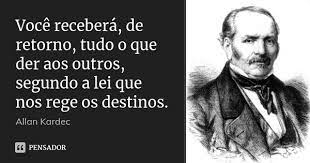
Let's be amazed: this sentence is not from Kardec. Nor does it appear to be yours, nor can it be found in ANY of your works. This is one more proof of how much Spiritism was invaded by false ideas, almost always anti-doctrinal.

Our tests are rich opportunities, almost always chosen by ourselves, being imposed only in cases in which we do not have consciential conditions for such choices and, even so, they are given by action of benevolence of superior Spirits, and not as divine punishment.

The soul or Spirit suffers in the spiritual life the consequences of all the imperfections that it has not been able to correct in the corporeal life. Your state, happy or unhappy, is inherent in your degree of purity or impurity. (Heaven and hell).

The greatest punishment is that we continue for countless ages dragging ourselves in the mud of our imperfections. That's enough.


Note: the name of the article comes from the text of the same title, which served as inspiration for this one, from the book Autonomia: a história sem contada do Espiritismo, by Paulo Henrique de Figueiredo.

study suggestions

We suggest to the reader the following additional content:


Weekly Studies of the Spiritist Revolution Work, with the Spiritism for All Study Group

Spiritism “is a total revolution that operates in ideas; a greater and more powerful revolution because it is not restricted to one people or one caste, as it simultaneously reaches, through the heart, all classes, all nationalities, all religions” (Allan Kardec – Genesis)

To reach this revolution of ideas, which starts from the individual to his social circle and, from there, to the world, it is necessary to study and knowledge, which feeds and underpins individual and autonomous transformation. So let's study!

We meet weekly, on Wednesdays, 15:00h (São Paulo time, GMT -3), as of 08/03/22.

Attention: We will start on the 03/08/22.

good conduct agreement

The work in question touches on quite controversial topics, as it analyzes several of the social problems and systems of social reform, including Marxism and socialism. Following in Kardec's footsteps, we emphasize that It will not be our intention to carry out in-depth analyzes on these topics; we will limit ourselves to maturing, together with the author, the understanding of the spiritist philosophy in its educational application, since Spiritism promotes a revolution of ideas, which go from the individual to society, respecting the autonomy and conscience of each one, differently from what proposes most of these systems. Entering the path of debate on these issues, which easily becomes a passionate political debate, should not be our purpose, and will always be restrained, in the name of the good progress of our studies.

Application form

To participate in the study room, fill in the form below. You will receive a confirmation in your email, which must be sent to the address [email protected].

At first, the studies will be recorded, for later evaluation and posting on Youtube (you must agree with this). However, we will not carry out simultaneous transmission of these studies, in order to better evaluate the recorded content.


Study Event: Spiritist Philosophy and Education, with Paulo Henrique de Figueiredo

The world will only change when society changes, and society will only change when the individual knows and understands the morality of good, which is the Law of God. How to achieve this, if not through basic education, inside and outside the home? And how can the moral of Spiritism leverage this change?

Come be part of this important and special study. SEPTEMBER 19, 2022, at 19:00 GMT (GMT -3).

You can follow the live on our Youtube channel – https://youtu.be/vW8TeJoKASE – or via Facebook – https://fb.me/e/1xarUPHXF – but also can join the chat room. To receive the access link, simply fill in the form below.

For this event, we recommend that you carefully watch the following video:


Application form for active participation in the Zoom chat room


The silence of the Spiritist Movement in the face of social issues

Many have spoken in silence that the Spiritist Movement would need to break with respect to politics. We must remember, of course, that the silence of the Spiritist Movement is not only reflected in a political nature, but is a generalized silence before the Doctrine itself, which has recently been agitated under the studies of Kardec's original works and works that recover knowledge forgotten in time.

Of course, when it comes to politics, we will never be supporting anyone who seeks to link Spiritism to ideologies, especially when these ideologies are not guided by the ideas that we will express below.

There are several initiatives that are seeking to counteract the aforementioned silence. Only from study groups, we know of three or four that are very strong, in addition to the roles of current researchers, among which it is impossible not to highlight Paulo Henrique de Figueiredo, in his exhausting work of recovering unknown information, especially those related to autonomous morality. and to rational spiritualism, as well as in the work so important that it is to resume Kardec's original works, unadulterated.

Well then: this work, which emphasizes the issue of autonomy, is unquestionably based on the power of autonomous choice that the Spirit must have. There would be no lack of citations in Kardec's work, of him and of different spirits, in this regard: the Spirit, to really change, needs to act by its own free will and reason, which is the basis for the other. There is no initiative, political or otherwise, that has succeeded in any lasting and real social change, however small, on the basis of authority alone. That is why I always see very carefully the issue of politics linked to any spiritist thought: it should, inexorably, be guided by the principle of morality, applied to relationships, from the first steps of the child on this planet.

I never tire of highlighting, and this will always be my flag, after understanding Spiritism in its essence: social transformation will only occur through the transformation of the individual, through family and school education. That's what we need to go back to ALL our efforts, inside and outside of politics, the latter being an effective way to return to society the morality guided by Rational Spiritualism, which understands and distinguishes the difference between happiness and unhappiness, which are characteristics of the soul's advances towards to the good, from emotions and pleasures, which are purely material. This is the missing understanding. Man will stop living under bridges when he understands that his progress depends on himself, and on no one else, and when others understand that charity is a moral and disinterested duty, going far beyond the alms that humiliate the parties.

Let us turn our intelligence to this purpose, dear brothers! Children continue to grow into youth and adults, full of acquired imperfections, or of those not corrected, largely purely because of bad habits of education, simply because no one is aware of the urgent need to bring the family and all public education officials to their senses. and private. Kardec saw the future with radiant eyes, because he believed that the educational model, guided by Rational Spiritualism, would continue to flourish and spread... matter.

We need to go back and understand Rousseau, Pestalozzi, Rivail, Biran, Janet and so many other free-thinkers who never wanted to bring about change by force, as they soon realized that it, in reality, only produces anger and irritation. Rivail would say, in his “Proposed Plan for the Improvement of Public Education”:

“The irritated and unpersuaded child submits only to force; nothing proves to him that she did wrong; she knows only that she did not act according to the master's will; and this will he regards, not as just and reasonable, but as a caprice and a tyranny; it believes itself to be always subject to the will. As she is commonly made to feel physical superiority rather than moral superiority, she waits impatiently to have enough strength herself to withdraw from it; hence this hostile spirit that reigns between the masters and their students.”

So it will be, because so it is, in any aspect of the Spirit. Rivail did not think of this when he wrote this work, but we know today, as he later came to know: the child is animated by the same Spirit as the adult, only a little more limited in his perceptions and capacities. It is your Spirit, therefore, and not your body, that does not submit to force. Let us remember this.

Paulo Degering Rosa Junior


The principle of happiness and unhappiness

As far as our state of mind is concerned, the feelings that affect us the most are those of unhappiness and unhappiness… Or, at least, we believe so. In this way, society in general lives in a search for happiness, almost always without lasting results, happiness that, when not achieved, refers to the general states that often lead to the abysses of depression or melancholy.

I begin by saying, dear reader, that the almost total absence of current direction and understanding is due to the forgetfulness of Rational Spiritualism. Having transformed man into a biological machine, lacking a soul, materialism took from morality its primordial essence, which the Spirit in its role of first cause of everything that goes on in the matter.

Paulo Henrique de Figueiredo says:

Religious doctrines and also materialistic thought are heteronomous, as they assume that morality would be based on pain and pleasure, which are innate impulses and linked to instinct and survival, sensations that arise from physiological changes, proper to the body. biological. The false idea of divine punishment for the guilty creature dogmatically points to the existence of physical pain after death, caused by the environment of hell, for all eternity. On the other hand, pleasures and eternal contemplation for the elect in Heaven. Spiritism, on the other hand, will demonstrate, for the first time, in its autonomous morality, the existence of intimate sensations proper to the spirit, which are happiness and unhappiness, giving these terms specific definitions.

KARDEC, Allan. Heaven and hell. Editor FEAL, 2021. Editor's Note.

Spiritism, which developed from Rational Spiritualism – a “movement” that formed the most illustrious thinkers of the 19th century, had, in a very summarized form ((I recommend, for a better understanding, the study of the work Heaven and Hell, by Allan Kardec, published by FEAL, with commentaries by Paulo Henrique de Figueiredo, and the work “Autonomy: the never-told story of Spiritism”, by the same author. Another suggestion is search for videos featuring Paulo, on YouTube)), in morality, the concepts of happiness and unhappiness are very well defined as achievements from the soul, whereas, of the body or matter, are part of emotions, be they the fear, a sadness, a happiness, a rage, etc. Also, in the matter aspect, we must mention the sensations, as the pleasure and the ache, which are the immediate result of the physical impression captured by the nerves and carried to the brain.

As incarnate Spirits, we are all subject to the conditions of matter. As evolved as a Spirit may be, the fact of receiving a hammer to the hand will cause a lot of pain, perhaps the same as for everyone else, but the detail is that the superior Spirit will not cling to that pain or to the individual who eventually provoked it — which is a very important one.

We thus have, well separated, what belongs to the Spirit and what belongs to matter. In a very simplistic way, and counting on the reader's willingness to believe that what I am saying is based on studies of the original works of Allan Kardec, from what he can check for himself, we conclude that the emotions of the body has nothing to do, a priori, with the feelings of soul or spirit. Happiness has to do with the achievements of the Spirit, while unhappiness has to do with his inferiority. A spirit, incarnated, can be very unhappy, despite being rich and with all resources of pleasures and joys within your reach, while another may be very happy living in a mud hut. A spirit incarnated in a healthy body can be very depressed or angry, while another, in a deformed or sick body, can be very calm, happy and kind.

To form a better understanding, let's talk about unhappiness. It is often confused with human emotions and pain, but, as we have seen, it does not reside in them. Unhappiness is actually how far the Spirit is away from happiness. This seems pretty obvious, but let me explain: happiness is living under God's law, that is, living in goodness. The absence of it, unhappiness, is living far from the good, under the empire of imperfections that lead us to error and suffering, which is the result of actions performed, and not divine punishment.

Here is the great key to understanding morality and the human being's necessary search for happiness: it does not reside in the fleeting things of matter, nor in pleasures, nor in passions. she resides in the soul, as a result of an inner, individual and non-transferable achievement.

Paulo Henrique, in the same work, says:

Already in the law that governs the human spirit, which has its main life in the spiritual world, the improvement of faculties through its effort is its goal, making use of reincarnations as a means of progress. Happiness is not like the physiological sensation of pleasure; it is an intimate state or sensation of the spirit, inherent to its intellectual-moral perfection. Every act of good corresponds to a feeling of happiness, and the development of virtues, knowledge and skills makes this condition progressive, until the full happiness of pure spirits. On the other hand, the condition of imperfection is inherent to moral suffering, which will last until the spirit overcomes imperfection by its effort. These are intimate states and feelings of the spirit, in no way dependent on something external to them. These are the laws of the soul, which govern the moral world. Thus Kardec expressed himself, in item 2 of Chapter VIII:

“As all spirits are perfectible, by virtue of the law of progress, they carry within themselves the elements of their happiness or future unhappiness and the means of acquiring one and avoiding the other by working towards their own advancement. (p. 132)”

The elements of your happiness or your unhappiness are in the spirit itself; it is up to him to provide one or the other. In this way, happiness is not a concession or a divine grace, but an achievement of the being itself. Nor is unhappiness a punishment, but a condition created when the spirit develops an imperfection that ends when the spirit itself undoes it.

ibid.

We can be very happy to experience relaxed and fun moments with friends, but once these moments are over, what remains it is our state of mind. We can be happy buying things to dress us well or eating tasty delicacies... But, after these actions, the same state of mind still remains. And here we come to something very important: this constant pursuit of happiness in things and occasions, instead of seeking it in the inner conquest, often leads us to imperfections!

Man, when seeking the satisfaction of his desires and instincts, confusing this search with the search for happiness, can “exaggerate the dose”. Let us take the example of the purchase of material goods: a person who links possessions to the feeling of happiness, when he cannot satisfy this desire with his own resources, may be led to commit the crime of robbery or theft, in order to satisfy this desire. there. Just in this example, we have greed and selfishness being cultivated. If repeated, forming habits, they can settle in the soul, as imperfections, which will produce sufferings that, to be overcome, will have to be overcome. understood and actively faced, for the will of the Spirit, which commonly takes more than one incarnation to achieve.

Paulo Henrique continues:

Every imperfection is the result of the free choice of the spirit, which, by attachment to matter, uses the faculties of the soul to act in order to conquer pleasure (sensation) and joy (emotion). This act of abuse, turned into a habit, is imperfection, which has as an inherent consequence moral suffering, or unhappiness (sensation of the spirit). This condition is transitory, because, overcoming imperfections, the spirit returns to the path of good and frees itself from unhappiness.

ibid.

The opposite is also true: the spirit that confuses unhappiness with the pains and negative emotions of matter, in order to see itself far from them, can launch itself on an endless search, which, often, also puts it in contact with bad habits that can make an imperfection appear.

This understanding, which seems very simple in principle, and which is of paramount importance, it's not very easy to be internalized. How will she be? Through study, which leads to knowledge, which strengthens reason. The Spirit only changes, really, when you see its imperfections and mistakes and when, actively, of its own accord, it starts to seek to overcome them. Therefore, the invitation to studies remains, and the one being carried out by the Spiritism for All Study Group (EPT), on the work O Céu e O Inferno (FEAL publisher, based on the 1st edition of the unadulterated original) is one of the best in this sense.

Here, before ending, we have one more reflection. We talk about the formation of imperfections arising from bad habits… That's why we can't help but talk about early childhood education. The child, by virtue of a bad habit, taught or reinforced from the cradle, can also acquire an imperfection, from which it will be very difficult to get rid of. Therefore, parents, the time has passed to focus on the study of morals and education, in order to better educate children, from their first acts in material life, helping them, through the charity that is our responsibility, to help these Spirits to reach happiness sooner, as we wish we had.

We hope to soon begin a series of articles on this topic. Be sure to subscribe to our email list to receive them too—just enter your email address in the "SUBSCRIBE TO OUR NEWSLETTER" box next to or below the article!

We suggest the reader to watch the video: