Family talks from beyond the grave – Suicide of an atheist

Obtained from the Spiritist Magazine of February 1861

Mr. JB D…, evoked at the request of one of his relatives, was an educated man, but to the last degree imbued with materialistic ideas. He didn't believe in the soul or in God. He voluntarily drowned two years ago.

1. (Evocation).

─ I suffer! I'm a convict.

2. ─ We were asked to call you by one of your relatives, who wants to know your fate. Can you say whether this evocation is pleasant or painful?

─ Painful.

3. ─ Was your death voluntary?

─ Yes.

Observation: The Spirit writes with extreme difficulty. The handwriting is large, irregular, convulsive and almost illegible. At first he shows anger, breaks the pencil and tears the paper.

4. ─ Stay calm. We will pray to God for you.

─ I am forced to believe in God.

5. ─ What reason led you to destroy yourselves?

─ Boredom of life hopeless. 

Observation: Suicide is understood when life is hopeless. We want to escape unhappiness at all costs. With Spiritism the future unfolds and hope is legitimized. Suicide, then, has no objective; even more, it is recognized that by such means one cannot escape one evil except to fall into another one a hundred times worse. This is why Spiritism has already removed so many victims from voluntary death. Are those who seek, first and foremost, the moral and philosophical end in it, wrong and dreamers? Very guilty are those who, for scientific sophisms and in the supposed name of reason, They strive to honor the desperate idea, the source of so many evils and crimes, that everything ends with life. They will be responsible not only for their own mistakes, but for all the evils they have caused.

6. ─ You wanted to escape the vicissitudes of life. Did you achieve anything? Are you happier now?

─ Why doesn’t nothing exist?!

7. ─ Would you be kind enough to describe your situation to us as best you can?

─ I suffer from being forced to believe in everything I denied. My soul is as if in a brazier, horribly tormented.

8. ─ Where did the materialistic ideas you had in life come from?

─ In another existence I had been bad, and my Spirit was condemned to suffer the torments of doubt during my life. So, I killed myself.

Observation: There is a whole range of ideas here. We often ask ourselves how there can be materialists, since, having already passed through the spiritist world, we should have intuition about it. Now, it is precisely this intuition that is refused, as punishment, to certain Spirits who preserved their pride and did not repent of their faults. We must not forget that the Earth is a place of atonement. This is why it contains so many incarnated evil Spirits.

Note from me (Paulo): the word “punishment”, in French, can be read as “punishment”, which, according to Rational Spiritualism, from which Spiritism developed, is nothing more than the natural consequences of our mistakes. Thus, the very proud Spirit, as a result of this pride, is unable to keep the intuition of life in the world of Spirits, as it is too closed in on itself.

9. ─ When you drowned, what did you think would happen to you? What reflections did you make at that moment?

─ None. For me it was nothing. I saw later that having not exhausted my sentence, I would still suffer a lot.

10. ─ Are you now convinced of the existence of God, the soul and the future life?

─ Oh! I am terribly tormented by this!

11. ─ Have you searched your wife and your brother?

─ Oh! no!

12. ─ Why?

─ Why bring together our torments? We go into exile in misfortune and only come together in happiness. Alas!

Note from me (Paul): he must be saying that the suffering Spirit cannot escape its own sufferings, while the detached Spirit, working for good, becomes happy and meets with others in the same “tune”.

13. ─ Would you like to see your brother again, who we could call to your side?

─ No, no! I am really bad.

14. ─ Why don't you want us to call him?

─ He's not happy either.

15. ─ You fear his presence. However, could it not do you any good?

─ No. Later.

16. ─ Your relative asks if you attended your funeral and if you were satisfied with what he did at the time.

─ Yes.

17. ─ Do you want him to say something?

─ Please pray a little for me.

18. ─ It seems that in the society you frequent, some people share the opinions you had in life. Would you like to tell them something about it?

─ Oh! How unfortunate! May they believe in another life! That's what I can wish them for greater happiness. If they could understand my sad position, they would reflect a lot.

– Evocation of the previous brother, who professed the same ideas but did not commit suicide. Although unhappy, he is calmer. Your handwriting is clear and legible.

─ May the picture of our sufferings be a useful lesson for you, and persuade you that there is another life, in which we atone for our faults and our unbelief!

20. ─ Do you and your brother who we have just mentioned see each other?

─ No. He runs away from me.

21. ─ You are calmer than him. Could you give us a more accurate description of your sufferings?

─ On Earth, don’t your self-love and your pride suffer when you are forced to confess your error? Does your Spirit not revolt at the thought of humiliating yourself before someone who shows you that you are wrong? Then! What do you think the Spirit who throughout his entire existence has been convinced that nothing exists beyond himself and that he is right against everyone suffers? When, suddenly, he finds himself faced with the dazzling truth, he feels annihilated and humiliated. Added to this is the remorse of, for so long, having forgotten the existence of a God so good, so indulgent. Your condition is unbearable; finds neither calm nor rest; He will not find a little peace of mind except at the moment when holy grace, that is, the love of God, touches him, because pride takes hold of our poor Spirit in such a way that it envelops him entirely, and he still needs a lot of time to get rid of that fatal tunic. Only the prayers of our brothers help us to free ourselves from it.

22. ─ Do you want to talk about your brothers alive or in Spirit?

─ From both sides.

23. ─ While we were talking to your brother, one of those present prayed for him. Has prayer been useful to you?

─ It will not be lost. If you now refuse grace, it will come back to you when you are in a state of having recourse to this divine panacea.

The result of these two evocations was transmitted to the person who requested them. Then we received the following response:

“You cannot imagine, sir, how great was the good produced by the evocation of my father-in-law and my uncle. We recognize them perfectly. Above all, the lyrics of the first one have a remarkable analogy with the ones he had in life, especially since, in the last months he spent with us, they were captivating and indecipherable. There we find the same shape of the legs, the signature, and certain letters, especially the d, f, o, p, q, t. As for the words, expressions and style, they are even more remarkable. For us, the analogy is perfect, except for his greatest clarification about God, the soul and eternity, which he once so formally denied. We are therefore perfectly convinced as to the identity. God will therefore be more glorified by our firmer belief in Spiritism, and our brothers, Spirits and living, will become better. His brother's identity is no less evident. The immense difference between the atheist and the believer was recognized in their character, their style, their expressions. One word, above all, shocked us: panacea. It was his usual expression, which he said to everyone and at all times.

“I showed the two communications to several people, who were touched by their veracity. But the non-believers, those who share the opinions of my two relatives, wanted more categorical answers: for, for example, Mr. D… to specify the place where he was buried, where he drowned, how he acted, etc. To satisfy and convince them, you could well ask him the following questions: Where and how did he commit suicide? How long was it submerged? Where was his body found? Where was he buried? In what manner, civil or religious, was the inhumation carried out, etc.?

“I ask you, sir, to kindly demand categorical answers to these essential questions for those who still doubt. I am convinced of the immense good this will produce. I am proceeding so that this letter reaches you tomorrow, Friday, so that you can evoke it at the Society session to be held on that day… etc.”

We reproduce this letter due to the identity it establishes. We have put together our response for the instruction of people unfamiliar with communications from beyond the grave.

“… The questions that you wish to be addressed again to the Spirit of your father-in-law are certainly dictated by a laudable intention, that of convincing unbelievers, because in you there is no mixture of feelings of doubt and curiosity. However, a more perfect knowledge of Spiritism would have made you understand that they are superfluous.

“To begin with, asking your father-in-law to give categorical answers, you are certainly unaware that we do not govern Spirits at will. They respond when they want and how they want, and often how they can. Their freedom of action is even greater than when alive and they have more ways of escaping the moral pressure we try to exert on them. The best proofs of identity are given spontaneously, according to your own will or arising from circumstances and, in most cases, it is a waste of time to try to provoke them. Your relative has proven his identity in an irrefutable way, in your opinion. It is, therefore, more than likely that he will refuse to answer questions that he rightly considers superfluous and asked with the aim of satisfying the curiosity of people who are indifferent to him. Could he respond, as other Spirits have often done in similar cases, asking:

“What’s the point in asking me things you know?” I would also add that the state of disturbance and suffering in which he finds himself must make research of this kind more painful for him, exactly as if one wanted to force a patient who can only think and speak to tell us details of his life. . It would certainly be a lack of due consideration for his position.

“As for the result you expected, it would be null, rest assured. The identity proofs provided have an even greater value, due to the very fact that they were spontaneous and that nothing could indicate that path. If unbelievers are not satisfied with this, neither would they be satisfied by asking questions that could imply connivance. There are creatures that nothing can convince. They would see your father-in-law with their own eyes and say they were the victims of a hallucination. The best thing you can do for them is to leave them calm and not waste time with superfluous words. We can only regret them, because sooner or later they will learn for themselves how much it costs to have rejected the light that God sends them. It is above all against these that God manifests his severity.

“Two more words, sir, about your request for evocation on the same day you were supposed to receive the letter. Evocations are not done like that, in a hurry. Spirits do not always respond to our appeal. To do so, they need to be able or willing to do so. Furthermore, a medium is needed that suits them and has the necessary special aptitude; that this medium is available at any given time; that the environment is sympathetic to the Spirit, etc. These are all circumstances for which we can never respond, and which are important to know when we want to do things seriously.”

To read more about the topic, Click here.



The fight against an obsessive spirit

In the fight against an obsessive Spirit, the knowledge brought by the Spiritist Doctrine, as it truly is, is crucial. Without the false ideas that reign over the current spiritist movement, we can reach the root causes and the method to combat the obsessive Spirits, through our own awareness.

Text obtained from part of the article Obsedados e Subjugados, from the Revista Espírita of 1858. Subtitles and highlights from us.

Excitement and vanity of the medium

Whether out of enthusiasm, or out of fascination with the Spirits, or out of self-love, in general the psychographic medium is led to believe that the Spirits that communicate with him are superior, and the more so, the more the Spirits, seeing their propensity, do not They stop adorning themselves with pompous titles, as necessary. Depending on the circumstances, they take the names of saints, sages, angels, the Virgin Mary herself, and play their role as actors, ridiculously dressing up in the clothes of the people they represent. Take away their mask and they become what they were: ridiculous. This is what one must know how to do, both with Spirits and with men.

Of blind and unreflective belief In the superiority of the Spirits that communicate, there is only one step to trust in their words, just as it happens among men. If they manage to inspire this confidence, they feed it through sophistry and the most specious reasoning, before which we often bow our heads. Gross Spirits are less dangerous: we recognize them immediately and they inspire nothing but repugnance. The most fearsome, in your world, as in ours, are the hypocritical Spirits: they always speak sweetly; flatter inclinations; They are sweet, sly, lavish in affectionate expressions and protests of dedication. You have to be really strong to resist such seductions.

Read too: Curse and Spiritism.

You will ask: Where is the danger if the Spirits are impalpable? The danger lies in the harmful advice they give, appearing to be benevolent, and in the ridiculous, untimely or disastrous attitudes that lead us to undertake. We have already seen some that made certain people travel from region to region in search of fantastic things, at the risk of compromising their health, fortune and life itself. We saw them dictate, with the appearance of gravity, the most ridiculous things and the strangest maxims.

Considering that it is appropriate to give an example alongside theory, we will relate the story of a person we know who was under the control of a similar fascination.

A young obsessed medium

Mr. F…, a well-educated young man, with a thorough education, with a gentle and benevolent character, but a little weak and indecisive, became a psychographic medium very quickly. The obsessive Spirit that took hold of him and did not give him rest, wrote incessantly. If a pen or pencil fell into his hand, he would take it in a convulsive movement and fill pages and pages in a few minutes. In the absence of an instrument, he would simulate writing with his finger, wherever he found himself: on the street, on walls, on doors, etc. Among other things, this was dictated to him: “Man is made up of three things: man, the bad Spirit and the good Spirit. You all have your bad Spirit, which is linked to the body by material ties. To expel the bad Spirit it is necessary to break these bonds, which means that the body must be weakened. When this is sufficiently weakened, the bond breaks and the bad Spirit leaves, leaving only the good one.”

As a result of this beautiful theory, they made him fast for five consecutive days and watch at night. When he was exhausted, they said to him: “Now the thing is done and the bond is broken. Your evil Spirit is gone: only we are left, in whom you must believe without reservation.” And he, persuaded that his evil Spirit had fled, blindly believed all his words. The subjugation had reached the point where if he had been told to throw himself into the water or head for the antipodes, he would have done so. When they wanted to force him to do something that was repugnant to him, he was dragged by an invisible force.

We give a small sample of his morals; From there you can judge the rest:

Absurdities of an obsessive Spirit that even uses the name of Jesus

“To have better communications it is first necessary to pray and fast for several days, some more, some less. Fasting weakens the bonds that exist between the ego and a particular demon attached to each to be human. This demon is linked to each person by the envelope that unites body and soul. This covering weakens due to lack of food and allows the Spirits to tear out that demon. Then Jesus descends into the heart of the possessed person, instead of the evil Spirit. This state of possessing Jesus in oneself is the only way to reach all truth and many other things.

When the creature managed to replace the devil with Jesus, it still does not possess the truth. To have it, you need to believe. God does not give the truth to those who doubt: it would be doing something useless and God does nothing in vain. As most new mediums doubt what they say and write, good Spirits, unwillingly, by God's formal order, they are obliged to lie and have no choice but to lie until the medium is convinced; but as soon as he believes one of these lies, the high spirits rush to reveal to him the secrets of heaven: the whole truth dissipates in an instant that cloud of errors with which they had been forced to envelop their protege.

We would fill a volume with all the nonsense that was dictated to him and the circumstances that followed. Among other things, they made him design a building of such dimensions that the sheets of paper, glued together, reached the height of two floors.

Note that in all this there is nothing coarse or banal. It is a series of sophistical reasonings linked together with the appearance of logic. There is indeed an infernal art in the means employed to deceive him, and if it had been possible for us to relate all these manifestations, one would have seen to what extent the cunning was carried and with what skill they used honeyed words.

A good Spirit sought to help

The obsessive Spirit who played the main role in this business gave the name François Dillois, when he was not covering himself with the mask of a respectable name. Later we learned what this Dillois had been like in life, and then nothing surprised us in his language. But in the midst of all this nonsense it was easy to recognize a good Spirit who was fighting, making from time to time hear some good words denying the other's absurdities. There was an obvious fight, but the fight was unequal. The young man was so subdued that the voice of reason was powerless over him. The Spirit of his father, notably, made him write the following words: “Yes, my son, courage! You suffer a harsh test, which will be for your good in the future. Unfortunately, at the moment, I can do nothing to free you, and it costs me a lot. Go see Allan Kardec; listen to him, and he will save you.”

The boy's will and Kardec's help

Indeed, Mr. F… came to look for me and, to begin with, I recognized without difficulty the pernicious influence he was under, whether in words or through certain material signs that experience makes known, and that cannot deceive us. He came back several times. I used all my willpower to call the good Spirits through you; all my rhetoric to prove to him that I was a victim of detestable Spirits; that what he wrote made no sense, as well as being deeply immoral. For this charity work I teamed up with a colleague, Mr. T… and little by little we got him to write sensible things. He became averse to that bad temper, willingly repelling it every time it tried to manifest itself, and slowly the good Spirits triumphed.

To change his ideas, he followed the advice of the Spirits, to give himself to a rough job, that did not leave him time to listen to bad suggestions.

The obsessing Spirit himself, Dillois, ended up confessing that he was defeated and expressed the desire to progress in a new existence. He confessed the evil he had tried to do and showed evidence of repentance. The fight was long and painful and offered the observer truly curious particularities. Today Mr. F. feels free and happy. It's as if he had laid down a burden. He has regained his joy and thanks us for the service we provided him.


Can we evoke evil spirits?

The subject is on the agenda, because many say they evoke spirits. Unfortunately, many also believe that simply because they are evoking bad Spirits, they would readily contract connections with Obsessing spirits. We will see, in the following text, that this is not the case and that, if there is seriousness and good intentions, in fact, good is produced and, often, the connection with a Spirit who will never forget your gesture.

An old carter – Revista Espírita of December 1859 (full content)

The excellent medium Mr. V… is a young man who generally stands out for the purity of his relationships with the spiritist world. However, after moving into the rooms he currently occupies, an inferior Spirit interferes in his communications, even interfering in his personal work.

Finding himself, on the night of September 6, 1859, at the house of Mr. Allan Kardec, with whom he was supposed to work, he was hindered by that Spirit, which made him draw incoherent things or prevented him from writing.

Then Mr. Allan Kardec, addressing the Spirit, had the following conversation with him:

1. ─ Why do you come here without being called?
─ I want to torment him.

2. ─ Who are you? Say your name.
─ I won't say that.

3. ─ What is your objective, meddling in what does not concern you? This does you no good.
─ No, but I prevent him from having good communications and I know that this hurts him a lot.

4. ─ You are an evil Spirit, because you take pleasure in doing evil. In the name of God I order you to leave and let us work in peace.
─ Do you think you scare me with that deep voice?

5. ─ If it is not me you are afraid of, you will undoubtedly be afraid of God, in whose name I speak to you and who can make you regret your wickedness.
─ Let’s not get angry, bourgeois.

6. ─ I repeat that you are a bad Spirit, and once again I ask you not to stop us from working.
─ I am what I am, it is my nature.
Having been called a superior Spirit, who was asked to remove the intruder, so as not to interrupt the work, the bad Spirit probably left, because during the rest of the night there was no further interruption.

When asked about the nature of this Spirit, the superior replied: This Spirit, who is of the lowest class, is a former carter, who died near the house where the medium lives. He chose his own room as his home, and for a long time now he has been obsessing over him and tormenting him incessantly. Now that he knows that the medium must, by order of superior Spirits, change residence, it torments him more than ever. It is also proof that the medium does not write his own thoughts. So you see that there are good things, even in the most unpleasant adventures in life. God reveals his power by every means possible.

─ What was the character of this man in life?

─ Everything that comes closest to the animal. I believe his horses had more intelligence and more feeling than he did.

─ How can Mr. V… get rid of him?

─ There are two: the spiritual means, asking God; the material environment, leaving the house where it is.

─ So there really are places haunted by certain Spirits?

─ Yes, Spirits that are still under the influence of matter attach themselves to certain locations.

─ Can the Spirits that haunt certain places make them fatally disastrous or favorable for the people who inhabit them?

─ Who could stop them? Dead, they exert influence as Spirits; alive, they exercise it like men.

─ Could someone who was not a medium, who had never heard of Spirits and who did not even believe in them, suffer such influence and be a victim of harassment from such Spirits?

─ Undoubtedly. This happens more often than you think, and explains many things.

─ Is there any basis in the belief that Spirits preferably frequent ruins and abandoned houses?

─ Superstition.

─ So the Spirits will haunt a new house on Rua de Rivoli, in the same way as an old slum?

─ Of course. They may be attracted to one place rather than another, by the mood of its residents.
Having evoked, in the Society, the Spirit of the aforementioned cartman, through the intermediary of Mr. R…, he manifested himself through signs of violence, breaking pencils, thrusting them forcefully into the paper, and by coarse, shaky writing , irregular and barely legible.

1. (Evocation).
─ Here I am.

2. ─ Do you recognize God’s power over you?
─ Yes; and?

3. ─ Why did you choose Mr. V…’s room, and not another one?
─ Because this pleases me.

4. ─ Will you stay there for a long time?
─ As far as feeling good.

5. ─ So you have no intention of improving?
─ We'll see. I have time.

6. ─ Are you upset because we called you?
─ Yes.

7. ─ What did you do when we called you?
─ I was in the tavern.

8. ─ So you drank?
─ How foolish! How can I drink?

9. ─ So what did you mean when you talked about the tavern?
─ I meant what I said.

10. ─ When I was alive, did you mistreat your horses?
─ Are you from the municipal police?

11. ─ Do you want us to pray for you?
─ And would you do this?

12. ─ Certainly. We pray for all those who suffer, because we have pity on the unfortunate and we know that God's mercy is great.
─ Oh! Well, you really are good people. I wish I could shake your hand. I will try to deserve it. Thanks.

OBSERVATION: This conversation confirms what experience has proven many times, regarding the influence that men can exert on Spirits, and through which they contribute to their improvement. Shows the influence of prayer.

Thus, this brute and almost untamed and wild nature finds itself as if subjugated by the idea of the advantages that can be offered to it. We have numerous examples of criminals who spontaneously came to communicate with mediums who had prayed for them, thus testifying to us their repentance.

To the above observations we will add the following considerations, relating to the evocation of inferior Spirits.

We have seen mediums, rightly anxious to maintain their good relationships beyond the grave, refuse to serve as interpreters of the inferior Spirits that can be called. It is on your part a misunderstood susceptibility. Because we evoke a vulgar Spirit, and even a bad one, we will not be dependent on him.

Far from it, and on the contrary, we will dominate it. It is not the one that comes to impose itself, against our will, as in obsessions. We are the ones who impose ourselves. He doesn't order, he obeys. We are your judge, not your prey. Furthermore, we can be useful to them through our advice and prayers and they are grateful to us for the interest we show in them. Extending your hand to help is doing a good deed. To refuse it is uncharitable; even more so, it is pride and selfishness. These inferior beings, in fact, are a great teaching for us. It was through him that we were able to get to know the lower layers of the spiritist world and the fate that awaits those who make a bad use of their lives here.

Let us note, furthermore, that it is almost always tremendous that they come to serious meetings, where the good Spirits dominate.

They are embarrassed and remain at a distance, listening in order to educate themselves. They often come with this objective, without being called.

Why, then, would we refuse to listen to them, when their repentance and suffering are often a reason for edification or, at least, for instruction?

There is nothing to fear from these communications, as long as they aim for the good. What would happen to the poor injured people if doctors refused to touch their wounds?


Evocation of a Suicidal Spirit in Suffering

The article describes the evocation of the Spirit of a French suicide, by Kardec, in a state of moral suffering.

Read more about cases like this clicking here.

Published in the Revista Espírita of November 1858. In full:

Recently the newspapers reported the following fact: “Yesterday (April 7, 1858) at seven o'clock in the evening, a man of about fifty years old, decently dressed, presented himself at the Samaritana establishment and asked for a bath. The employee was surprised that, after two hours, the individual did not call; He decided to go into the bathroom to see if he hadn't felt unwell. He then witnessed a horrible spectacle: the unfortunate man had cut his throat with a razor and all the blood had mixed with the water in the bathtub. Since the identity could not be established, the corpse was transported to the morgue.”

We thought it would be possible to derive a useful lesson for our instruction from the conversation with the Spirit of this man. Therefore, we evoke it on April 13th, just six days after his death.

1. ─ I ask Almighty God to allow the Spirit of the individual who committed suicide on April 7, 1858, in the Samaritan baths, to come and communicate with us.

─ Wait... (After a few moments): Here he is.

NOTE: To understand this answer it is necessary to know that, in general, in all regular meetings, there is a familiar Spirit, from the medium or from the family, who is always present, without having to call him. He is the one who makes those who are evoked come and, depending on whether he is more or less elevated, he serves as a messenger or gives orders to the Spirits who are inferior to him. When our meetings are interpreted by Ms. Ermance Dufaux, it is always the Spirit of Saint Louis who voluntarily takes on this task. He was the one who gave the answer above.

2. ─ Where are you now?

─ I don't know... Tell me where I am.

3. ─ On Rue Valois (Palais-Royal), no. 35, at a meeting of people who are involved in spiritualist studies and who are benevolent.

─ Tell me if I'm alive... I suffocate in the coffin.

4. ─ Who invited you to come to us?

─ I felt relieved.

5. ─ What reason led you to commit suicide?

─ Am I dead?... No!... I'm in my body... You don't know how much I suffer!... I suffocate!... May a pious hand come and put an end to me!

OBSERVATION: Your soul, although separated from the body, is still completely immersed in what we could call the vortex of corporeal matter; Earthly ideas are still alive. He doesn't believe he's dead.

6. ─ Why didn't you leave any identification elements?

─ I'm abandoned. I fled suffering to find torture.

7. ─ Do you still have the same reasons for remaining incognito?

─ Yes. Don't put a hot iron on the bleeding wound.

8. ─ Could you give us your name, age, profession and address?

─ Not at all. No!…

9. ─ Did you have a family, a wife, children?

─ I was abandoned. Nobody loved me.

10. ─ What did you do to not be loved by anyone?

─ How many are there like me!... A man can be abandoned in the middle of his own family, when no heart loves him.

11. ─ Did you experience any hesitation when committing suicide?

─ I was thirsty to die… I was waiting for rest.

12. ─ How did the idea of the future not lead you to renounce that plan?

─ I no longer create in the future; I was hopeless. The future is hope.

13. ─ What reflections did you make when you felt life disappearing?

─ I didn’t reflect; I felt it... But my life was not extinguished... my soul is linked to the body... I did not die... however I feel that worms are gnawing at me.

14. ─ What feeling did you experience at the moment death was complete?

─ Is it complete?

15. ─ Was the moment when life ended painful?

─ Less painful than later. So only the body suffered.

São Luís continues:

─ The Spirit freed itself from a burden that crushed it. He felt the voluptuousness of pain.

(To São Luís): ─ Is this the state that always follows suicide?

─ Yes. The suicide's spirit remains linked to the body until the end of his life. Natural death is the weakening of life. Suicide stops her abruptly.

─ Will this state be the same in every accidental death that is independent of will and that shortens the natural duration of life?

─ No. What do you understand by suicide? The Spirit is only guilty of his works.

OBSERVATION: We had prepared a series of questions that we proposed to address to the Spirit of this man about his new existence. Faced with their answers, they lost their meaning. It was clear to us that he had no awareness of the situation. The only thing he could describe to us was his suffering.

This doubt about death is very common in the recently deceased and especially in those who in life did not elevate their soul above matter. At first glance it is a bizarre phenomenon, but it is very naturally explainable. If we ask a person who is sleepwalking for the first time if they are asleep, they will almost always answer that no, and your answer is logical. The questioner formulates the question poorly, using an inappropriate term. The idea of sleep, in common speech, is linked to the suspension of all sensitive faculties. Now, the somnambulist, who thinks and sees; who is aware of his moral freedom, does not believe that he sleeps and, in fact, does not sleep, in the vulgar meaning of the word. This is why he responds that he is not sleeping until he becomes familiar with this new way of understanding things. The same happens with the man who has just died. For him, death was nothing. Now, as with the sleepwalker, he sees and feels the speech. For him, therefore, life goes on, and he claims so, until he has acquired consciousness of his new state.

Cover photo: Daniel Reche: https://www.pexels.com/pt-br/foto/foto-em-escala-de-cinza-de-um-homem-cobrindo-o-rosto-com-as-maos -3601097/


Moral problems – Suicide for love

The following article, about the suicide of a boy, in an act of uncontained emotions, was published in the Revista Espírita of November 1858. In full:

Seven or eight months ago, Luís G…, a shoemaker, was dating the young Vitorina R…, a boot stitcher, who he was supposed to marry soon, as the banns were being published. Things being at this point, the young people considered themselves almost definitely united and, as a cost-saving measure, the shoemaker came to have meals at the bride's house.

Having come last Wednesday, as usual, to have dinner at the seamstress' ((seamstress)) house, an argument ensued about something futile. They were obstinate, on both sides, and things got to the point where Luís left the table and went away, swearing never to return.

However, the next day, the shoemaker, very confused, came to ask for forgiveness. It is said that the night is a good advisor, but the worker, perhaps foreseeing, after the scene the night before, what could happen when there was no longer time to go back, refused to reconcile and neither the protests, nor the tears, nor despair could overcome her. However, as several days had passed since that outburst, hoping that his beloved would be more tractable, the night before last Luís wanted to try one last explanation: he arrived, knocked on the door in order to make himself known, but she refused to open. New pleas from the abandoned poor, new protests through the door, but nothing moved the implacable elected official.

“Then goodbye, oh wicked one!” finally exclaimed the poor boy, “Goodbye forever! Look for a husband who wants you as much as I do!”

At the same time, the girl heard a kind of muffled groan, then the sound of a body sliding along the door, and everything went silent. She thought that Luís had sat on the doorstep to wait for his first exit, but she promised herself not to set foot on the street while he was there.

After just a quarter of an hour, one of the tenants who was passing through the courtyard with a light shouted for help. Soon the neighbors arrived and Miss Vitorina, having also opened her door, let out a scream of horror when she noticed the body of her fiancé on the floor, pale and inanimate. Everyone rushed to help him and look for a doctor, but they soon found that everything was useless, as he had already ceased to exist. The unfortunate young man had buried the shoemaker's knife in his chest and the iron remained in the wound.

The fact that we found in Le Siecle April 7th awakened in us the idea of asking a superior Spirit some questions about its moral consequences. Here they are, with the respective answers, given by the Spirit of São Luís in the Society's session on August 1, 1858.

1. ─ Is the girl, the involuntary cause of her boyfriend's death, responsible? ─ Yes, because I didn’t love him.

2. ─ To avoid this misfortune, should she marry him, even though she didn't love him? ─ She was looking for an opportunity to separate from him; He did at the beginning of his call what he would have done later.

3. ─ So the guilt consists of having harbored feelings in him that he did not share and which were the cause of the boy's death? ─ Yes. That's right.

4. ─ In this case, your responsibility must be proportional to the fault, which must not be as great as if it had, in any case, caused death. ─ This is obvious.

5. ─ Is Luís’ suicide justified in the madness into which Vitorina’s obstinacy plunged him? ─ Yes, because his suicide, provoked by love, is less criminal in the eyes of God than that of the man who wants to free himself from life out of cowardice.

NOTE: Saying that this suicide is any less criminal in the eyes of God, evidently means that there is criminality, even though it is minor. The lack consists of the weakness that he did not know how to overcome. It is undoubtedly a test to which he succumbed. Now, the Spirits teach us that merit lies in fighting victoriously against tests of all kinds, which are the essence of earthly life.

Evoked on another day, the Spirit of Luís C… was asked the following questions, to which he responded:

1. ─ What do you think about the action you took? ─ Vitorina is ungrateful. I was wrong to kill myself for her, because she didn't deserve it.

2. ─ So she didn’t love you? ─ No. At first I thought so, but I was deluded. The scene I made opened his eyes. Afterwards, he felt happy with this pretext to get rid of me.

3. ─ And do you sincerely love her? ─ I had a passion for her. I believe it was just that. If I loved her with pure love, I wouldn't have wanted to hurt her.

4. ─ If she had known that you really wanted to kill each other, would she have persisted in refusing? ─ I don't know. I don't think so, because she wasn't bad. However, it would have been unfortunate. For her it was better that way.

5. ─ When you arrived at your door, did you intend to kill yourself if you were refused? ─ No. I didn't even think about that. I didn't think she was so obstinate. Only when I saw his stubbornness did I feel dizzy.

6. ─ It seems that you only regret the suicide because Vitorina did not deserve it. Is it your only feeling? ─ Right now, yes. I still find myself disturbed. It seems to me to be on your doorstep. However, I feel something that I cannot define.

7. ─ Will you understand later? ─ Yes, when I'm free... What I did was bad. I should have left her calm... I was weak and I suffer the consequences... As you see, passion leads man to blindness and to make absurd mistakes. He only understands when it is too late.

8. ─ You said you suffer the consequences. What punishment do you suffer? ─ I made a mistake by shortening my life. I shouldn't have done it. It should resist instead of ending everything prematurely. That's why I'm unhappy. I suffer. She's always the one who makes me suffer. It seems to me that I'm still on your doorstep. How ungrateful! Don't tell me about this anymore. I don't want to think anymore, because it hurts me so much. Goodbye.


A case of spiritual obsession: The Spirit and the juror

The following article was published in Spiritist Magazine of November 1858, and deals with a case of spiritual obsession, where a young man was obsessed by a Spirit – through his own fault – to the point of being driven to kill a lady:

One of our correspondents, a man of great knowledge and holder of official scientific titles, which does not prevent him from committing the weakness of believing that we have a soul and that this soul survives the body, which after death remains wandering in space and can still communicate with the living, all the more so as he himself is a good medium and maintains conversations with beings from beyond the grave, he sends us the following letter:

"Sir,

“Perhaps you thought it wise to include the following fact in your interesting magazine:

“I was a juror some time ago. The court was to try a young man, barely out of his teens, accused of having murdered an elderly woman in horrible circumstances. The accused confessed and told the details of the crime with an impassivity and cynicism that made the assembly tremble.

“However, it is easy to predict, due to his age, his absolute lack of education and given the encouragement he received from his family, that extenuating circumstances would be presented in his favor, especially since he was driven by anger, acting against a provocation due to insults. .

“I wanted to consult the victim regarding the degree of his culpability. I called her, during a session, through a mental evocation. She let me know she was present and I placed my hand at her command. Here is the conversation we had ─ me, mentally, she in writing:

“─ What do you think of your murderer?

“─ I won’t be the one to accuse him.

“─ Why?

“─ Because he was led to crime by a man who courted me fifty years ago and who, having achieved nothing from me, swore to take revenge. After his death, he maintained the desire for revenge and took advantage of the accused's dispositions to inspire in him the desire to kill me.

“─ How do you know that?

“─ Because he himself told me, when I arrived in this world that I inhabit today.

“─ I understand your reservation in the face of the stimuli that your killer did not repel as he should and could have. But do you not think that the criminal inspiration, to which he voluntarily obeyed, would not have had the same power over him if he had not nurtured or entertained, for a long time, feelings of envy, hatred and revenge against you and your family? family?

“─ Definitely. Without it he would have been better able to resist. That's why I say that whoever wanted revenge took advantage of that young man's dispositions. You understand that he would not have addressed someone who was willing to resist.

“─ Does he enjoy your revenge?

“─ No, because you see that it will cost you dearly. Furthermore, instead of harming me, he provided me a service, allowing me to enter the world of Spirits sooner, where I am happier. It was, therefore, an evil action of no benefit to him.
“Mitigating circumstances were admitted by the jury, based on the reasons indicated above, and the death penalty was discarded.

“Regarding what I have just said, a moral observation of great importance must be made. It is necessary to conclude, in fact, that man must watch over his slightest malevolent thoughts and even his bad feelings, however fleeting they may seem, as they can attract evil and corrupted Spirits to him, and expose him, weak and unarmed. , to their guilty inspirations. It is a door that he opens to evil, without understanding the danger. It was, therefore, with a deep knowledge of man and the spiritual world that Jesus Christ said: 'Whoever looks at a woman to lust after her has already committed adultery with her in his heart.” (Matt. 5:28).

“I have the honor, etc. SIMON M…”


Walewska: reflections from the perspective of Spiritism

One of the greatest Brazilian athletes, Walewska Oliveira (and not Valeska, Valesca, Walesca, Waleska, etc.) passed away on the night of 21/09/23, in São Paulo. The reason for her death was a fatal fall — likely suicide — from the 17th floor of the building where she lived with her husband, Ricardo Alexandre Mendes. The police report recorded the incident as a fall, and also recorded the existence of a piece of paper where, possibly, she had recorded a goodbye letter. The building's cameras recorded the moments in which the athlete went to this area, carrying a bottle of wine and a briefcase. The details of the case are not yet known, but the issue, precisely this month, marked by the campaign Yellow September, aimed at preventing suicide (we omitted the word to avoid problems with search engines) raises a reflection from the perspective of Spiritism, in what it actually says.

First of all, I must say that I find it regrettable any opinion that seeks to judge attitudes like this (assuming that this happened) by classifying them as selfish, “lack of God”, cowardice, etc.

We wish Walewska's family, friends and husband a lot of strength to go through something so difficult and that, if they look for answers, they can find them in the right places. Furthermore, we hope that no supposed spiritist will inadvertently bring supposed communications, psychographed letters, exposing them to the public without reasoning about them. We feel that, if what we suppose was what happened, she did not have the opportunity to learn about a philosophy that gives certainty about the future and the ability to face life's pain from a different perspective.

Spiritist Doctrine and Spiritist Movement

It is worth remembering that the Spiritist Doctrine, as it really is, is a science, formed by methodological and serious studies, coordinated by Allan Kardec, analyzing communications, evocations and phenomena throughout the world. Its main characteristic, as a science, is that any doctrinal principle must be born from the scientific method, something that was abandoned at the end of the 19th century.

Contrary to spontaneous evocations and communications, at that time subjected to the double criteria of agreement and reason, today the Spiritist Movement in general believes blindly in practically what mediums and spirits say, forgetting or unaware that they are just opinions that should pass the aforementioned criteria. . Other times, they generalize individual situations, precisely because of a lack of knowledge. Thus, different narratives are created which, if not just absurd, sometimes offend reasoning and even disrespect individuals in their different conditions.

The Valley of Suicides

Among them, and in the aspect discussed here, we can mention the idea that every suicide will go to the "Valley of Suicides," where, according to this idea, they will suffer until they accept "rescue" from a Spirit who, many say, is the Virgin Mary herself. Others say that those who commit this act will be reborn in bodies mutilated by guilt, where they must redeem their crimes. These are, respectively, nothing more than false ideas stemming from religions that teach the fall through sin.

I wonder: don't people who say such things put themselves in the shoes of those who hear them? Don't they reason? How would a mother, whose son was born with certain physical characteristics, feel when she heard the idea that the reason for that was due to the fact that he had committed crimes, if not against others, then against himself and against God? Wouldn't many be offended? Many others could come to see them with stigmas, perhaps? Worse: what would people who were born with such characteristics think? The fact is that many abandon Spiritism because of the Spiritist Movement which, in the information age, is reluctant to recognize the need to return to Kardec, not because of fundamentalism, but because of seeking scientific foundations.

We have already heard people say, within a Spiritist Center, from people involved in the institution's work, and even from speakers, that the reason the person was born blind was because they used their vision, in their past life, to bad. How many absurdities, how many nonsense, which only empty the banks of the Spiritist Movement, turned into religion.

Real Spiritism

But, thanks to Kardec's methodological studies, we can easily demonstrate the falsehood in the generalization of these ideas. It would be enough for every spiritist adept to read the first year of the Revista Espírita (1858), to verify that the situations of the Spirits of people who committed these acts are not unique, precisely because we cannot outline a “penal code of future life”, an idea introduced into adulteration of Heaven and Hell, in its fourth edition, released after Kardec's death, on which all known editions until recently were based (refer to edition of Editora FEAL to access the original and untouched content).

They would discover, with this study, that the future of the Spirit depends on its psychology, its knowledge, its ideas. That the extreme act is often taken in a state of madness, madness, thoughtlessness, inability to deal with unmonitored emotions. The article "Suicide for love“, from the September 1858 Magazine, demonstrates this. The article “The Samaritan woman's suicide“, from June of the same year, demonstrates another case, where the Spirit, in a deep state of disturbance, believes, due to a state of moral suffering, that it is still linked to its body.

Facts

One fact is undeniable: remorse and repentance will be states that all Spirits will encounter, later, when they realize that they took such an attitude due to an inability to deal with pain, emotions (at that time known as passions), regrets, with dislikes, etc. Unfortunately, everything is generated by an inability to see life from another angle, a very broad, logical, and clear angle that Spiritism provides, in its originality. It does not try to impose the fear of punishment, but demonstrates the facts, the consequences and gives the individual a glimpse of the future, where attachments lead to evil and suffering, but the path to return to good will always be open, from the moment in which he understands the reasons for his suffering and, through his own will and efforts, decides to face the roots of his mistakes.

See: in the case presented in the Magazine of September 1858, the boy just carried out a thoughtless act. He states that he didn't even think about it, but that he was overcome by “vertigo”, that is, such a strong emotion that he didn't know how to deal with. In Spirit, he understood the foolishness (which is why everyone, without exception, will spend some time with the fateful scene repeating itself in their minds) and understood the need to correct himself in the future, so as not to commit this type of problem again. Who knows, according to your ability to understand, you will choose a life that will give you, from an early age, the fiber to deal with these emotions?

It remains to be said that the scenes that some suffering Spirits transmit in communications, such as dark valleys or even the idea of “threshold“, are born from their own minds. Perhaps they can materialize them on a scale, in a kind of tuned suffering, but they are no less temporary and definitely do not represent the generic condition of the suffering Spirit after death (read the Spiritist Magazine and you will see).

The obsession

We have one more aspect to address: the issue of obsession. The science of Spirits, treated seriously, was emphatic in demonstrating that individuals sometimes commit such acts in a state of madness, out of their mind. Often, but not always, this state has the determining influence of an obsessing Spirit.

An article that demonstrates this is “The Spirit and the Juror“, from November 1859. In it, it is evident that the role of an obsessing Spirit, when it finds paths in the individual's own ideas, can influence you slowly. The latter, accepting this influence, which pleases him, even without knowing that he does so, slowly allows himself to be in tune with the obsessing Spirit, like a puppet whose strings are slowly being connected to the hands of its master. At a certain point, the individual starts to respond blindly, reaching a state of possession, as discussed by Kardec in A Gênesis (refer to the edition by FEAL).

Hence, a kind of shared guilt is born, of which each person will be their own judge. The one who allowed himself to be influenced, when he understands, will seek to create the strength to no longer allow himself to do so. The one who influenced, one day, will understand the harm he is doing to himself, deviating from the good, and will seek conditions to repair his deviation.

Final words

There is a lot to recover when it comes to the scientific principles of Spiritism. Its recovery, its restoration, free from dogmas and false ideas depends on this. daily disseminated and taught in spiritist centers, on tribunes and, now, on the Internet, where they find it regrettably easy to spread. We need to use this facility in favor of good and the restoration of true ideas, not attacking others, as many still waste their time doing, but recovering the truth and disseminating it, in true ant work, where each person needs to carry their grains . Take your initiative. Forget about romance for the moment. Study Spiritism where it really exists as a scientific doctrine.


Mediumship: Spiritism, Umbanda and other religions

Not long ago, I demonstrated, in article is at video, that the reason for the birth of Umbanda was due to an absurd attitude of a spiritist center that prohibited Spirits such as those of the “pretos-velhos”, recognized in Umbanda as one of its entities, from communicating. They mistakenly thought that mediumship belongs to Spiritism. Sad reality of a distorted doctrine, formed by the cooperation of groups and individuals even from Catholicism and Protestantism, who studied it, regardless of their religions.

Image: people in white, wearing Umbanda clothes, a religion where mediumship is practiced and, often, Spiritism is studied

Today, the Spiritist Movement, which accuses other religions of “mysticism”, also adopts several mystical ideas, to the detriment of existing doctrinal knowledge.

It turns out that this disagreement occurred, on both sides, due to a lack of knowledge of what Spiritism really is, which, at that time, was already distorted on Brazilian soil. On the side of the spiritists, who wanted to dictate the truth based on false concepts, if they had known the content of the Spiritist Magazine, they would know how unreasonable such an attitude would be, since Kardec demonstrated the usefulness of evoking all the Spirits, with one detail: not to hear them and believe in them without reasoning, but to be able to study their communications in a psychological way.

Before I continue, I need to say that if you believe you know enough and don't need to know anything else, this article is not for you. Otherwise, if you are interested in knowing the facts and thus judging by your own conscience, stay with me until the end.

I want to say, to make it clear, based on the knowledge acquired through the study: all Spirits have something to teach, although not in the same way, in the same way that we can learn from the words of the wise, which we seek to internalize, and from the examples of criminals, which we seek not to repeat. This is how, for example, Kardec and others found learning from the guiding Spirit of the Parisian Society of Spiritist Studies, São Luís, to the study of the Spirit of the ragpicker on Noyers Street, who scared the people there and threw stones at the windows. (read Spiritist Magazine 1860 » August » The ragpicker on Rue de Noyers).

dissent

Unfortunately, with dissent, the first founders of the Umbanda religion not only moved away from the Spiritist Movement, with its errors, but also from the Spiritist Doctrine, which was the result of joint and collaborative efforts, coordinated by Allan Kardec, in the methodological and systematic of thousands of evocations, spontaneous communications and various spiritist phenomena. Umbanda was not the only case.

But I'm not here to point fingers at anyone. I am of the opinion that everything got tangled up by the “force of things”, that is, people just repeated what they were taught. It is not too much to repeat: Spiritism, when it really gained strength in Brazilian territory, arrived adulterated in principles and greatly influenced by the ideas of Jean-Baptiste Roustaing, who chose to blindly believe in Spirits who fed his vanity by declaring him the “revealer of the revelations” and who quickly turned against Kardec when he sought to warn him of the danger of doing so, instead of taking care to question the Spirits and his own reason. The FEB itself – Brazilian Spiritist Federation – self-proclaimed responsible for the direction of Spiritism in Brazil, adopted Roustaing's principles since its origins, and this is one of the biggest reasons why evocations were abolished in this country, an influence that is spreading today throughout the world and that turned the Spiritist Movement into a religion, very far from the science that Spiritism actually is.

Due to this distancing from Spiritism, substantially stigmatized by the actions, practices and words of Brazilian “spiritists”, there were countless dissents from the Spiritist Movement, sometimes towards other religions, sometimes towards disbelief. But, here, we come to the problem of the matter: mediumship, for those who had it, was almost never interrupted by the departure of the Spiritist Movement, which does not stop it. Thus, almost always, they began to live mediumship in the way they knew how and how they could, far from the knowledge generated by that collaborative work for which Kardec was responsible, as it was necessary to be at that time.

Stigma

This stigma, generated by the Spiritist Movement, meant that, for a long time, and still today – unfortunately – people from religions such as Umbanda, who practice mediumship, looked at Allan Kardec with prejudice and even with a certain anger, often believing , that he had founded a religion where he intended to adopt the truth. Nothing false anymore, but the truth was very difficult to reach behind so many false ideas that the Spiritist Movement cultivated (and still cultivates). Kardec never took the truth for himself. His role was that of a dedicated researcher, who always sought to act impersonally, always ready to modify his concepts and hypotheses when they proved to be wrong. Thus, through systematic and careful observation, carried out in collaboration with countless groups and people, it was possible to establish several doctrinal principles, which are not the absolute truth, but which reason indicates as the most rational and probable possible.

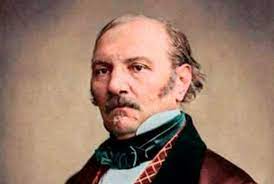
image: Allan Kardec, researcher responsible for coordinating the studies, using mediumship, that allowed the formation of the Spiritist Doctrine, or Spiritism

Umbanda entities

Behind the nomenclatures with African roots, which many still find strange and stigmatized, are the Spirits that communicate in the Umbanda religion. Below Olorum, the orixás of the Yoruba tradition are venerated as superior entities, and they vary according to each branch of the religion. These include Oxalá, Oxum, Oxóssi, Xangô, Ogum, Obaluaiê, Yemanjá, Oyá, Oxumaré, Obá, Egunitá, Yansã, Nanã and Omolu. Below the orixás, spiritual entities are grouped into lines and phalanges, covering different categories, such as the Caboclos, which are indigenous spirits; the Pretos Velhos, which represent the spirits of former Brazilian slaves; the Exus, who are benevolent spirits and messengers of the orixás; the Pomba Giras, identified as ladies of the night or sorceresses; and the Erês, who are childish spirits.

As we can see, they are just nomenclatures, and nothing more than that. Pashas, Zouaves (who were African soldiers), supposed sorcerers, etc. communicated with Kardec or were evoked. When they became more enlightened, they appeared detached from their previous personalities; At least, they said they presented themselves as they were or as they remembered or imagined.

Of course, I cannot help but remember that evocation for the purpose of empty curiosity or play will be reciprocated by the presence of Spirits of like mind. Serious evocations were carried out with the aim of developing the Doctrine.

It is from here that we will approach Spiritism in its reality, without impositions, since, as Umbanda is a religion, it is necessary to recognize the freedom of each person to believe in what they want, and how they want.

The rediscovery of true Spiritism

What I intend to demonstrate, finally, is that the mediumship practiced in Umbanda does not differ from the mediumship practiced by spiritists, or by Catholics, by Buddhists, by any religion, in short, or even by freethinkers, except for one detail: beliefs. And here, I need to be emphatic in repeating that Spiritism, being, from a spiritual point of view, in Nature itself, is thus characterized by a natural science, so that, to understand it well, scientific dedication is necessary. Note that here I am separating Spiritism from the Spiritist Movement: they are two different things.

Well then: the merit of Kardec and all those who seriously studied Spiritism in its first steps, was to analyze with methodology and scientific rigor the results of mediumistic communications and various phenomena, obtaining, as I mentioned, a theory composed of several doctrinal principles, exhaustively verified. Kardec, for example, several times questions how the Spirit got there so quickly, not being satisfied with the first answer. It was thus possible to understand who the Spirits are; how they find themselves after leaving the material body, after its death, etc., which later gave rise to Kardec's other works, including “The Book of Mediums or Guide to Mediums and Evocators”, a true practical treatise on the science of communication with the Spirits. With this, it was possible for the mediums and scholars of the time, who naturally came from different religions, apart from the freethinkers, to overcome several errors and become increasingly useful in the propagation of knowledge that every day converted more to good. and to reasoned faith criminals, depressives to the point of despair, disbelievers, etc.

If you've been following me, you'll understand what I'm saying. It's like saying: if there are studies on physics, which explains principles such as inertia, it would be unwise to practice base jumping without calculating the inertia that could cause the individual to fall to the ground, taking the necessary precautions to prevent this from happening. When we talk about mediumship, we say the same thing.

An example of errors made by modern spiritists is the one given at the beginning, when they wanted to prohibit the communication of a Spirit that presented itself under such a nomenclature. Another: it has already been demonstrated that we cannot blindly believe in what the Spirits say, as they do not gain wisdom by leaving the physical body, it is necessary to always reason about what they say and, if there is any room for doubt, it is necessary to investigate further , including through evocations, if necessary, if the Doctrine no longer provides sufficient answers to the subject in question.

One more example: it has already been demonstrated that it is not possible to dominate Spirits through rituals, formulas or objects, and that malicious Spirits often intensify their attacks even more when one tries to do so. This is the result of this methodological study on countless Spirits. Kardec, in fact, tries to make a bad Spirit go away through the force of God's words and name, during an evocation, without success. Still, there are those who deliberately choose to turn a deaf ear to these facts and who, not infrequently, end up magnifying their displeasures or, sometimes, becoming non-believers, who do not find a solution to their disturbances, despite all the formulas, signs, objects and rituals used.

Conclusion

Of course, Kardec did not end Spiritism. Quite the opposite: as a scientist, he always asserted the need to continue his studies. However, for this continuity, all the aspects previously highlighted are necessary. It is not enough to listen to isolated opinions from Spirits and take them as truth, and those who fight against this, deep down, just want to support their own vainly cultivated opinions.

The reflection, to conclude, is this: neither spiritists, nor dissidents, nor other people, religious or not, really know what Spiritism is today, although everyone is capable of practicing mediumship. Therefore, they suffer from various deceptions and harmful effects, the main one being obsession and even possession, in addition to the dissemination of false ideas that delay the development of humanity. Often, these bad results are found by people in good faith, for whom knowledge would be enough. Other times, they are reluctant people, who definitely don't want to open themselves up to the possibility of admitting that they are wrong or that they don't know everything – but this article is not for them.

Let us, therefore, as in Kardec's time, help recover this knowledge. Let's learn what Spiritism really is, through the study of the Revista Espírita from 1858 to 1869; let's practice healthy mediumship, free from false ideas; We will then resume the evocations, and then cooperate between the groups, as Kardec presents in Revista Espírita, not with mediumship restricted to “spiritist centers”, as we know it today, but rather with it spread across small groups and family groups, each one of them a “center”. It does not matter what religion each person has, to which everyone has the right: Spiritism is a natural fact, accessible to everyone.

For a long time, the Spiritist Movement and Umbanda were guided by mysticism, despite having such a rich and serious wealth of knowledge at their disposal. Whether you are a participant in the Spiritist Movement, or another religion, or even a freethinker who wants to know the facts, join this recovery effort. That's the invitation.

I suggest, as a great read, the work “Autonomy: the never told story of Spiritism”, by Paulo Henrique de Figueiredo.

Thank you for accompanying me here.


The history of Spiritism and the Spiritist Movement

Spiritism today, or rather what the Spiritist Movement knows and transmits about it, is very far from being reality, and this is very serious, as it is precisely because of these distortions that false ideas were created that repel individuals and create fights, not only internally, but also with spiritualist religions.

A very well-known case is that of Umbanda, which was created because an individual was prohibited from “receiving” a Spirit from an “old black man” in a spiritist center. Not only that: nowadays, people of any religion who have any interest in Spiritism are led to the question: “do I need to abandon my religion to be a Spiritist?”. This is because “being a Spiritist”, in modern times, means attending a Spiritist center which, according to false concepts, is where Spiritism “lives”.

I am here to demonstrate how wrong these conceptions are and that, far from a dispute of truths, it is possible to have union and that, in truth, this is how Spiritism developed.

The history of Spiritism like almost no one has known

It is logical to say that, before Spiritism became established as a doctrine, no one was a Spiritist. How was it possible, then, to form this science, with a philosophical aspect and moral consequences?

Anyone who says or thinks that it was Allan Kardec who created Spiritism is wrong. No: Spiritism is in nature, just like the other sciences. It would behoove someone to study, with scientific methodology and seriousness, the principles of this science, and that is what Kardec did. He never gave himself the right to take the truth for himself, simply because, as an honest scientist, he knew that science does not deal with truths, but with theories that come closest to the truth.

Thus, Kardec dedicated himself to studying the phenomena and communications of Spirits, using the main tool available: evocations, through mediums. And he didn't do it alone: at that time, study groups spread across France and other nearby countries and, in fact, preceded Kardec in evocations. When he became interested in Spiritism, there were already several evocations recorded on paper, which he gathered, analyzed and organized, which gave rise to the first edition of The Spirits' Book, about half the size of its second edition.

Kardec quickly realized that this initial effort in the Doctrine would require development, like all science. Thus, in 1858, the Spiritist Magazine — Journal of Psychological Studies, a monthly periodical where he presented to the public results of studies on evocations and spontaneous communications within the scope of the Parisian Society of Spiritist Studies, as well as pertinent content sent by other groups. He also used the Magazine to reinforce the true face of Spiritism, often presenting counterpoints to opinions and articles full of ignorance and, at times, evil.

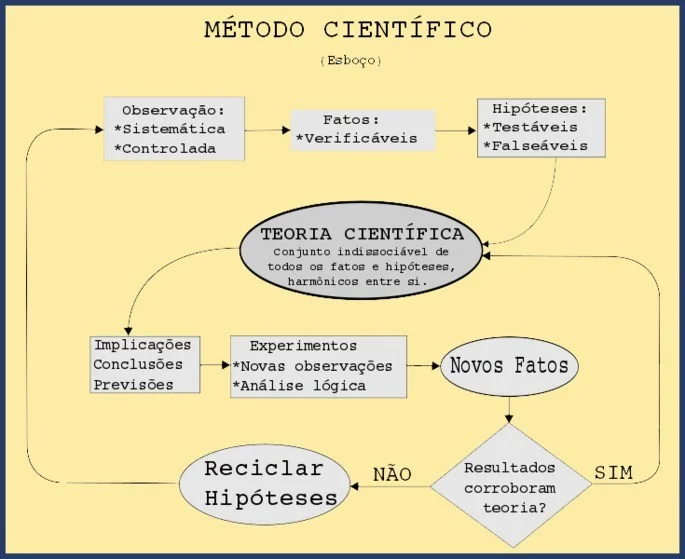
We talk about scientific methodology: well, Spiritism was born like all science: from a systematic and controlled observation of verifiable facts (although not under our will), from which hypotheses were created. From the hypotheses, a theory was created, which was then subjected to experiments (evocations). From the experiments, the results were verified and, from there, the hypotheses were evaluated: if they were corroborated, they were incorporated into the theory; if not, they were reevaluated and new observations were made.

Untruths

One of the biggest untruths that reign over the current Spiritist Movement is that evocations should not be carried out, which is in opposition to the historical characteristics of Spiritism. Anyone who studies the first year of Revista Espírita understands how indispensable for spiritist science, which, as it is a science, should not be taken as sacred content, which should remain untouched. On the contrary: Spiritism needs development, but this development can only be done through scientific methodology, which necessarily depends on the resumption of evocations. An example of a practice lacking method, or taken for false principles, is that it is enough to evoke one or more Spirits, in an isolated group, and ask (or listen) to them about everything, making this a doctrinal principle.

Another big untruth is the assumption that mediumship belongs to the Spiritist Doctrine. So much so, that we demonstrate that Spiritism was born through the joint effort of groups that could not be Spiritists, since the doctrine did not yet exist. At that time, people of various beliefs and religions practiced mediumship in their homes, in small groups, and reaped good or bad results from evocations depending on their efforts to reason about communications. Kardec mentions, in the Magazine, that the followers of Spiritism included Catholics, Protestants, Muslims, Buddhists, etc., carrying out evocations and studies and often sending them to the Parisian Society of Spiritist Studies, where, together with other collaborators, they were evaluated, analyzed and separated those that could represent an interest for the general public.

Here we have two more untruths of the modern Spiritist Movement: the one that says that mediumship can only be practiced in the spiritist center and the one that says that we should just wait for the free communication of the Spirits. From these, perhaps, is born the biggest mistake of modern spiritists and followers: the blind and unreasoned acceptance of everything the Spirits say.

Another untruth, which we cannot fail to mention, is the one that says that Spiritism is a religion. We have already demonstrated that it is a science and that it can only be taken as a religion in the philosophical sense of natural religion, approached in a metaphysical and moral way by Rational Spiritualism, which we will talk about in a moment. This is the reason for finding, in Kardec's time, followers among religions, who did not leave their religions, with their particularities, to practice Spiritism. Regarding this, stay with us until the end, as understanding is extremely important.

Unfortunately, the Spiritist Movement erased science and transformed Spiritism into a religion, which started to create false ideas and dogmas that, if they please some, please for a while, but cannot face reason in the most critical moments of life, creating, thus, disbelievers. They forgot that Spirits do not become wise by leaving the material body and that, among them, there are good and bad, wise and ignorant, etc., and that it is above all when it is simply made available, without dialogue, that anyone presents themselves .

There are countless false ideas, which feed the Spiritist Movement and followers in general, which have not gone through the necessary screening, which have not been investigated and questioned, even if they were opposed to what, with method, was transformed in principle by psychological observation in thousands of Spirits, of all “types”.

We invite the reader, if they have not already done so, to start studying the Revista Espírita from 1858 and 1859 (it runs until May 1869). This publication, which should be taken as a laboratory where one can follow the development of the Spiritist Doctrine, through the method highlighted above, and not as a final idea in each article, demonstrates what Spiritism actually is and how much our society is far from this reality.

Notice what we say untruths, and not “lies”, since most of those who spread them, speak from what they were taught. But where did these untruths come from?

The materialist turn of the 19th century

Spiritism was not born out of nowhere. The ground was very well prepared before that and, at the beginning of the 19th century, the movement known as Rational Spiritualism was born, which, based on metaphysics, sought to study the human psyche through its most elementary and inseparable aspect: the soul. Authors such as Maine de Biran, Victor Cousin and Paul Janet were its main exponents.

You probably don't know, but Rational Spiritualism defined French Moral Sciences in the middle of this century, forming part of French teaching and defining its structure. I will leave information in the description. But ER approached this study only through metaphysics, and not in a practical way. As Spiritism, which was its development, Experimental Psychology was born (and now you know the reason for the subtitle of the Spiritist Magazine). I will not go into many details, which can be found in the book “Autonomy: the never told story of Spiritism”, by Paulo Henrique de Figueiredo. The issue here is different.

At the end of the 19th century, German materialist philosophy overcame French spiritualist philosophy, which, according to some rulers, was the reason for France's failure in the war. Rational Spiritualism was swept under the carpet and Spiritism, which was already suffering from adulterations (we will talk about that in a moment) took the final blow, being practically forgotten in France, in Europe and, later, in the world. New icons of the philosophy of nothingness and materialist psychology (however paradoxical this idea may be), such as Nietzsche and Freud, were taken as idols, replacing rational spiritualist psychology with the perspective of the nullity of moral efforts and selfishness.

Adulterations in Spiritism

Very interesting details about the events after Allan Kardec's death can be gleaned from the books “O Legado de Allan Kardec”, by Simoni Privato, and “Ponto Final”, by Wilson Garcia. In short: the fateful and unexpected event shook spiritists everywhere, who struggled to regain some strength. Along with this, wars came and, in the Spiritist Society, Kardec's successor, Pierre Gaetan Leymarie, undermined scientific doctrinal principles, expelled old people, in the middle of winter, from homes created by Kardec for poor spiritists, burned correspondence carefully kept by the Professor and, for personal interests, he admitted to the Spiritist Magazine contents originating from the ideology of Roustaing, now deceased, who considered himself the revealer of truths, blindly believing in one or more obsessive Spirits who communicated through a medium. The care for rationality, for the general agreement of spiritist communications, ended and, to throw the last straw on French Spiritism, Leymarie was put on trial for publishing content originating from a charlatan, in what became known as “ Process of the Spiritists”.

Because of this whole scenario, Spiritism grew stronger in an already distorted Brazil. The origins of FEB, an institution that took the liberty of proclaiming itself the general leader of Spiritism in Brazil, in fact, are completely linked to these distortions. FEB was founded and guided by Roustaing's principles for a long time (read Ponto Final, by Wilson Garcia). This is the main reason for the distortions of the Brazilian Spiritist Movement.

Added to this, the Revista Espírita only came to be translated in the 1950s. Here, several false ideas were formed, with, as we have demonstrated, the assumption of not judging communications and not evoking Spirits for investigations being the most damaging of them.

The resumption

When we talk about resuming Spiritism, we talk about resuming it as a science. To do this, knowledge is needed, born from study, seriousness, will, purpose and collaboration. Mediumship, which does not belong to the Spiritist Doctrine or the Spiritist Movement, can be practiced by everyone, including outside of spiritist centers. Evocations are necessary and healthy, but here we need warn about some principles of the science of Spirits.

The Spiritist Doctrine, as a science, has the merit of having produced knowledge about the observation of phenomena and communications of Spirits, spread throughout the world. It was not born from Kardec's brain, but from thousands of evocations and facts, analyzed in a scientific way. We repeat this a lot, because this understanding is substantial.

Already in the time of Allan Kardec, mediumship was practiced everywhere. At first, with many errors; later, as knowledge became established, it became increasingly more serious and rational, leaving only dissidents and stubborn people who, not wanting to observe scientific principles and driven by self-love, insisted on banal errors, which almost always led them to obsessions. . We mentioned Roustaing a little while ago, who, preferring to blindly believe the words of Spirits that fed his ego, promptly turned against Kardec when he tried to warn him. It's like Icarus, who, warned that he couldn't approach the sun without getting burned, fed with his ego by his wings, ignored the warnings and ended up burned.

This general warning comes in line with the completion of this important call: Spiritism needs to be resumed, and this depends on knowledge and care. The evocations need to be resumed. The doctrine of Spirits needs to be developed again by small groups, cooperating with each other. This was the direction that Kardec sought to give to Spiritism, shortly before his death (read Spiritist Magazine — 1868 > December > Transitional Constitution of Spiritism), where Spiritism would start to be developed by scattered groups, coordinated among themselves, observing the principles already established by the method. People of any religion can do so, as mediumship does not belong to the Spiritist Movement. The centers need to return to being serious, controlled study centers. When resuming the evocations, it is clear that we will face different challenges; It is logical to assume that many will encounter difficulties and many others will fall into the error of vanity and personalism, struggling to establish false ideas, as is already the case. Unfortunately, we will find them mainly in the Spiritist Movement. But these are challenges that will be faced and, if they are done with the doctrinal knowledge that already exists, they will be quickly overcome, if they ever exist.

Let us envision a new future, where there is no fight between religions, but where individuals and groups cooperate with the restoration of evocations with a greater purpose: that of resuming the development of Spiritism. We will return to Spiritism in homes, as in Kardec's time, where family evocations consoled, taught and, at times, represented doctrinal interest. They will be spiritists, or their followers, people of any religion, any creed, or even non-believers, who, with the firm purpose of learning and with the full awareness of not being the holders of the truth, will seek, through evocations and collaboration, to restore the momentarily interrupted path of Spiritism, a doctrine capable of revolutionizing ideas and, thus, transforming individuals, families, groups and, finally, the world. The truth does not belong to anyone, but the theories that come closest to it can be found by that maxim expressed by Allan Kardec, representing the scientific method in Spiritism:

General concordance in teaching is the doctrine’s essential character, the condition even of its existence. It is evident that all principles which have not received the consecration of general agreement can only be considered as a fractional part of this same doctrine, merely as a simple, isolated opinion for which Spiritism cannot assume the responsibility.

It is the concordant, collective teaching of the spirits who have passed beyond which constitutes the logical criterion, giving strength to the spiritual doctrine and assuring to it perpetuity.

Allan Kardec – Genesis

We welcome your comments below.


Spiritism and Science: overcoming modern challenges and errors

Spiritism, as a science with a philosophical aspect and moral consequences (Spiritism can only be seen as religion From a philosophical point of view, said Kardec, precisely based on the philosophy of the time, the Rational Spiritualism, from where Spiritism developed.)), formed through the scientific method, experiences challenges from all sides. Placed in a figure, it looks like the most beautiful flower, with the sweetest perfume and the greatest healing properties, smothered by thorns and weeds.

The most diverse difficulties arise from all sides, arising mainly from a lack of commitment, zeal and care. Under this nomenclature, they admit any type of ideas, coming from the mouth or mediumistic intermediation of individuals who have become unquestionable icons. As if that were not enough, lacking knowledge about what science and about the necessary scientific method, responsible precisely for the unassailable strength of the Doctrine born from the studies coordinated by Allan Kardec, most modern researchers promote, in the spiritist environment, new ideas, new theories, distracting themselves from the essential point: the evocations, producing teachings that agree with each other, so subjected to rational analysis, in the face of human science and in the face of what had already been constructed by the same method.

Scientific Method

Let us return for a moment to the question of the definition of scientific method, exemplified in the attached figure. For those who dedicated themselves to studying at least the first year of Revista Espírita (1858), it will be very easy to identify the same steps taken by Kardec:

  • the systematic and controlled observation of certain phenomena and, later, of evocations;
  • verification of identified facts;
  • the investigation of hypotheses, which form a theory, cohesive in itself, from which we obtain implications, conclusions and predictions;
  • carrying out experiments, through evocations, from which new observations are obtained, analyzed rationally and logically;
  • hence, the observation of new facts, which will or will not corroborate the theory;
  • finally, add the results of these observations to the scientific theory, if they corroborate it, or recycle hypotheses, making new observations and going through the same method again.
Exemplification of the scientific method

A very notable fact, which denotes Kardec's scientific rigor and his indissoluble commitment to true science, is that he Never clung to any idea in the study of Spiritism. Anyone who has studied the Spiritist Magazine of 1858 and 1859 already understands this very well. An example of this is the study treated mainly from the RE of July 1859, starting with the article O Zuavo de Magenta and concluded (at least for the moment) in the articles of the following month. We highlight the study in the article Materiality from Beyond the Grave.

And it is precisely at this point, that of attachment to ideas, added to the absence of the necessary method, that the vast majority of modern researchers of Spiritism make mistakes.

The error of the modern spiritualist movement

The big problem arises when, abandoning the essential scientific method for spiritist science, the Spiritist Movement began to admit theories contrary to the principles already solidified by the same method, such as the ideas of spiritual colonies, thresholds, etc., falling into the most basic error of the excited spiritist: blindly believe in the opinions of Spirits.

We do not say that Spiritism, studied by Kardec, has already observed everything there is to be observed. Of course not. What we say is that the modern spiritist movement has created a large set of theories that cannot face the scientific method, because they have not gone through it!

We very often find even those dedicated and willing researchers — we will not take this true impetus from them — who, however, cling to the most diverse ideas and who very quickly become irritated by the contradiction of what, scientifically, is part of the principles doctrinaires of Spiritism.

The basis of the indispensable methodology in Spiritism

Let us return here to what is highlighted on our home page – a quote from Allan Kardec in A Gênesis:

General concordance in teaching is the doctrine’s essential character, the condition even of its existence. It is evident that all principles which have not received the consecration of general agreement can only be considered as a fractional part of this same doctrine, merely as a simple, isolated opinion for which Spiritism cannot assume the responsibility.

It is the concordant, collective teaching of the spirits who have passed beyond which constitutes the logical criterion, giving strength to the spiritual doctrine and assuring to it perpetuity.

Allan Kardec — The Genesis

The statement highlighted above, made by Kardec, is not a mere result of a personal systematization. Quite the contrary: it represents the necessary scientific method for the study and development of Spiritism. It is not enough for the same principle to be consecrated by generality (which requires the use of evocations, because it is not enough that we just put ourselves in the role of listening and accepting what the spirits say); it is not necessary, furthermore, that this consenting collectivity of opinion of the spirits be passed through the criterion of logic, which means comparing it to human science and the scientific method, so that, only then, it can be taken as a principle of Spiritism.

Note, furthermore, the term “opinion” used by Kardec, not by chance: what the Spirits say, through mediumistic communications, are their own opinions, born from their knowledge and their own observations, when they are not the result of a deliberate intention to mystify, that is, to promote false ideas . It happens in the best groups. The opinions of spirits, like the opinions of human beings, can be loaded with beliefs, false ideas, little knowledge, illusions, etc. How, then, to analyze them scientifically? Through the psychological observation of these communications.

The nuances in a psychological science

Anyone who has studied at least the first two years of the Spiritist Magazine notes that, even at the end of the second year, Kardec continues to frequently question the communicating spirit how he got there, how he presents himself, how he sees other spirits, etc. If an answer disagrees with the scientific theory or brings new facts, it will be investigated through evocations and according to the scientific method — which is not done nowadays.

Kardec investigated, among many things, the issue of pain in the Spirit. There were those who claimed to feel cold or hot; pains; hunger; worms gnawing his body, &c. It was through dedicated study, through rational analysis of the psychological nuances of these communications, that Kardec arrived at several doctrinal scientific principles. An example of this is the communication from the Spirit of the assassin Lemaire in the RE of March 1858:

6. Immediately after your execution, were you aware of your new existence? — I was plunged into an immense disturbance, from which I still haven't emerged. I felt great pain; looks like my heart felt it. I saw something roll at the foot of the scaffold. I saw the blood flow and my pain became more acute.

Kardec could easily, were it not for his scientific rigor, admit that the Spirit materially suffered from a pain in the heart. But he investigates:

7. Was it a purely physical pain, similar to that caused by a serious injury, such as the amputation of a limb? — No. Imagine remorse, great moral pain.

We could cite a huge diversity of cases that illustrate this scientific principle, but we leave the purpose of studying the Doctrine that it embraces to the reader's healthy curiosity.

Spiritism needs defense

Leaving aside the scientific method is a big mistake on the part of most modern researchers of Spiritism, who aim to construct new doctrinal principles without going through this process, when they should not only be practicing evocations, given the dedicated study of the Spiritist Magazine, but also should be encouraging the spiritist movement to do so at all times.

By not doing so, they throw another shovel of lime on Spiritism, producing a bad impression and a false idea in the scientific world, which does not recognize it as something born of science, but as a mere superstitious belief or a religion. It is not uncommon for me to come across allegations from people who, having not had the chance to know what really be it Spiritism, they distanced themselves from it because they could not admit, for reason, that, for example, a Spirit has to take a flying bus to get around.

We have a lot to do and you must have realized that the first step is studying.